Your Guide to Finding and Buying Art by Local Artists
Choosing to buy art by local artists goes far beyond a simple purchase. It’s a direct investment in your community’s cultural soul, enriching your own space while helping the creative minds in your neighborhood continue their work.
Why Supporting Local Artists Matters
When you decide to buy art from someone in your own region, you’re not just bringing home a beautiful object. You’re stepping into the role of a modern-day patron, providing the support that allows local creativity to thrive. This keeps the unique voices and perspectives of your community alive and visible.
Unlike a mass-produced print you might find anywhere, an original piece of art has a story. It holds a piece of the artist's life, their point of view, and their passion—a narrative that becomes woven into the fabric of your home.
The Personal Connection to Creativity
Bringing home work from a local artist often creates a genuine connection. You might meet the artist at a weekend fair, get a tour of their studio, or even just follow their progress on a new piece online. This relationship adds a profound layer of meaning to the art itself, turning it from a mere decoration into a cherished story.
This direct-to-creator connection is becoming more important than ever. The market for independent artists is growing, with projections showing it will expand at a compound annual growth rate of 7.46% between 2026 and 2034. This isn't just a number; it shows a real shift in what people value—authentic work with a personal touch.
Buying from a local artist is an act of modern patronage. It’s a declaration that you value the heart and soul poured into a piece of work and believe in sustaining the creative individuals who enrich our communities.
Cultivating a Thriving Local Culture
For an artist, your support is more than just financial. It's the validation and encouragement they need to keep creating. By investing in local talent, you become a key part of building a vibrant cultural scene, one that inspires more artists to hone their craft and makes your community a far more interesting place to live.
This investment creates a positive ripple effect. A strong arts scene draws visitors, bolsters local businesses like framers and galleries, and helps forge a unique community identity. By getting involved, you can learn more about exciting local art community projects that are shaping the future of your region's culture. You’ll quickly find yourself moving from a simple buyer to a true advocate for the arts.
How to Discover Amazing Local Artists Near You
Finding art you love is one thing; discovering it right in your own community is another experience entirely. Your city is a living gallery, full of talented creators producing unique works. You just need to know where to look.
Fortunately, connecting with local talent is easier than ever. It's a matter of blending a little digital detective work with some old-fashioned, real-world exploration.
Digital Discovery: Your Search Starts Online
Your journey to finding art by local artists can easily begin from your couch. Social media, particularly a visual platform like Instagram, has become a primary portfolio for countless artists to showcase their work and engage with collectors.
The key is to think like a local. Instead of using a generic hashtag like #art, get specific with localized tags. For example, a search for #NJArtist or #PhillyArt will instantly bring up a curated feed of artists creating right in your region. This simple trick helps you cut through the noise and find portfolios you might never stumble upon otherwise.
Beyond social media, several other online avenues can lead you to remarkable local talent.
- Online Art Marketplaces: Websites like Etsy let you filter searches by location. Simply set the filter to your city or a nearby metro area to discover a variety of makers, from painters to ceramicists.
- Artist-Specific Platforms: Many artists sell prints and originals through dedicated platforms like INPRNT. While not always location-first, their search functions provide another excellent channel for discovery.
- Local Arts Councils: Don't overlook your regional arts council or cultural alliance. Their websites are often goldmines, featuring member directories, event calendars, and news about local exhibitions.
Choosing the right discovery method depends on what you're looking for. Each approach offers its own set of benefits and potential trade-offs.
Comparing Methods for Discovering Local Art
| Discovery Method | Primary Advantage | Consideration |
|---|---|---|
| Social Media | Direct, real-time connection with the artist and their process. | Algorithms can be limiting; requires targeted hashtag searches. |
| Online Marketplaces | Broad selection with filters for location, price, and medium. | Can feel less personal; may require more digging to find original works. |
| Local Arts Councils | Curated, community-vetted source for established local talent. | Directories may not include emerging or non-member artists. |
| Art Fairs/Festivals | See a high volume of art in person and meet artists face-to-face. | Can be overwhelming; a high-energy environment may not be for everyone. |
| Open Studio Tours | An intimate look into the artist's workspace and creative process. | These events are infrequent and often scheduled annually. |
| Local Businesses | Casual, low-pressure way to discover art in your daily routine. | Exhibitions rotate, and finding artist information can sometimes be tricky. |
Ultimately, a combination of these methods will give you the most comprehensive view of your local art scene.
Getting Out There: Exploring the Physical Art Scene
As effective as online tools are, nothing replaces the experience of seeing art with your own eyes. Venturing out into your community is where the real magic happens, allowing you to engage directly with the work and the people who create it.
Art fairs are a cornerstone of the local art ecosystem. In fact, a 2026 global art market report highlighted just how important these events have become. With the market reaching $59.6 billion in 2026, art fairs drove 35% of all dealer sales—their highest share since 2022. For smaller galleries, domestic sales now account for a staggering 71% of revenue, showing a clear shift toward collectors supporting regional talent.
Your community is a creative ecosystem. The more you explore—both online and off—the more you'll uncover the rich network of artists, galleries, and events that bring your local art scene to life.
Look beyond the big festivals for smaller, community-focused opportunities. Many artists participate in open studio weekends, inviting the public directly into their creative spaces for a behind-the-scenes look.
You can also find fantastic work in unexpected places. Local businesses like coffee shops, bookstores, and boutique hotels often feature rotating exhibits of local work. Following or joining local art collectives near you is another excellent way to tap into a vibrant community of creators and be the first to know about new shows and events.
Evaluating Art and Connecting with the Artist
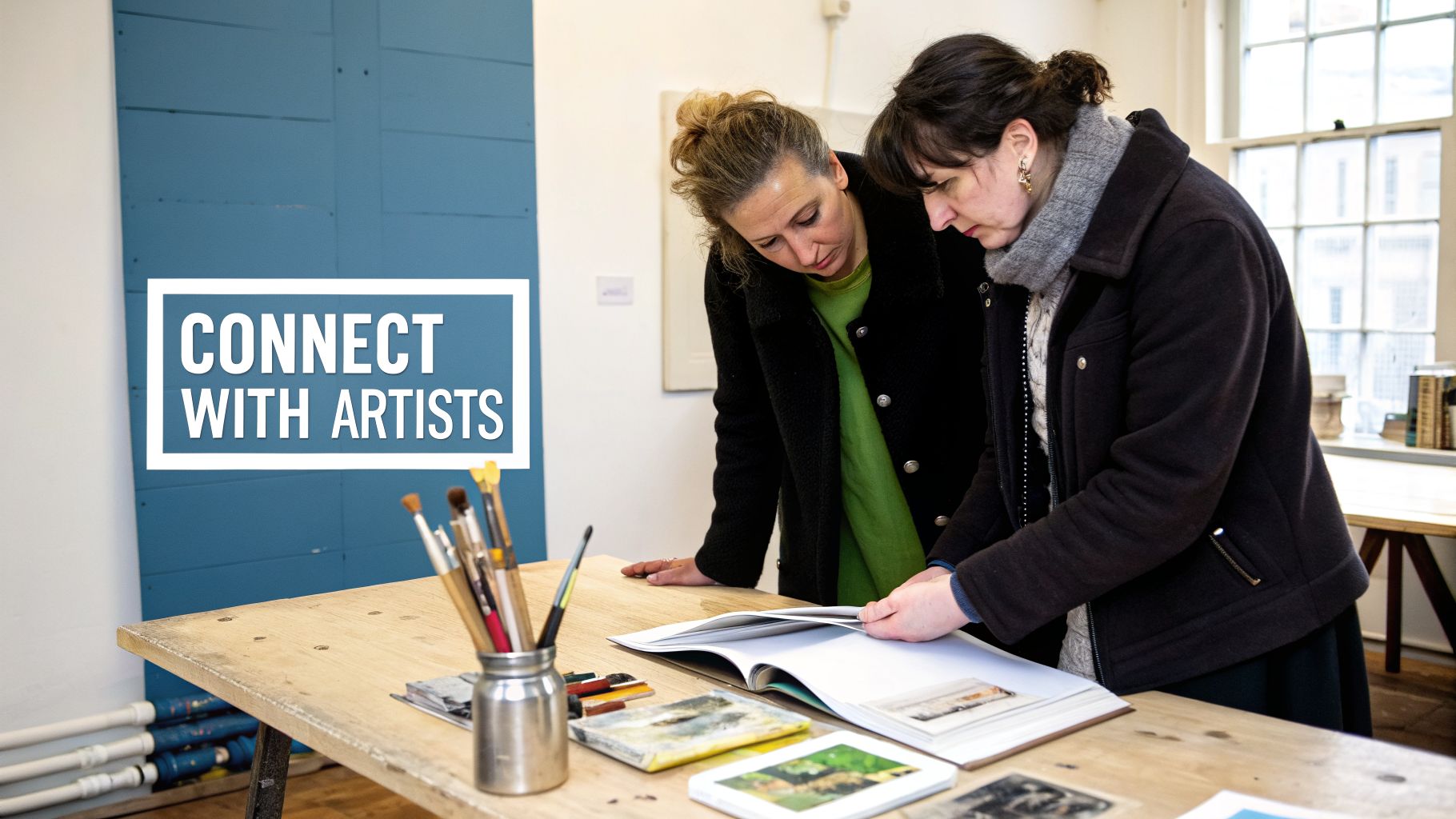
When you find a local artist whose work stops you in your tracks, the real journey begins. It's time to move beyond that first impression and delve into their full portfolio, shifting from a casual admirer to a potential patron. This is your chance to understand their creative voice.
Take a broad look at their collection. You’re looking for a common thread—a consistent style, recurring themes, or a signature color palette. While artists evolve, a cohesive body of work often signals a mature vision. Collecting art by local artists is more than acquiring objects; it's about investing in a creator's ongoing story.
How to Read a Piece of Art
Looking at art is easy. Seeing it is a skill. To truly evaluate a piece, you need to look past the surface and examine the fundamental choices the artist made.
First, let’s talk about composition. How has the artist arranged the elements? A strong composition feels intentional, guiding your eye on a specific journey across the work. It creates a sense of balance and flow, whether it’s a tranquil landscape or a chaotic abstract.
Then, there’s color. Notice how the artist uses their palette. Are the hues bold and clashing, or are they subtle and harmonious? Color carries immense emotional weight. A fiery red sparks a different feeling than a serene blue. And finally, get close enough to see the technique. The texture of the brushwork or the precision of the lines reveals so much about the artist's energy and skill.
These elements come together to create a deeper experience. Ask yourself:
- Emotional Weight: What feeling does the piece stir in you? Art's greatest power is its ability to connect with us on an emotional level.
- Narrative Clues: Does it tell a story? Even abstract work can suggest a narrative or capture a specific moment in time.
- Artistic Signature: An artist's style is their true signature, long before you spot their name in the corner. If you’re curious about deciphering physical signatures, our guide on how to identify artist signatures is a helpful resource.
Connecting with the Artist Personally
Once you’ve spent some time appreciating the work, reaching out is the natural next step. This is a delicate moment that can set the tone for your entire relationship. Whether you’re sending an email or a direct message, a little thoughtfulness goes a long way.
Lead with genuine appreciation. Mention a specific piece that resonated with you and, more importantly, why it did. This simple act shows that you've truly engaged with their art, not just scrolled past a thumbnail. It proves you see them as a creator, not just a vendor.
The most rewarding art purchases often begin with a human connection. By showing genuine interest in an artist's process and story before discussing a sale, you build rapport and turn a simple transaction into a collaborative experience.
This personal approach aligns with a broader, positive shift in the art world. For example, by 2026, female and non-binary artists achieved 50% representation in primary-market galleries, a change largely driven by a new wave of collectors. These collectors, making up 49% of gallery clientele, and other local buyers are increasingly seeking art with authentic, diverse narratives. You can dive deeper into these market dynamics by exploring the latest findings on art market trends.
Start a conversation about their creativity first. Ask about their inspiration, their process, or a particular technique. Defer any questions about price until later. This courtesy builds a foundation of respect and opens the door to a wonderful connection, whether you end up buying an existing piece or commissioning something new.
How to Commission Custom Artwork Confidently
There’s something truly special about commissioning a custom piece of art. Instead of just buying a finished work, you get to be part of its creation—a unique partnership between you and the artist. It’s an incredible experience, but for first-timers, the whole idea can be a little intimidating.
Where do you even begin? It’s really a matter of breaking it down. With clear communication and a solid plan, you can confidently commission art by local artists that brings your vision to life. It all boils down to building a partnership based on shared respect and a clear set of expectations from the start.
Laying the Groundwork With a Strong Creative Brief
That first conversation you have with an artist is everything. This is your chance to get the idea out of your head and onto the table. A vague request like, "I want something nice for my living room," is a recipe for disappointment because it leaves too much to guesswork. The key is to come prepared with a simple but thoughtful creative brief.
Let's say you're dreaming of an ocean-inspired painting. A great brief would touch on these points:
- Inspiration and Mood: What’s the feeling you're after? Is it the quiet calm of a beach at sunrise or the raw power of a stormy sea? Bring reference photos—pictures you’ve taken, magazine clippings, or even other works of art that capture the mood.
- Color Palette: Get specific. Don't just say "blue." Instead, try something like, "I'm imagining deep navy and cerulean blues, with soft accents of sandy beige and foam white." This gives the artist a much clearer palette to work with.
- Size and Orientation: Measure your space. A request for a "48×36 inch horizontal painting to hang over the sofa" is infinitely more helpful than just asking for "something large."
The point of this isn’t to micromanage the artist's every move. It’s to give them a strong starting point so they can apply their unique talent and perspective to your idea.
A well-crafted brief is a roadmap for your collaboration. It minimizes ambiguity, respects the artist's time, and sets the stage for a final piece that aligns with your expectations.
From here, the artist will typically create some initial sketches or a color study. This is your first glimpse of their interpretation and the perfect time to give constructive feedback. Remember, this is a collaboration, and your input here is vital.
Formalizing the Agreement
Once you’re both excited about the creative direction, it’s time to talk business. Putting a simple agreement in writing isn’t about a lack of trust—it’s just good professional practice that protects both you and the artist. Any professional creator will appreciate this step; in fact, it's standard procedure for artists building their careers online. Many of today’s top talents run their businesses entirely from their own sites, and you can see how they get started in our guide to creating free websites for artists.
A solid agreement should clearly spell everything out:
- Total Cost and Payment Schedule: The standard is often a 50% non-refundable deposit to start, with the remaining balance due when the work is finished.
- Project Timeline: Agree on an estimated completion date. Be sure to build in some flexibility, as the creative process isn't always linear.
- Revision Rounds: Clarify how many rounds of feedback are included. A common structure is one major revision after the initial sketch and one minor touch-up before the final varnish is applied.
- Delivery and Ownership: Figure out the logistics for getting the art to you. It's also important to note that the artist usually retains the copyright to the work, even after you own the physical piece, unless you negotiate a different arrangement.
With a clear agreement in place, there are no surprises down the road. It frees both of you to focus on what really matters: creating a beautiful piece of art.
Finalizing the Purchase and Caring for Your New Art
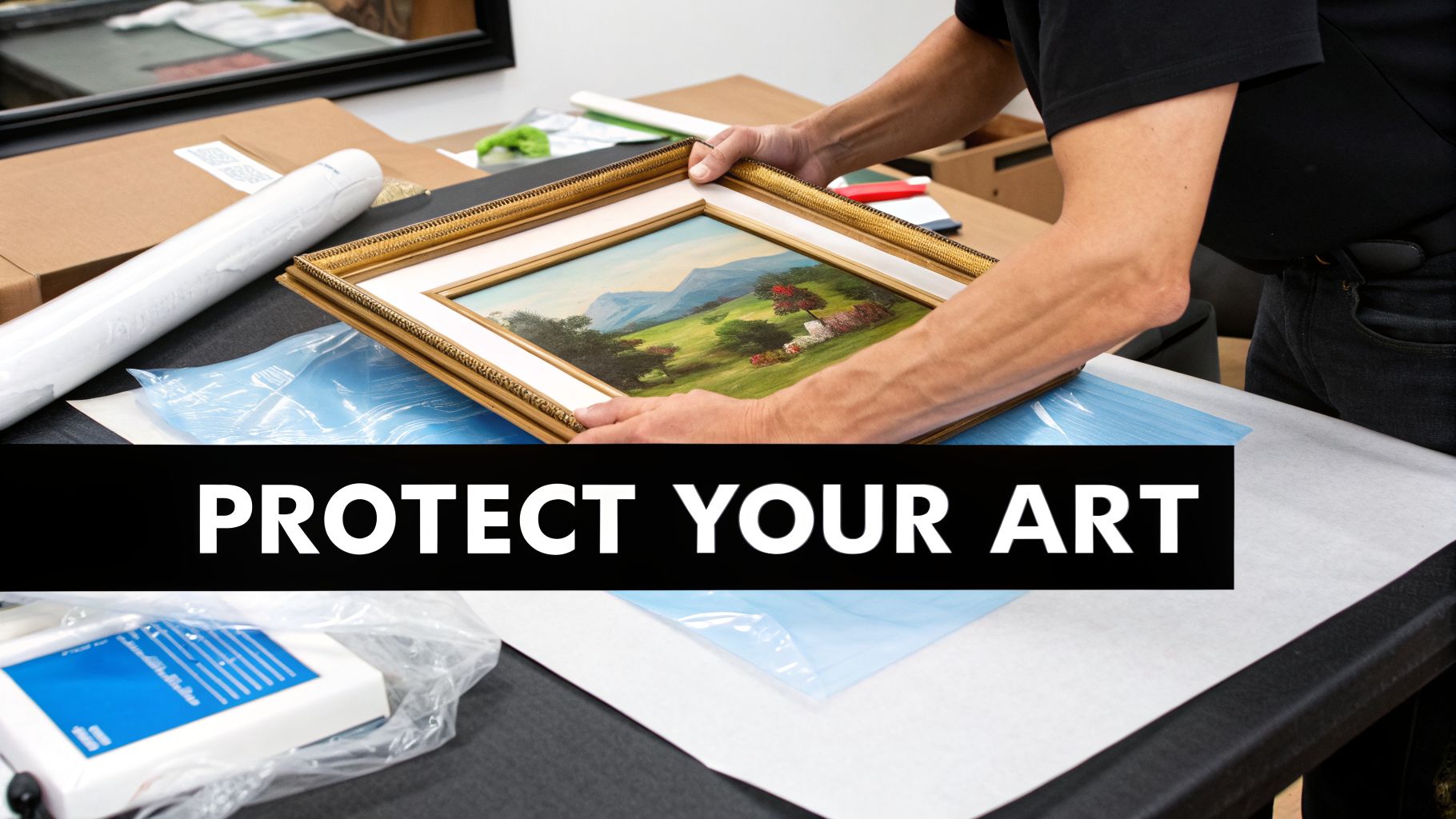
You’ve found the one. After searching and deliberating, you're ready to bring that special piece of art home. This final step is more than just a transaction; it’s where you formalize the purchase and begin your journey as the new caretaker of a unique creative work.
Most independent artists are well-equipped to handle secure digital payments or credit cards, making the logistics simple. Once the payment is settled, you'll need to coordinate pickup or shipping. If the artist is local, I always recommend picking up the work in person if you can. It’s a wonderful way to cap off the experience and have one last conversation with the creator.
Before you finalize everything, there are two documents you absolutely must get from the artist:
- A Bill of Sale: This is your official receipt. It should clearly list the artwork’s title, size, medium, price, and the date you bought it.
- A Certificate of Authenticity (COA): Signed by the artist, this paper certifies that the work is genuine. It’s critical for insurance and for establishing the artwork's provenance—its history of ownership—which is key to its long-term value.
These pieces of paper are your proof of ownership and the foundation for protecting your investment in art by local artists.
Becoming a Good Art Custodian
Once the artwork is in your hands, your role shifts from collector to custodian. Proper care is what ensures the piece will not only look stunning for decades but also hold its value. You've become the guardian of the artist's vision.
Your home is now a gallery. By taking simple, preventative measures, you honor the artist's work and ensure its story can be enjoyed by future generations.
In my experience, sunlight is the number one enemy of art. Direct UV rays can cause shocking and irreversible fading in a surprisingly short amount of time. A hard and fast rule is to never hang paintings or prints on a wall that gets hit with direct, prolonged sunlight.
Long-Term Preservation and Framing
The environment in your home has a massive impact on your art's longevity. You need to keep an eye on both temperature and humidity. Avoid hanging precious pieces in places with wild swings, like bathrooms, kitchens, or directly above a radiator. These constant fluctuations can make a canvas warp, paper ripple, or paint crack over time.
This is where proper framing becomes your best line of defense. A great frame is far more than decoration; it’s a shield.
- UV-Protective Glass: This is non-negotiable. For any work that will be exposed to even ambient light, this special glass acts as a powerful barrier against fading.
- Acid-Free Materials: Insist that the matboard, backing, and anything else touching the art is archival quality. Standard materials contain acid that will "burn" and discolor the work over time.
- A Little Breathing Room: The surface of the art should never be pressed directly against the glass. A professional framer uses spacers or a mat to create a tiny air gap, which prevents moisture from getting trapped and causing damage.
By taking these steps, you’re doing more than just hanging a picture on the wall—you’re preserving a piece of local culture. For a deeper dive into choosing the right materials, you can learn all about the essentials of new image art framing in our dedicated guide.
Common Questions About Buying Local Art
It’s completely normal to have a few questions as you begin exploring the local art scene. Let's walk through some of the most common ones so you can feel confident and prepared on your journey to finding the perfect piece.
How Do I Determine a Fair Price for Local Art?
Figuring out the right price for a piece of art by local artists can feel a bit mysterious at first. A lot goes into it: the artist's experience and reputation, the size and detail of the work, the cost of materials, and even the going rates in your specific area.
The best way to navigate this is with open and honest communication. Many artists are transparent and list prices directly on their websites. If you don't see one, it's perfectly fine to ask. A polite email or message inquiring about the price of a specific piece is standard practice.
For a custom commission, the artist will walk you through a detailed quote. While you should avoid aggressive haggling—this isn't a flea market—don't be afraid to be upfront about your budget. A good artist will appreciate the honesty. Remember, you aren't just buying a decorative object; you're investing in someone’s skill, time, and unique creative vision.
What Is the Etiquette for Visiting an Artist Studio?
A studio visit is an incredible opportunity to step into an artist’s world and see where the creativity happens. But an artist’s studio is their private workplace, so the number one rule is to always schedule an appointment. Never, ever just drop by unannounced.
Once you’re there, be respectful of the space. It’s a working environment, so always ask permission before you touch a painting, a tool, or anything else.
Try to come with a few thoughts or questions about their work. Mentioning a specific piece you saw online or asking about their technique shows you've done your homework and are genuinely interested.
A purchase is always appreciated but never expected during a studio visit. The main point is often to connect with the artist and show sincere interest in their creative world. Artists truly value that relationship-building.
Can I Return Art if I Change My Mind?
Return policies can differ quite a bit, so this is something you need to clarify upfront. If you’re buying from an artist’s formal online store, they will likely have a clear return policy published on their site, similar to any other online business.
However, things change with direct sales, like those made at a studio or art fair. For these in-person transactions and especially for custom commissions, the sale is almost always final once payment is made.
It is absolutely crucial to ask about returns or policies for damage during shipping before you finalize the purchase. This is why it’s so important to be completely sure about your decision before you commit.
How Can I Support Local Artists on a Limited Budget?
Buying original art is the most direct way to support an artist financially, but it’s certainly not the only way to make a meaningful impact. Your enthusiasm and advocacy can be just as powerful for an artist's career.
Many artists provide more accessible ways for new collectors to get involved. You could look into:
- Affordable Prints: High-quality reproductions of original paintings are a fantastic entry point.
- Sketches or Small Studies: These are smaller, less expensive original works that offer a beautiful glimpse into an artist's process.
- Digital Downloads: Some creators offer digital files you can print yourself, making for a very budget-friendly option.
Beyond making a purchase, you can offer incredible support for free. Share their work on your social media (and always tag them!), write a glowing testimonial for their website, or tell friends who might be in the market for art. Even small actions, like attending their gallery shows and signing up for their newsletter, help their career grow in very real ways.
At Skyler’s Art, you can explore a curated gallery of original paintings that blend impressionistic energy with personal storytelling. If you’re looking for art that speaks before you do, discover the collection at https://skylers-art.org.