A Guide to Launching Impactful Art Community Projects
Community art projects are all about bringing people together—artists, residents, you name it—to create something beautiful in a public space. It’s where an individual artist's vision meets the collective voice of a neighborhood.
This is how art breaks free from the gallery walls and becomes a living, breathing part of a community's identity, transforming a town one brushstroke at a time.
The Real Impact of Community Art Projects
At its heart, a community art project is about so much more than just making a place look better. These projects are powerful tools for building connections and sparking conversation. Think about it: when a forgotten wall bursts into life with a vibrant mural, or an empty lot is reborn as a sculpture garden, it completely changes how people feel about and use that space.
Suddenly, residents have a real sense of ownership and pride. They have a stake in their neighborhood's story. For artists like myself, it's an incredible opportunity to connect directly with an audience, shifting from the quiet of the studio to a lively, collaborative process with the very people who will live with the art.
This isn't just a niche trend; it's a global movement that's attracting serious attention and funding. The investment in public art is growing, and the numbers are telling. For instance, the recent CODAawards showcased the Top 100 public art projects worldwide, and together, they accounted for over $44 million in commissions. That figure really drives home the value that cities and organizations are placing on weaving art into the fabric of public life. You can see some of these incredible global projects and how they are shaping public art investment.
Fostering Connection and Identity
What truly makes these projects special is their power to build bridges. They unite people from all walks of life—neighbors, local shop owners, schools, and city leaders—who might never cross paths otherwise. They all come together with a single creative goal.
The process itself can be profoundly personal and emotional, turning abstract ideas into a shared visual story. In my own work, I often draw on themes from nature, like resilience and tranquility. These are universal feelings that really connect with people when they see them come to life in a public piece.
A community art project serves as a mirror, reflecting the stories, struggles, and hopes of the people who create it. It becomes a landmark not just of place, but of a shared moment in time.
This shared storytelling strengthens a community's identity and sense of belonging. The results speak for themselves:
- Revitalized Public Spaces: Neglected areas are transformed into vibrant, welcoming spots that encourage positive community interaction.
- Amplified Voices: It gives a platform to underrepresented groups, allowing them to share their histories and perspectives in a powerful, visual way.
- Enhanced Social Bonds: The shared experience of creating something together builds lasting relationships among everyone involved.
By weaving individual stories into a collective tapestry, these projects do more than just decorate a space. They build a legacy of unity and shared purpose, exploring how art that expresses emotion can truly shape a community's heart.
Developing Your Project From Idea to Proposal
Every great community art project starts not with a splash of paint, but with a solid idea. This is the crucial stage where you take that creative spark and shape it into a concrete plan—one that reflects your artistic voice while genuinely connecting with the community you want to serve. It's about moving from a loose concept to a specific, actionable proposal.
Before you get lost in the details, pin down your core message. Ask yourself: What story am I trying to tell here? Who am I speaking to, and what do I want them to take away from this experience? A project without a clear purpose is just decoration; one with a strong message can create real meaning.
This is also where your own artistic identity comes in. If your work is all about the ocean's tranquility, like mine, that passion will be the engine that drives the whole project forward. Authenticity is key. If you need a little help clarifying that connection, our guide on how to develop your art style can be a great resource.
Defining Your Project Scope
Once you have that core message, it’s time to get practical and define the project's scope. This means setting realistic boundaries. It’s far better to pull off a smaller, beautifully executed project than to over-promise and deliver something that feels rushed or incomplete.
Get specific about your goals, your timeline, and what success will actually look like.
Let’s say you're dreaming of that ocean-themed mural for a local youth center. A well-defined scope would look something like this:
- Primary Goal: To co-create a vibrant mural that inspires a sense of calm and wonder for the kids at the center.
- Timeline: A six-week project from start to finish—two weeks for community design workshops and four weeks for painting.
- Key Partners: The youth center’s director, a local paint shop for a materials sponsorship, and the neighborhood association to help find volunteers.
See the difference? That level of detail turns a fuzzy idea into a manageable plan.
This flowchart helps visualize how a personal artistic vision can evolve into a project with a lasting community legacy.
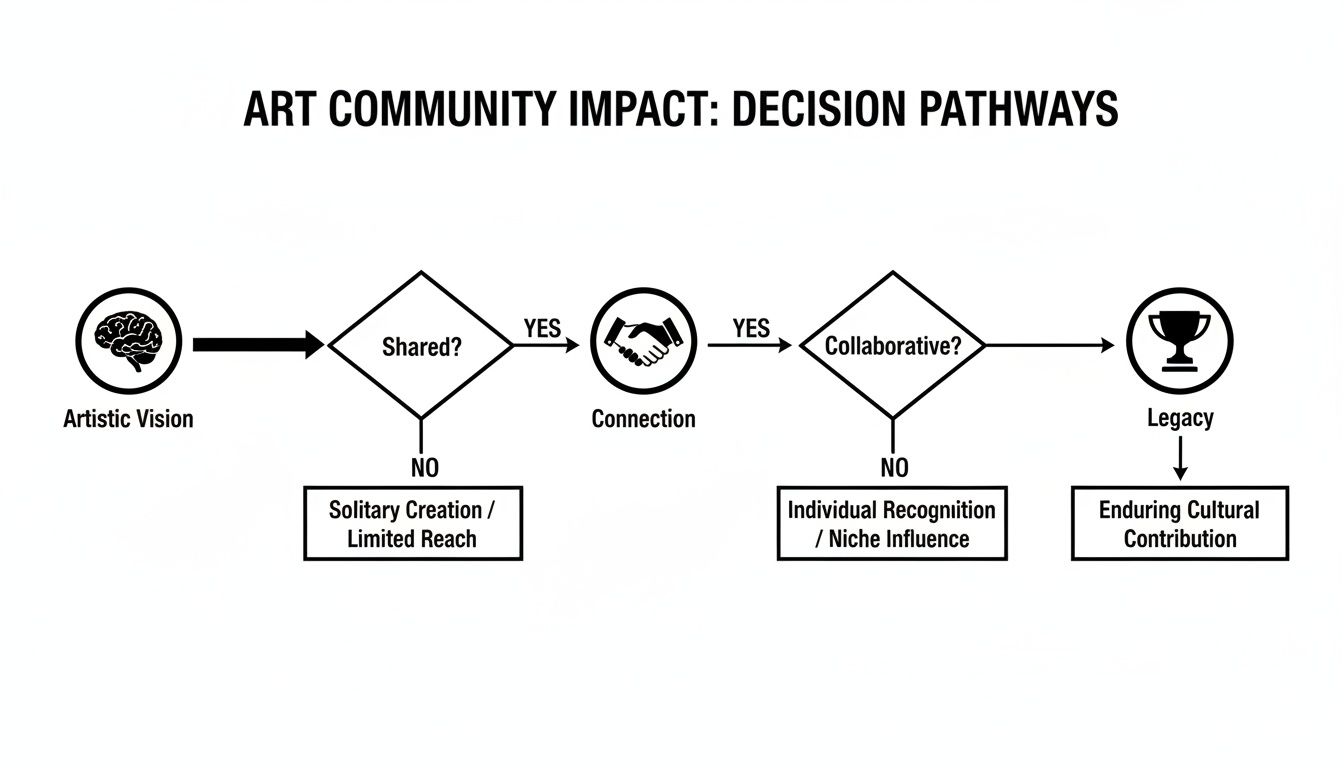
As you can see, a powerful project grows from a solid artistic vision, expands through genuine community connection, and ultimately solidifies into something that endures.
Choosing the Right Project Format
The format you choose—mural, sculpture, workshop—will directly shape your budget, scope, and how the community gets involved. A temporary pop-up has totally different demands than a permanent mural. You have to ask what format best serves your core message and fits within your logistical reality.
To help you think through the options, here’s a quick comparison of some common project types.
Choosing the Right Format for Your Community Art Project
This table breaks down common community art project formats, helping you select the best approach for your goals, budget, and desired level of community involvement.
| Project Type | Key Characteristics | Best For | Example Concept |
|---|---|---|---|
| Permanent Mural | Large-scale, high-visibility, requires significant planning and durable materials. | Creating a lasting landmark, revitalizing a public space, telling a permanent community story. | A large-scale ocean ecosystem mural on a highly visible downtown wall. |
| Community Sculpture | Three-dimensional, can be interactive, requires site approval and specialized skills. | Fostering tactile engagement, creating a focal point in a park or plaza. | A sculpture made from recycled plastic and other materials collected by community members. |
| Pop-Up Installation | Temporary, often event-based, allows for experimentation with materials and concepts. | Generating buzz for a specific cause, testing an idea, engaging audiences for a short period. | A temporary "beach" made of clean sand and found objects in a town square to raise ocean awareness. |
| Workshop Series | Process-focused, emphasizes skill-sharing and co-creation over a final product. | Building community skills, fostering deep collaboration, projects with educational goals. | A series of workshops teaching watercolor techniques to paint local marine life. |
Ultimately, the format you land on should feel like the most natural and effective way to bring your vision to life with the resources and community support you have.
The success of your proposal really hinges on clarity. A potential funder or partner must understand not just the what and why of your project, but the how. Think of your proposal as the bridge between your artistic vision and the practical reality of making it happen.
Navigating Funding and Project Logistics
Turning a powerful idea into a tangible piece of public art is where the real work begins. It’s about mastering the practical side of your project—securing the resources and meticulously planning every logistical detail, from the first dollar raised to the final protective coat of sealant. Frankly, the success of most art community projects hinges on this behind-the-scenes effort.
The funding puzzle can feel daunting, I know. But the trick is to build a diverse funding strategy rather than putting all your hopes on a single large grant.
Crafting a Winning Funding Strategy
Before you ask for a dime, you need a detailed, transparent budget. Think of this less as an internal document and more as your most critical tool for grant applications and sponsorship pitches. A solid budget screams professionalism and shows potential funders you've thought everything through.
Break your expenses down into crystal-clear categories:
- Materials and Supplies: Get specific here. List everything from primers and professional-grade paints to brushes and cleanup supplies. For outdoor work, don't forget to factor in costs for durable, weather-resistant materials and anti-graffiti coatings.
- Artist and Facilitator Compensation: Always, always pay your artists and key team members. Valuing creative labor is fundamental to building a sustainable arts community.
- Permits and Insurance: You’ll need to research local requirements for public art installations and absolutely secure liability insurance. These are non-negotiable costs that protect you, your partners, and the public.
- Marketing and Documentation: Earmark funds for promotional materials, a launch event, and professional photography or videography. You need to be able to showcase the project's impact long after the paint dries.
With a clear budget in hand, you can start pursuing different funding avenues with confidence. Local arts council grants are often a fantastic place to start. It’s also worth noting that communities with strong public support for the arts tend to have higher levels of local arts agency funding. Research from the Arts Vibrancy Index, for instance, shows a clear correlation between this funding and a greater number of working artists and arts nonprofits. Digging into what makes these communities thrive can offer some great insights.
Securing Your Site and Materials
Once the funding starts to come together, your focus can shift to the physical logistics. Choosing the right location is about so much more than visibility; it’s about finding a site that resonates with your project's theme and truly serves the community. An ocean-themed mural, for example, would feel perfectly at home on the side of a community pool or a building near a local waterway.
Getting permission is a formal process, not a casual chat. You'll need to identify the property owner—whether that’s a private business or a city department—and present them with a professional proposal. This packet should include your concept sketch, timeline, budget, and proof of insurance.
Meticulous planning in the logistics phase prevents costly and time-consuming problems down the road. Double-checking permit requirements or testing a paint sample for durability may seem small, but these steps are what ensure a smooth and successful installation.
Material selection is just as critical, especially for any art that will live outdoors. Your choices have to strike a balance between your artistic vision and sheer durability. Think about the local climate—will the piece be baked in intense sun, drenched in heavy rain, or subjected to freezing temperatures? I always recommend opting for professional-grade materials designed to withstand the elements.
And for larger pieces, you have to consider the installation from the very beginning. If you're wrestling with a massive canvas, our guide on how to hang large canvas art has some practical tips that can easily be adapted for public installations. Proper preparation and smart material choices are what ensure your artwork becomes a lasting community landmark, not a future maintenance headache.
Building Genuine Community Engagement
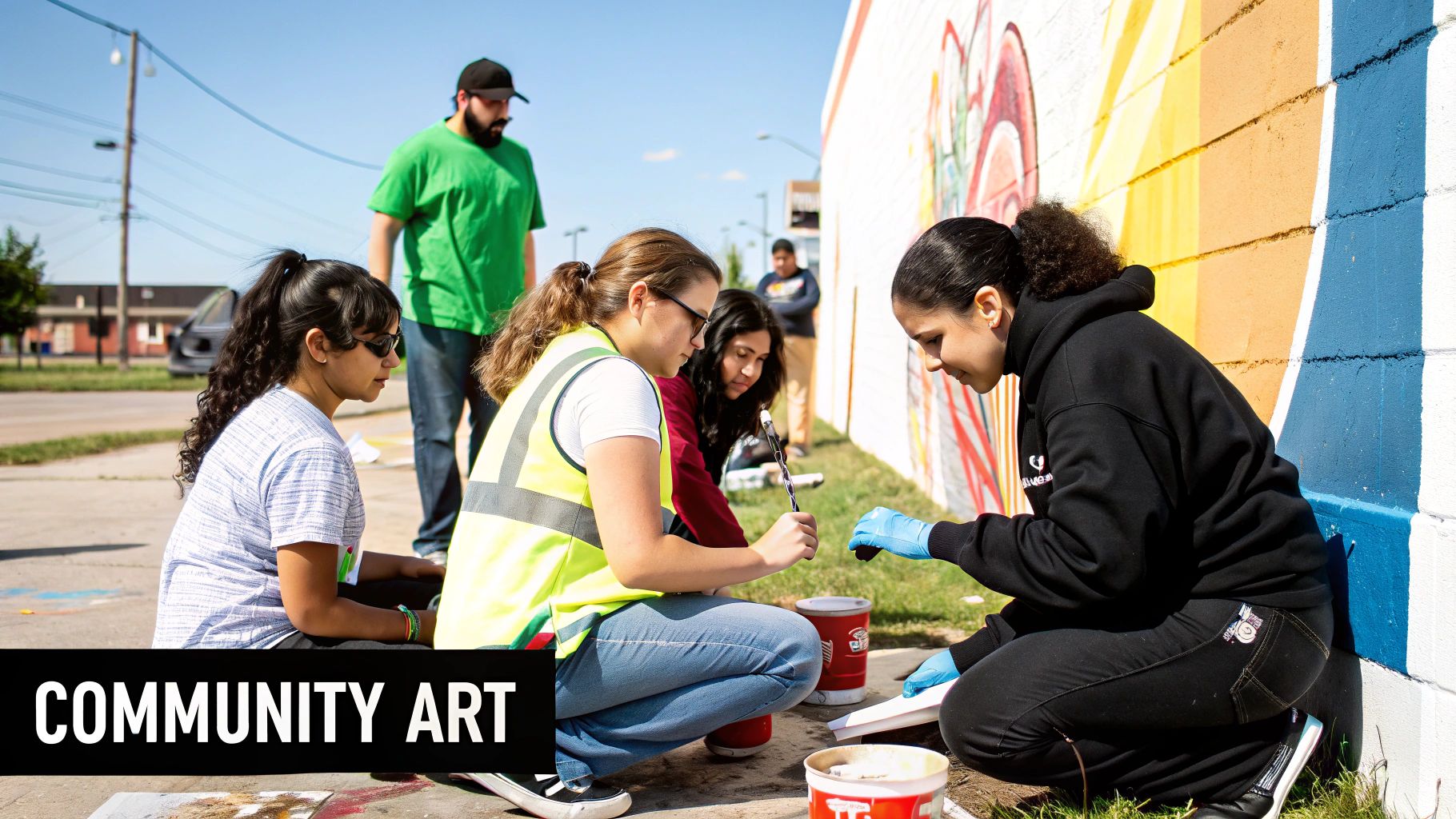
The real magic of art community projects isn't just in the final piece of art. It’s measured by the sense of ownership and pride the community feels long after the paint has dried. This only happens when you move past simple participation and cultivate genuine, inclusive engagement, making the creative process just as important as the product.
It all starts with intentional outreach. You have to meet people where they are. Don't just post on social media and hope for the best. Instead, get out there and connect directly. Partner with the places that are already the heart of the neighborhood—local libraries, community centers, and neighborhood associations have already earned the trust you need to tap into.
Fostering an Inclusive and Accessible Environment
Inclusivity isn’t a box to check; it’s the foundation of the entire project. You have to actively plan to remove barriers before they have a chance to exclude someone. Think about the diverse needs of your community right from the very beginning.
This means looking at every single part of your project through an accessibility lens.
- Physical Accessibility: Is your workshop space actually wheelchair accessible? If you're planning a big mural, think about roles for people who can't or don't want to climb scaffolding. They could be invaluable for mixing colors, painting lower sections, or coordinating supplies.
- Linguistic Diversity: Is English the only language spoken in the neighborhood? Probably not. Providing key information in multiple languages or hiring a local interpreter for a brainstorming session can make all the difference.
- Sensory Considerations: If you’re working with kids or anyone with sensory sensitivities, think about the environment. Can you create a quiet corner for breaks? The materials you choose also matter, and knowing a little about color psychology in interior design can help you create a more calming and focused atmosphere.
When you thoughtfully address these needs, you’re sending a powerful message: everyone is truly welcome here, and what you bring to the table matters.
A project’s real power comes from co-creation, where the community transitions from being the audience to becoming the artists. This collaborative spirit ensures the final piece is a true reflection of the people it represents.
Empowering Participants in Collaborative Sessions
Your job as the lead artist or organizer is to be a facilitator, not a dictator. The best collaborative sessions happen when community members feel empowered to bring their own ideas and skills to the forefront. Design your workshops to be a conversation, a space for real dialogue and experimentation.
For instance, rather than showing up with a fully-formed design, start with a broad theme like "our roots" or "resilience." From there, lead brainstorming activities that invite personal stories and different interpretations. You can use simple prompts to get people talking. This allows the visual narrative of the project to grow organically from the group's own shared experiences, creating something far richer and more authentic in the end.
Showcasing Your Project's Lasting Value
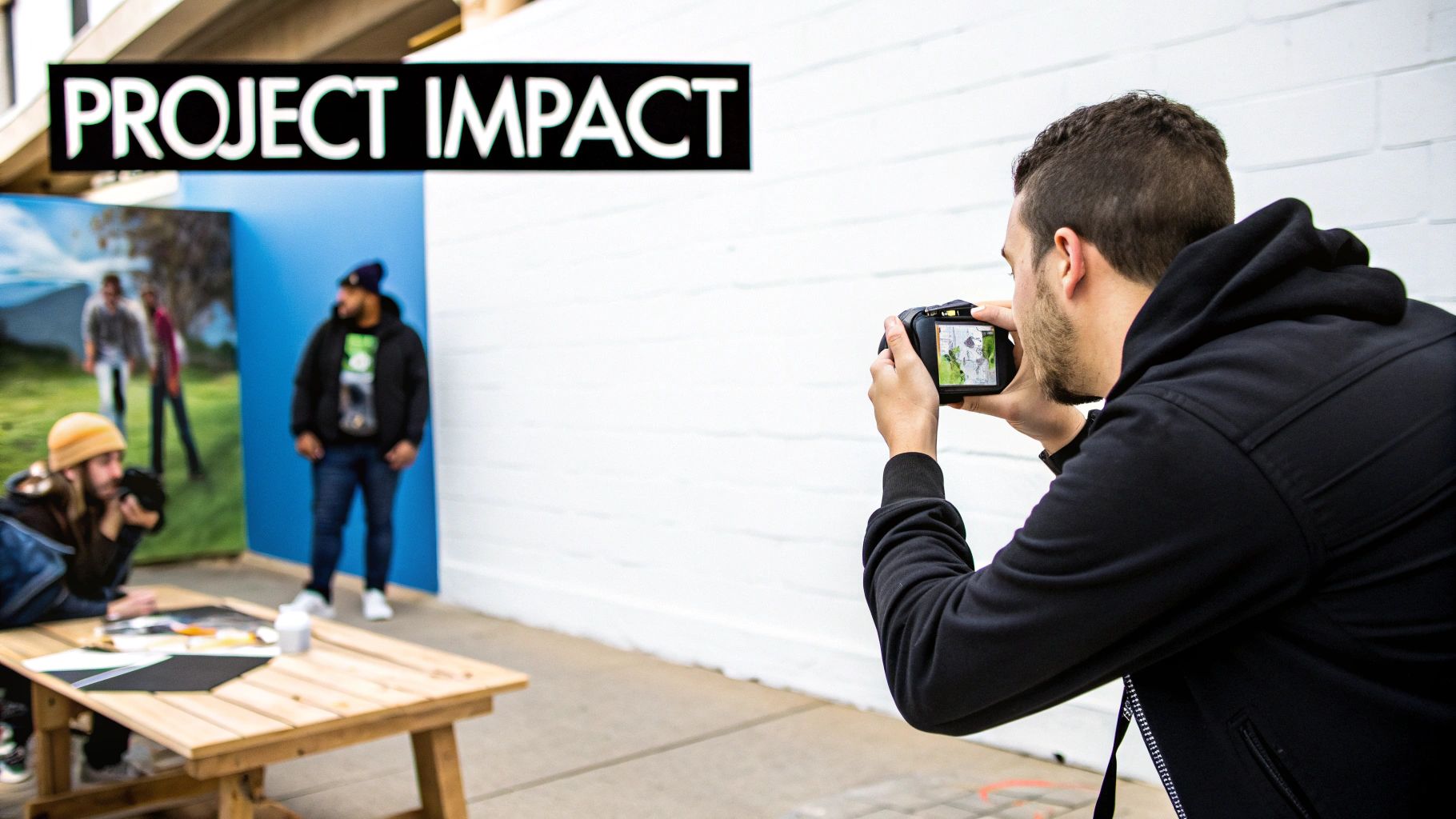
So, the paint is dry and the final piece is installed. It might feel like the end, but in many ways, your work is just beginning. The life of an art community project extends far beyond the creative process. How you document its journey and measure its impact is what truly cements its legacy and opens doors for what comes next.
Think of this documentation as the tangible proof of your project's value. It’s the story you'll tell to future funders, potential partners, and new community members, transforming a temporary event into an enduring narrative of collaboration and change.
Capturing the Journey and the Outcome
Don't make the mistake of treating documentation as an afterthought. You should be thinking about it from day one. This means capturing the project as it unfolds, from those initial messy brainstorming sessions and community workshops all the way to the final reveal. High-quality photos and videos are your best friends here.
To make sure you get everything, I always recommend a simple shot list. It keeps you focused on telling the complete story.
- Process Shots: Get in there and capture photos of people actively making art. These are often the most powerful images.
- Before-and-After Photos: Nothing shows a transformation quite like a good before-and-after. It’s a classic for a reason.
- Detail Shots: Zoom in on interesting textures, brush strokes, or specific elements that participants created.
- Community Interaction: My favorite shots are often the candid ones of people simply enjoying or interacting with the finished piece.
And don't forget the human element. Collecting testimonials from participants, volunteers, and local leaders adds a layer of social proof that visuals alone can't provide. A few short video clips or written quotes can be absolute gold for grant reports and future promotional materials.
Your documentation is more than an archive; it's a strategic asset. Each photograph, video, and testimonial is a piece of evidence that demonstrates the transformative power of public art, building a case for continued investment and support.
Weaving a Narrative for Future Success
Once you have all this wonderful content, it's time to craft a compelling story. Share it everywhere—on your website, across social media, and in direct updates to your stakeholders. Creating a dedicated project page or an online gallery gives your work a permanent digital home, much like understanding how to choose art for your home helps tell a personal story within a private space.
This documented legacy also has real-world economic implications. Art tourism is a real and growing sector, projected to expand from $54.7 billion to $86.5 billion by 2035. When you effectively showcase your project's success, you're adding to your community's cultural appeal and proving that local art can have a measurable impact.
Ultimately, by meticulously documenting and sharing your project’s story, you build a powerful portfolio. It's more than just a celebration of what you accomplished; it's a powerful argument for the essential role the arts play in building stronger, more connected communities.
Common Questions About Community Art Projects
Even the best-laid plans run into snags. That’s just the nature of bringing a group of people together for a creative endeavor. Learning to navigate those moments with grace is what really makes a community art project successful. Think of these common questions less as roadblocks and more as chances to build trust and flex your facilitation muscles.
Let's dive into some of the issues that pop up most often and how to handle them.
How Do I Handle Creative Differences with Community Participants?
This is a big one. When you have multiple creative minds in one space, disagreements are bound to happen. The key is to remember your role: you're less of a director and more of a guide.
The most important thing you can do is establish a shared vision before anyone picks up a paintbrush. Get everyone to agree on the core goals of the project. This document becomes your north star.
When a debate kicks off, gently bring the conversation back to those agreed-upon objectives. A really effective technique is to clarify which parts of the project are set in stone—say, the overall ocean theme or the primary color palette—and which parts are wide open for collaboration, like the specific sea creatures or wave patterns. By offering structured choices, you give participants a real sense of creative ownership while making sure the final piece still hangs together.
What Is the Best Way to Get Official Permission?
Securing permission for public art is all about preparation and professionalism. First, you have to figure out exactly who to ask. Is the wall owned by a private business? A city parks commission? The public works department? Do your homework.
Once you know who to talk to, you need to assemble a formal project proposal. This isn't optional; it's essential for being taken seriously.
- Detailed Concept Sketch: They need to see what you’re planning.
- Project Timeline: Lay out a clear schedule from the first prep day to the final clear coat.
- Itemized Budget: Be completely transparent about where every dollar is going.
- Proof of Insurance: Liability coverage is a must to protect everyone involved.
Get a meeting on the calendar and present your package. Be ready to answer questions about long-term maintenance, how durable your materials are, and how the project will benefit the neighborhood. I've found that building relationships with local officials or community leaders before you need something from them can make this process infinitely smoother.
Your ability to anticipate questions and present a professional, well-researched plan is often the deciding factor in gaining official approval. It demonstrates respect for the process and builds confidence in your project’s success.
How Can I Ensure My Project Is Sustainable?
Sustainability in community art is about more than just the environment; it’s about endurance. You're thinking about two things: the physical lifespan of the art and the lasting impact it has on the community.
For physical longevity, don't skimp on materials. Use professional-grade supplies that are right for your climate. That might mean an anti-graffiti coating for a mural in a high-traffic area or a marine-grade sealant for a sculpture near the coast.
For social sustainability, it all comes down to ownership. When residents feel like the art is theirs—because they helped dream it up, design it, and paint it—they become its fiercest protectors. They’re the ones who will celebrate it and look after it for years to come, long after your involvement has ended. That's the real legacy.
At Skyler’s Art, we believe that art is a powerful tool for connection and storytelling, whether on a public wall or in your own home. Explore our collection of original, nature-inspired paintings to find a piece that speaks to you. Discover your next favorite artwork at https://skylers-art.org.