Acrylic Paintings of Seascapes A Collector’s Guide

There’s something about a great seascape painting that pulls you in. Using the versatile and fast-drying medium of acrylic paint, artists capture the ocean’s dynamic beauty, bringing the serene yet powerful spirit of the coast right into our homes. These pieces are so much more than decoration; they serve as a deep, emotional connection to the sea and its ever-changing moods.
The Enduring Allure of Acrylic Seascapes
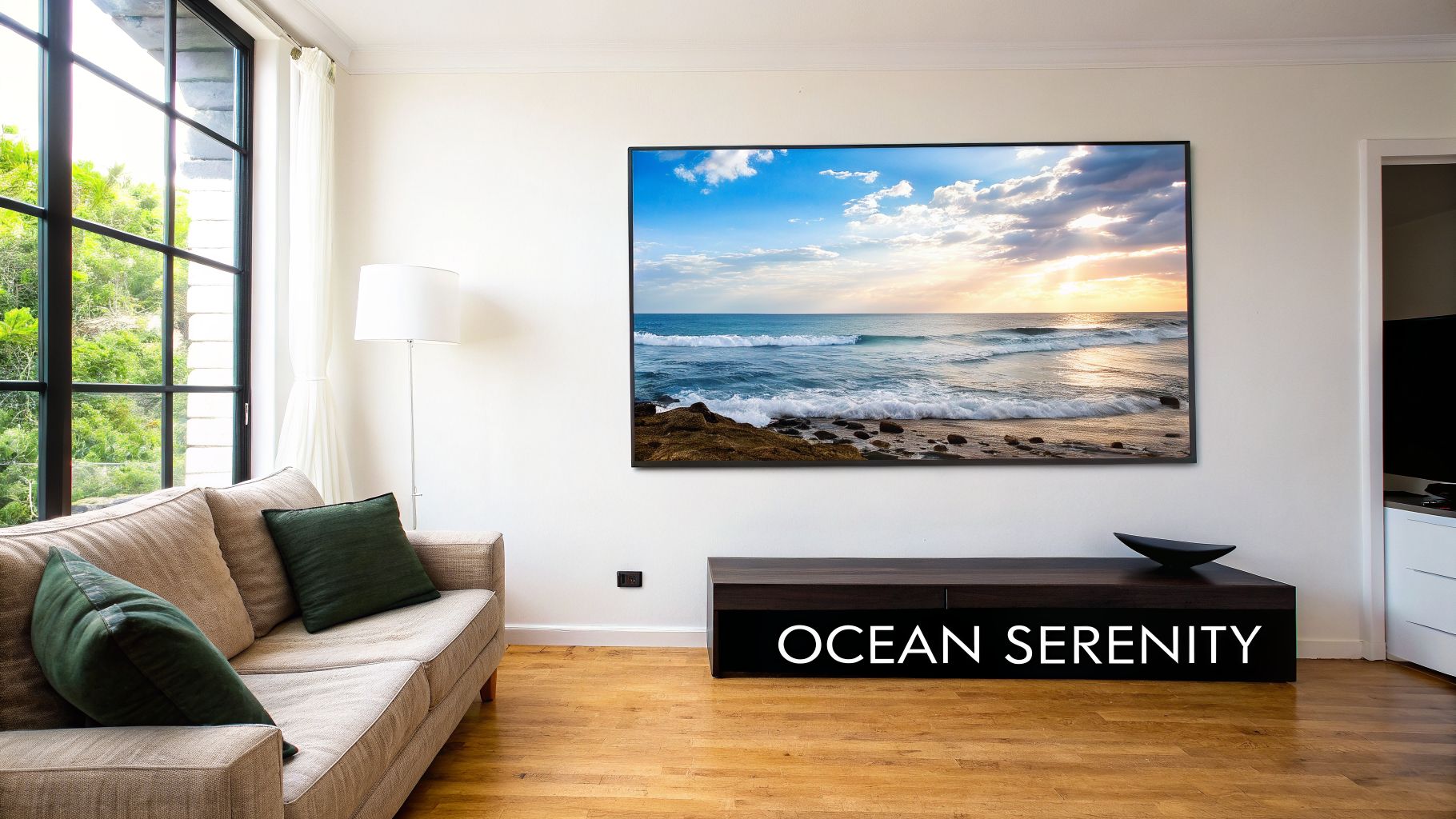
For centuries, artists have been drawn to the ocean, fascinated by its profound duality. It can be a place of immense, raw power one moment and a source of deep, meditative tranquility the next. An acrylic seascape beautifully translates this complex relationship onto the canvas, turning any room into a personal coastal sanctuary.
These artworks do more than just hang on a wall. They have a unique ability to transport you, evoking memories of salt-laced air and the rhythmic crash of waves. This restorative quality makes the seascape a timeless genre, loved by seasoned collectors and interior designers alike. A well-chosen piece can completely shift the atmosphere of a space, creating a focal point that’s both visually stunning and emotionally resonant.
Capturing Light and Emotion
The real magic of an acrylic seascape is its power to freeze a fleeting moment in time. Because acrylics dry so quickly, artists can build up layers of color and texture in a way that’s perfect for rendering the sea. You can almost feel the glassy surface of a calm morning or the thick, churning foam of a storm-tossed wave. It’s this layering that gives the finished work such a palpable sense of depth and movement.
Artists like Skyler’s Art masterfully use these properties, often weaving in impressionistic brushwork to tell a deeper story. Their work is a fantastic example of how technique serves emotion, focusing on:
- Emotional Resonance: Each painting is built around a personal narrative, designed to connect with the viewer on a more intimate level.
- Expressive Brushwork: You can see the energy in the bold, textured strokes that convey the raw motion of the water.
- Luminous Color: The color palette is never an accident. It’s carefully chosen to capture the specific quality of light—from the warm glow of a sunset to the cool, moody tones of twilight.
A seascape is more than a depiction of water; it is a painted feeling. It's the artist's interpretation of a memory, a mood, or a moment of reflection by the shore, shared with the viewer through color and form.
A Lasting Connection to the Coast
For so many of us, a seascape painting becomes a tangible connection to a place that holds personal meaning. It might remind you of a childhood beach, a remarkable vacation, or simply the powerful idea of freedom the ocean represents. You can explore how different pieces achieve this in our guide on selecting coastal wall art for a living room.
Ultimately, the enduring appeal of acrylic paintings of seascapes comes down to this universal, human bond with the sea. When you bring a piece of the coast indoors, you’re not just acquiring art. You are welcoming a daily reminder of nature’s immense beauty and its incredible power to inspire, calm, and restore the soul.
Why Acrylics Are Ideal for Seascape Art
If you've ever stood before a seascape painting and felt you could almost hear the waves crash, chances are you were looking at an acrylic. Artists have many paints to choose from, but when it comes to capturing the ocean's restless spirit, acrylics offer a unique set of tools that feel tailor-made for the job.
The secret is their incredibly fast-drying nature. Unlike oil paints that can take days or even weeks to fully cure, acrylics can be dry to the touch in minutes. This isn't just a matter of convenience; it’s a creative game-changer. It allows an artist to work with momentum, building up layers of color and texture in a single session to create a truly dynamic scene.
You can think of it like the tide itself. Just as each wave washes over the shore, leaving behind a new layer of sand, foam, and water, an artist can apply successive layers of acrylic paint. A thin, glassy wash can become the calm surface of a tidal pool, while thick, expressive strokes build the frothy, chaotic crest of a breaking wave.
The Power of Layering and Texture
This ability to layer quickly is what allows artists to convey the ocean's immense depth and complexity. An artist might begin with a dark blue underpainting to map out the deepest shadows, then add progressively lighter, translucent glazes to show sunlight piercing the water's surface. It's this technique that breathes life and movement into the painting.
The benefits of working in layers are immense:
- Building Depth: Applying thin, transparent washes (called glazes) over solid colors creates a luminous glow, perfectly mimicking how light filters through water.
- Creating Texture: Artists can use a palette knife or heavy brushwork to apply thick paint—a technique known as impasto—to sculpt three-dimensional waves and rocky cliffs that physically catch the light.
- Making Quick Corrections: If a layer doesn't look right, there's no need to panic. The artist can simply wait a few minutes for it to dry and paint right over it, which encourages fearless experimentation.
For any aspiring artist, mastering these basics is the first step. If you're curious to try it yourself, our guide on how to start painting with acrylics is the perfect place to begin.
Unmatched Vibrancy and Lasting Durability
Beyond their workability, acrylics are prized for their brilliant color and incredible permanence. The pigments are held in a polymer emulsion that dries into a tough, water-resistant film. This means the colors stay bright and true, resisting the fading or shifting that can plague other types of paint.
The chemical stability of acrylic paint ensures that the brilliant blues of a sunlit sea and the warm golds of a coastal sunset won't yellow or darken over time. This makes an acrylic seascape a lasting investment in beauty.
This durability is a huge plus for collectors. An acrylic painting is far less sensitive to changes in humidity and temperature, making it a robust, low-maintenance piece for any art collection. Its resilience guarantees that the artwork's visual power and emotional pull will last for generations.
The art world has certainly taken notice. The global market for acrylic art paint, valued at USD 1.29 billion in 2026, is expected to climb to USD 1.81 billion by 2032. This growth is fueled by the very qualities that make acrylics perfect for seascapes; in fact, 47% of professional artists prefer newer formulas specifically for their superior sheen and water resistance—ideal for creating luminous waves. You can see more details in the acrylic paint market report on researchandmarkets.com.
Ultimately, acrylics give the seascape painter the perfect toolkit. They offer the speed to capture a fleeting moment of light on water, the texture to convey the ocean's raw power, and the color fidelity to ensure that beauty remains timeless.
Exploring Styles and Techniques in Seascape Painting
When you begin looking at acrylic paintings of seascapes, you'll quickly realize that no two artists see the ocean in the same way. Understanding their different approaches is like learning the language of the coast; it deepens your appreciation and helps you pinpoint what truly speaks to you.
An artist’s chosen style isn't just a technical decision—it’s the very soul of the painting. It’s what determines whether you’re swept up in the raw, elemental power of a storm, basking in the fleeting warmth of a sunset, or examining the hyper-realistic shimmer of light on wet sand. Let's look at the three main styles you'll come across.
Comparing Styles of Acrylic Seascape Paintings
Every style offers a distinct emotional journey and a unique interpretation of the sea. While some artists dedicate themselves to a single approach, many, including myself at Skyler's Art, often blend elements to create something deeply personal. This table breaks down the core differences.
| Style | Core Characteristic | Dominant Feeling | Common Techniques |
|---|---|---|---|
| Impressionism | Captures the fleeting effects of light and atmosphere. | Nostalgic, dreamy, sensory, and immediate. | Visible brushstrokes, emphasis on light, soft edges. |
| Realism | Aims for a highly detailed, true-to-life depiction. | Awe, contemplation, and a sense of presence. | Smooth blending, meticulous detail, precise rendering. |
| Abstract | Deconstructs the sea into color, form, and emotion. | Evocative, energetic, or meditative, depending on the artist. | Bold color fields, gestural marks, non-representational forms. |
As you can see, the style is the bridge between the artist’s vision and your own experience. It’s the framework that tells the story.
An artwork's style is the bridge between the artist’s vision and the viewer’s emotional response. Whether through the soft focus of Impressionism or the sharp clarity of Realism, the style dictates how the story of the sea is told.
Common Techniques That Bring the Ocean to Life
Styles provide the overall vision, but specific painting techniques are the tools artists use to execute that vision. For an acrylic painter, the medium's fast-drying nature is a huge advantage, opening the door to a variety of expressive methods.
This is where the unique properties of acrylics truly shine.
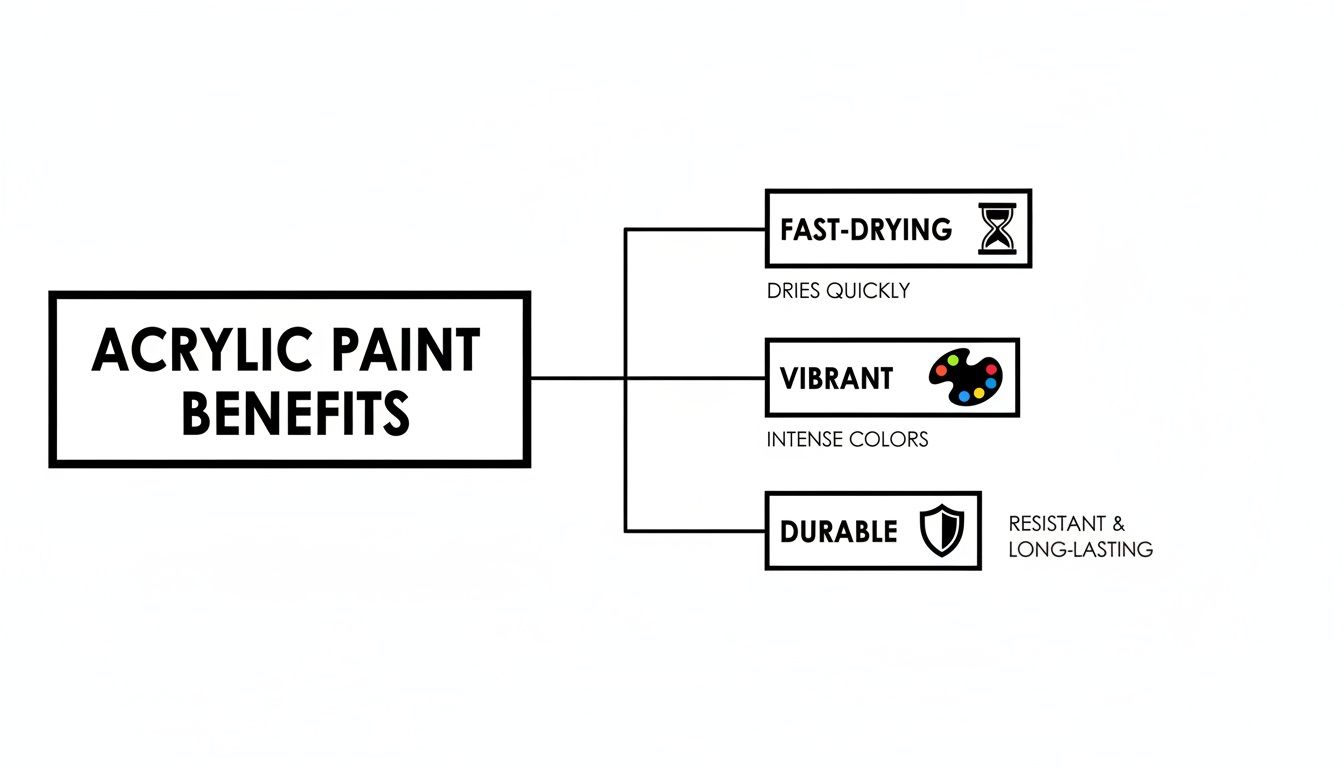
The ability to work quickly, layer colors without them turning muddy, and build durable texture gives artists incredible freedom.
Here are a few key techniques you can learn to spot:
Wet-on-Wet Blending: This is exactly what it sounds like—applying wet paint onto another layer that is still wet. It’s the secret behind those soft, hazy skies and the seamless gradients in calm waters, creating an effect that feels beautifully organic.
Impasto: When you see a painting where the paint itself rises off the canvas in thick, sculptural forms, you're looking at impasto. Artists use a palette knife or heavy brushstrokes to build up the crest of a wave or the rough texture of a cliffside, adding a tactile, three-dimensional quality that plays with light and shadow.
Glazing: This is a more patient, deliberate technique. It involves applying thin, translucent layers of color over a dry section of the painting. Each glaze subtly alters the hue and adds a luminous depth, perfect for capturing sunlight filtering through water or the rich, deep blues of the open ocean. Capturing that light is a fundamental skill, which I explore in my guide on how to paint water reflections.
Once you start recognizing these styles and techniques, you transform from a passive viewer into an engaged observer. You're no longer just seeing a pretty picture of the ocean; you're appreciating the craft, the intention, and the incredible skill that brought that vision to life.
How to Choose Your Perfect Seascape Painting
Choosing a piece of art is a deeply personal experience. When you decide on an acrylic seascape, you’re not just buying a decoration—you’re bringing a window into your home, one that looks out onto a world of emotion, memory, and masterful technique.
To find the right piece, it helps to move beyond a simple first impression. Learning to see the painting with a more discerning eye will give you the confidence to select a work that you'll treasure for years to come.
A truly great seascape does more than just show you the ocean. It guides your eye, creates a mood, and connects with you on a personal level. The first thing to notice is the composition—the way the artist has arranged everything in the scene.
Pay attention to how your eye naturally moves across the canvas. Does a leading line, like the gentle curve of a shoreline, pull you toward the horizon? Is there a clear focal point, perhaps a dramatic crashing wave or a lone sea stack, that anchors the entire image? A strong composition feels balanced and intentional, creating a sense of harmony even within a chaotic, stormy scene.
Understanding Emotional and Technical Elements
Once you have a feel for the structure, let your attention turn to the colors. Color harmony is absolutely vital in setting the painting's mood. A palette dominated by cool blues and muted grays can evoke a sense of quiet contemplation, while a canvas bursting with the warm oranges and pinks of sunset feels vibrant and full of joy. Think about the atmosphere you want to cultivate in your own space and look for art that strikes the same emotional chord.
Next, get a closer look at the brushwork. The way an artist applies paint is their signature, a direct channel for conveying energy and feeling. Are the strokes broad and expressive, creating a sense of raw power and movement? Or are they smooth and carefully blended, giving the piece a tranquil, almost photographic finish? This texture is a key part of the artist's voice.
The growing appreciation for such personal works is clear in market trends. In fact, the US non-commercial acrylic paints market is projected to hit USD 290.3 million by 2027, signaling a healthy and growing environment for collectors. You can see more data on the strong growth of the acrylics market for yourself.
But in the end, the most important factor is emotional resonance. A technically perfect painting might leave you cold, whereas a looser, more impressionistic piece could speak directly to your soul.
Art should be a conversation. The most meaningful piece is not always the most technically flawless, but the one that tells a story you want to hear again and again. It should evoke a memory, a feeling, or a dream.
Connecting with the Artist and Buying Online
To deepen that connection, it's worth looking beyond the canvas to the artist's own story. An artist statement or biography offers invaluable context, revealing the inspiration and intent behind the work. Knowing that story enriches your appreciation and transforms the painting from a beautiful object into a piece of a larger human journey. For a direct link to art with a story, you can explore the collection of original acrylic paintings for sale at Skyler's Art.
When you're ready to purchase acrylic paintings of seascapes online, a few practical steps can ensure you buy with confidence.
- Review High-Resolution Photos: Always zoom in on the details. Look for crystal-clear images that showcase the painting's texture, brushstrokes, and true colors from several angles.
- Understand Return Policies: A reputable artist or gallery will always have a clear and fair return policy. This gives you peace of mind, allowing you to see the work in your own space before fully committing.
- Read the Narrative: Take a moment to read the artwork's description and the artist's statement. This is often where you find the soul of the piece.
By combining this thoughtful analysis with your own gut feeling, you can move from simply browsing to consciously selecting. You’ll find a seascape that not only complements your home but truly enriches your life.
Displaying and Caring for Your Acrylic Artwork

Bringing a piece of art into your home is the start of a wonderful relationship. To make sure your acrylic seascape remains a captivating focal point for a lifetime, a little thought into its display and care goes a long way. The good news? Acrylics are known for their resilience, so protecting your investment is refreshingly straightforward.
Framing is your first decision, and it’s about more than just aesthetics. A well-chosen frame serves a dual purpose: it protects the painting’s vulnerable edges from bumps and scrapes while also completing the visual statement. Think of it as the final flourish that draws the eye inward, truly elevating the artwork's presence.
Choosing the Right Frame and Placement
Selecting a frame is a creative act in itself. The style you choose can dramatically shift the mood of the painting, so it's worth finding a perfect match for both the art and your home’s decor.
- Floater Frames: A hugely popular choice for modern canvas art, and for good reason. The canvas appears to "float" within the frame, leaving a small gap that creates a sophisticated, three-dimensional effect. This style beautifully highlights the texture and depth of the painting itself.
- Traditional Frames: Classic wood frames, whether simple or ornate, can add a timeless, grounding quality. A warm-toned wood might echo the glow of a sunset scene, while a distressed white frame can perfectly complement a rustic, coastal vibe.
- No Frame at All: Many contemporary acrylic paintings of seascapes are created on gallery-wrapped canvases, with the image continuing around the sides. This allows for a clean, minimalist presentation that needs no frame to feel complete. For tips on hanging larger works, our guide on how to hang large canvas art is a great resource.
The art world certainly recognizes the importance of good framing. The market for acrylic painting frames—a key element in displaying seascapes—was valued at USD 256 million in 2025. This figure highlights the value collectors place on proper presentation and protection, a trend also reflected in the growing global acrylic paints market.
Proper lighting is the final touch that brings an acrylic seascape to life. It should illuminate the colors and textures without causing harm.
Lighting and Long-Term Care
With your piece framed and hung, lighting becomes your next most important tool. Your goal is simple: showcase the artist's work without introducing elements that could cause damage over time. The biggest culprit is direct sunlight. While acrylics are quite stable, years of constant UV exposure can eventually cause even the most lightfast pigments to fade.
It’s far better to rely on diffused natural light or dedicated art lighting. LED bulbs are an outstanding choice because they emit very little heat and almost no UV radiation. For a professional touch, aim spotlights at a 30-degree angle to the canvas; this minimizes glare and beautifully accentuates the texture of every brushstroke.
Because acrylic paint cures to a durable, water-resistant film, day-to-day care is remarkably simple.
- Regular Dusting: Your main task is just keeping dust at bay. A gentle sweep with a soft, clean, dry brush or a feather duster is all it takes.
- Avoid Cleaners: Never, ever use chemical cleaners, solvents, or even water on the painted surface. These can easily damage the paint or the protective varnish layer.
- Handle with Care: When you need to move the painting, always hold it by the sturdy frame or the wooden stretcher bars on the back. Try to avoid touching the front, as oils from your skin can leave a residue.
By following these simple guidelines, you can ensure your acrylic seascape will remain a source of inspiration and beauty, preserving its visual power for you and your family to enjoy for generations.
Answering Your Questions About Seascape Art
As you begin to explore the world of acrylic paintings of seascapes, you're bound to have a few questions. It's only natural. Here, I'll walk you through some of the most common inquiries I hear from collectors and enthusiasts, giving you the clarity you need to move forward with confidence.
Are Acrylic Seascape Paintings a Good Investment?
This is a question I get all the time, and the answer is yes, they absolutely can be. The financial value of an original acrylic seascape is tied to a few key things: the artist's career trajectory, the technical skill on display, and—perhaps most importantly—the painting's ability to connect with people on an emotional level.
Because acrylics are known for their exceptional durability and color permanence, a well-made painting is built to last for generations, holding its value beautifully over time. If you're thinking in terms of investment, my best advice is to look for artists with a distinct style and a growing following. It's a strong signal that their work is not only resonating today but is likely to become even more sought-after.
An original painting is so much more than an asset. It is a singular creation, a moment in time captured through the artist's own hands. While prints make art accessible, an original acrylic offers a depth, texture, and connection that can't be replicated—it’s the value of owning a piece of the artist's story.
How Do I Know if a Seascape Will Fit My Decor?
Finding the right piece is all about balancing your room’s existing color palette with the atmosphere you want to create. Think about the feeling you're aiming for. A painting of a dramatic, stormy sea can bring a powerful energy to a minimalist room, while a tranquil, sun-drenched beach can lend a sense of calm to a busy family space.
A fantastic tool many artists and galleries now offer is a digital "view in room" feature. You can simply upload a photo of your wall and see how the artwork looks in your home before making a decision. It’s an incredibly helpful way to visualize the final result.
What Is the Process for Commissioning a Custom Seascape?
Commissioning a piece is a truly special experience that results in an artwork made just for you. Most artists are open to commissions and enjoy the collaborative process. It generally unfolds in a few steps:
- Initial Consultation: This is where you and the artist have a conversation. You'll discuss your vision, including the ideal size, color preferences, and perhaps a specific location you have in mind, like a favorite childhood beach.
- Proposal and Agreement: Based on your discussion, the artist will provide a quote and a projected timeline for the work.
- Creation Process: The artist gets to work, often sharing progress photos with you along the way to ensure the piece is aligning with your vision.
The end result of this journey is a work of art that is uniquely yours, born from a shared creative process.
At Skyler’s Art, the door is always open for commissions to turn your personal connection to the sea into a beautiful, tangible painting. Feel free to explore the gallery of available works or start a conversation about a custom piece on the website.