Your Guide to Buying Original Acrylic Paintings for Sale

When you begin looking for original acrylic paintings for sale, you're doing more than just shopping for décor. You're investing in a one-of-a-kind story, a piece of an artist's soul captured in color and texture. An original work of art creates an authentic connection to a creator’s vision, transforming a room from simply furnished into a space that is deeply personal.
Why Invest in Original Acrylic Paintings

Choosing to buy original art is a powerful decision. It adds a layer of soul and individuality to your environment that a mass-produced print can never truly match. Every single brushstroke is a permanent record of the artist's hand at work, a testament to their creative journey. This authenticity is precisely what elevates a painting from a mere image into a treasured possession.
For collectors, both new and seasoned, acrylic paintings are an especially compelling choice. As a modern medium, acrylic is celebrated for its incredible versatility. It allows artists like Skyler to build up rich, opaque layers reminiscent of oil paints or, conversely, create the delicate, translucent washes of watercolor. The result is artwork that feels dynamic, vibrant, and full of life.
The Lasting Value of Acrylics
From a practical standpoint, one of the biggest advantages of acrylic paint is its durability. Unlike some other mediums, acrylics are renowned for their permanence and ability to resist the effects of aging. They are lightfast, meaning their brilliant colors won’t fade over time when cared for properly. The paint's flexible, water-resistant film also protects the artwork from environmental shifts, ensuring your investment retains its visual splendor for generations.
This combination of durability and artistic appeal has created a thriving market. The global demand for acrylics is a testament to this, with the market projected to reach $6,361.11 million by 2035. This growth is fueled by strong interest from professional artists and a mature collector base, making it a stable and promising area for art investment.
More Than Just an Asset
Beyond any financial or physical attributes, an original acrylic painting is a powerful form of self-expression. The art you choose to live with reflects your taste, your personality, and what moves you.
An original painting is a conversation starter, a focal point, and a daily source of inspiration. It has the unique ability to influence the mood of a room and evoke deep emotional responses.
This guide is designed to be your roadmap on this art-buying journey. We'll walk through everything from assessing quality and authenticity to understanding pricing and how to properly care for your new piece. By the end, you'll feel confident in finding an original acrylic painting that truly speaks to you. You can explore more about how art can express emotion in our dedicated article.
Understanding the Unique Qualities of Acrylic Art
To really connect with an original acrylic painting, it helps to understand what makes the medium itself so special. Acrylic paint is a true modern marvel, giving artists like Skyler an incredible spectrum of creative freedom. At its heart, the paint is made of pigment suspended in a synthetic polymer emulsion—basically, pure color held in a fast-drying, water-based binder.
Think of acrylics as the ultimate chameleon of the art world. An artist can thin them with water to mimic the soft, translucent washes of watercolor, creating luminous glazes and delicate layers. In the next moment, they can apply the paint straight from the tube, building up thick, sculptural textures that have all the weight and body of a traditional oil painting.
This sheer versatility is a huge reason why so many contemporary artists gravitate toward it when creating original acrylic paintings for sale.
The Practical Power of a Modern Medium
One of the biggest game-changers with acrylic paint is how quickly it dries. While oils can take days, weeks, or even months to fully cure, acrylics are often dry to the touch in just minutes or hours. This allows an artist to work with incredible speed, layering colors and building up a composition without long, forced breaks. For a painter like Skyler, this immediacy is perfect for capturing the fleeting energy of a crashing wave or the shifting light of a coastal sunset.
Once dry, acrylic paint transforms into a durable, flexible, and water-resistant film. This built-in resilience is fantastic news for anyone who owns one.
- Color Permanence: Professional-grade acrylics are remarkably lightfast. This means they are highly resistant to fading from light exposure, keeping the colors as brilliant as the day they were painted for decades to come.
- Physical Durability: The finished paint surface is much less prone to cracking or yellowing over time compared to older mediums, which helps preserve the painting's structural integrity.
- Ease of Care: Because the surface is water-resistant, you can gently wipe away dust with a soft, damp cloth. This makes maintaining the artwork far simpler than with more delicate pieces.
This unique blend of artistic flexibility and chemical stability makes acrylics a brilliant choice for creating lasting works of art. The painting you invest in today is engineered to retain its beauty and vibrancy for a lifetime.
Comparing Acrylics with Other Popular Paint Mediums
To get a clearer picture of why an artist might choose acrylics, let’s see how they compare to other popular paints. Each medium has its own personality, which directly influences the look and feel of the final artwork. For those curious about the process, you can learn more about how to start painting with acrylics in our guide.
The following table breaks down the key differences.
Comparing Acrylics with Other Popular Paint Mediums
| Attribute | Acrylic Paint | Oil Paint | Watercolor Paint |
|---|---|---|---|
| Drying Time | Fast (minutes to hours) | Slow (days to months) | Fast (minutes) |
| Texture | Highly versatile; from thin washes to thick impasto | Rich, buttery, and blendable; excellent for texture | Thin, transparent layers; generally smooth surface |
| Color Shift | Can darken slightly as it dries | Color remains consistent when dry | Lightens as it dries |
| Durability | Very durable, flexible, and water-resistant once dry | Durable but can yellow or crack over many years | Delicate; susceptible to water damage |
| Cleanup | Simple; soap and water while wet | Requires solvents like turpentine or mineral spirits | Easy; just water |
This comparison really highlights why original acrylic paintings for sale are in such high demand. They offer a perfect balance of brilliant color, textural possibilities, and long-term stability that appeals to artists and collectors alike.
How to Assess Quality and Authenticity in Original Paintings
When you're searching for original acrylic paintings for sale, it's easy to get swept up in the immediate feeling a piece gives you. That emotional connection is vital, of course, but taking a moment to look deeper is what separates a casual purchase from a confident investment. Learning to recognize the hallmarks of quality and authenticity means you're not just buying a pretty picture; you're acquiring a well-crafted piece of original art.
Think of it like being a wine connoisseur for a day. You're not just tasting the wine—you're looking at its color, smelling its aroma, and understanding its origins to fully appreciate its value. The same principle applies here.
Examining the Physical Materials
The story of a great painting begins long before the first brushstroke. The quality of the materials an artist selects has a massive impact on both the artwork's immediate appearance and, just as importantly, its ability to stand the test of time.
First, take a look at the support structure. A professional artist will almost always use a high-quality, pre-stretched canvas or a sturdy, custom-built frame with solid stretcher bars. These are the wooden frames holding the canvas taut. The wood should be clean and straight, not warped or flimsy. Give the canvas a light tap—it should feel tight, like a drum, and be neatly stapled on the back, not the sides.
Next, get a feel for the paint itself. Professional-grade acrylics are loaded with pigment, which translates into rich, vibrant colors that look and feel substantial. Lower-quality craft paints, by contrast, can appear thin, chalky, or dull. When an artist chooses archival, lightfast paints, they are making a commitment to the permanence of their work, ensuring its colors will stay true for a century or more.
This flowchart helps visualize why so many professional artists land on acrylics for their durability and creative potential.
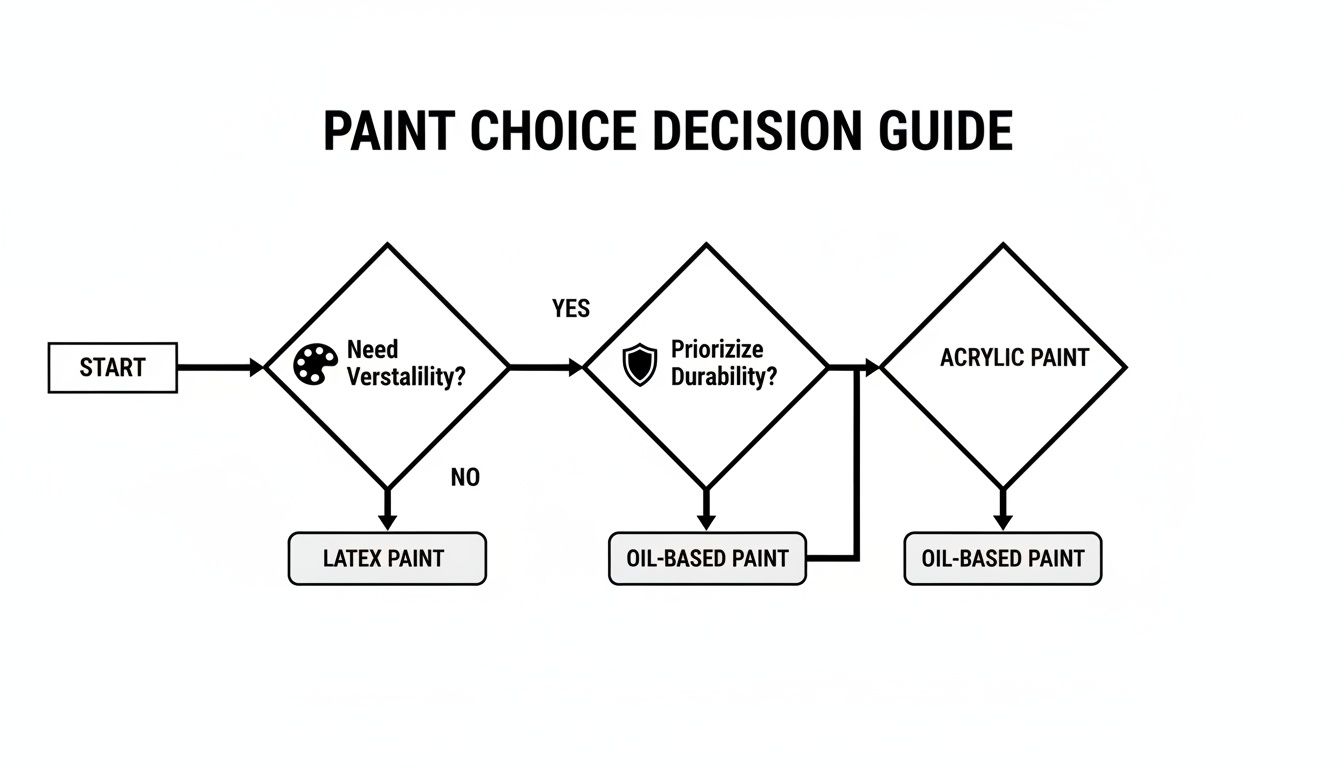
As you can see, when an artist needs a medium that offers both exceptional durability and versatility, professional acrylics are the clear choice for creating lasting original art.
Evaluating Artistic Technique and Composition
With the materials checked, it's time to focus on the artist's hand. An artist's technique is their unique signature, a visual language you can learn to read with a little practice.
Look for confident, intentional brushwork. Is there variation? Can you see bold, thick applications of paint next to delicate, fine lines? Artists like Skyler often employ a variety of methods to build visual interest and texture. This is especially clear in the way they layer colors, allowing hints of underlying hues to peek through, which gives the piece a wonderful sense of depth. To see more examples, take a look at our guide to textured acrylic painting techniques.
Composition is another tell-tale sign of skill. A well-composed painting feels balanced and naturally guides your eye through the work. It shouldn't feel cluttered or oddly empty. Notice where the main subject is placed and how other elements in the painting create pathways for your gaze. A skillful command of light and shadow is what creates that sense of three-dimensional realism, making the art feel truly alive.
A high-quality painting shows a mastery of the medium. The artist isn't fighting with the paint; they are working in harmony with it. The result is a piece that feels both technically accomplished and emotionally resonant.
Verifying Authenticity and Provenance
Authenticity is the crucial element that distinguishes an original work of art from a mass-produced print. It's your guarantee that you are buying a unique object that came directly from the artist's creative process. Here are a few key things to look for.
- The Signature: An artist's signature should be present, typically on the front corner or on the back. It should look like a natural part of the painting, not something added hastily later. Many artists also title, date, and sign the back of the canvas as well.
- Certificate of Authenticity (COA): Any reputable artist or gallery will provide a COA. This is a formal document that lists the painting’s title, dimensions, medium, and creation date, along with a statement from the artist certifying it as an original.
- Provenance: This is simply the artwork’s documented history of ownership. When you buy directly from an artist like Skyler, the provenance is clean and direct—it comes straight from the studio to you. This is the most powerful proof of authenticity you can get.
The growing demand for genuine artwork is reflected in the art materials market itself. The global market for fine art acrylic paints is projected to reach $1.2 billion, with a healthy growth rate of 6.5%. This trend shows that as more people embrace collecting, the value of premium original art from dedicated creators is on a steady rise—making this an excellent time to invest in a piece you love.
How to Determine Fair Value for Original Artwork
Trying to understand the price tag on a piece of original art can feel a bit like deciphering a secret code. But once you know what to look for, the factors that determine value are actually quite straightforward. When you understand what goes into the price of original acrylic paintings for sale, you can feel confident that you’re making a smart, fair investment. A painting’s price isn't just a random number; it's a careful calculation based on the artist’s career, the specifics of the artwork itself, and where it's being sold.
You can think of a painting's value as a story. Each element—the artist's background, the size of the canvas, the intricacy of the brushwork—is a new chapter, and together they create the final price.
The Artist's Journey and Reputation
One of the heaviest weights on the pricing scale is the artist's career path. This covers everything from their years of experience and exhibition history to their overall recognition in the art community.
- Emerging Artists: These are the creators just starting to make their mark. Their work is usually priced more accessibly, which presents a wonderful opportunity for new collectors to buy original art and support an artist’s journey from the very beginning.
- Mid-Career Artists: Artists like Skyler fall into this group. They’ve built a consistent portfolio, honed a signature style, and likely have a history of gallery shows or features in publications. Their pricing reflects this established track record and growing demand.
- Established Artists: These are the household names of the art world, with long lists of major exhibitions, prestigious awards, and representation by top-tier galleries. Their work commands the highest prices because of its proven critical and commercial success.
An artist’s reputation is, in a way, a guarantee of quality and commitment. When you buy from an artist with a solid career, you're investing in their skill, their dedication, and their future potential. In today's world, a professional online presence is a key sign of an artist's commitment. You can learn more by reading our insights on how artists can effectively use social media to build their careers.
Artwork Size and Complexity
Putting the artist's reputation aside, the physical nature of the painting itself is a major factor in its value. Size is the most obvious one. A larger canvas simply requires more paint, more time, and more studio space to create, which naturally translates to a higher price.
But complexity is just as critical. A small, hyper-detailed painting that took an artist weeks of focused work might be valued more highly than a much larger, minimalist piece. You have to consider the labor involved. Were there dozens of transparent layers applied? Was a complex, sculptural texture built up by hand? All those hours and that practiced skill are baked into the final cost.
The price isn't just for the object you hang on your wall. It reflects the countless hours of concentration, the cost of professional-grade materials, and the years of practice it took for the artist to bring their vision to life. It’s a valuation of both material and mastery.
Gallery Prices vs. Buying Direct
Where you buy your art also makes a big difference. Galleries are an essential part of the art world, but they have to cover their own costs—rent, staff, marketing—so they typically take a commission of up to 50% on every sale.
When you buy directly from an artist’s studio, like Skyler’s Art, you get to skip that gallery commission. This often means you can acquire the same piece for a better price, while also knowing that 100% of your money is going directly to the creator. This direct-to-collector model is becoming more and more common. The global art paint market, which includes acrylics, is set to grow from $1,160.71 million to $5,302.47 million by 2035. Professional artists in North America are responsible for 30-40% of that consumption, showing just how vital it is to support them at the source. You can explore more about the art paint market from Industry Research. Buying direct not only gives you better value but also adds a personal story and connection to your collecting experience.
Finding the Perfect Painting for Your Space

Choosing an original painting is far more than just filling an empty wall. It's a chance to breathe personality and emotion into your surroundings, to find that one piece that truly makes a house feel like a home. The right artwork can tie an entire room together or create a stunning focal point that reflects your personal style.
Think of it like casting the lead role in a play. The painting you choose needs the right presence to command the stage, so to speak, without overshadowing the rest of the decor. The first step is to get a handle on scale and proportion.
Matching Scale and Proportion to Your Room
One of the most common missteps I see is choosing a painting that's simply too small for its wall. An undersized piece gets lost, its potential impact completely diminished. On the flip side, a painting that's too large can easily overwhelm a room, making it feel crowded and off-balance. The trick is to strike that perfect, harmonious balance between the art and the space it inhabits.
A good rule of thumb is to select art that is roughly two-thirds to three-quarters the width of the furniture it hangs above, like a sofa or a headboard. This relationship creates a visual anchor that just feels right. If you're working with a large, blank wall, a single, bold statement piece often has a much more powerful and cohesive effect than a scattering of smaller ones.
To take the guesswork out of it, try this simple trick: once you find some original acrylic paintings for sale you like, note their dimensions. Use painter's tape to outline that exact shape on your wall. Live with that "footprint" for a day or two. It’s a fantastic way to visualize how the scale of the piece will actually feel in your room before you make the commitment.
Working with Color and Style
With the right size in mind, you can turn your attention to the fun part: how the painting’s color and style will play with your existing decor. When it comes to color, you can go one of two ways.
- Harmony: Look for a painting that picks up on colors already in the room—the shade of your throw pillows, a thread in your rug, or the pattern on your curtains. This approach creates a wonderfully cohesive and unified look, tying everything together.
- Contrast: For a more dynamic feel, choose a piece with a bold, contrasting color that pops. A vibrant painting in an otherwise neutral room injects immediate energy and personality, making a confident statement.
A painting should not be treated as a simple accessory that must perfectly match everything. Instead, view it as a piece that can either complement the room's existing conversation or start an entirely new one.
The artistic style is just as crucial. The expressive, impressionistic energy found in Skyler’s Art, for example, is remarkably versatile. These works can bring an organic warmth to a sleek, modern interior just as easily as they can enhance the relaxed vibe of a coastal-themed room. The key is to find a style that aligns with the mood you want to create. For a deeper dive, take a look at our article on how to choose art for your home.
Ultimately, buying art is a deeply personal journey. While these guidelines offer a solid framework, the most important factor is always your own connection to the work. A painting you truly love will always find its perfect place, bringing you joy every time you pass it.
5. Caring for Your Original Acrylic Investment
Bringing an original acrylic painting into your home is like starting a new relationship. To make it last a lifetime—and beyond—it needs a little care. The good news is that acrylics are remarkably durable, so protecting your investment is thankfully straightforward.
The single most important decision you'll make for your painting's longevity is where you hang it. The ideal spot is one with stable temperature and humidity, well away from the daily onslaught of direct sunlight. Think of the sun's UV rays as the arch-nemesis of color; over time, they can bleach even the highest-quality professional pigments.
With that in mind, avoid walls that get blasted with intense sun for hours each day. You'll also want to steer clear of places with dramatic temperature or moisture swings, like directly over a radiator, in the line of fire of an AC vent, or in a steamy bathroom. A stable environment is a safe environment.
Best Practices for Display and Cleaning
Once you’ve found that perfect, safe spot, a few simple habits will keep your painting looking as fresh as the day it was created. This is all about gentle, preventative maintenance—which is always easier than trying to fix a problem later.
Framing isn't just about aesthetics; it’s the painting's first line of defense.
- Professional Framing: Always go for professional framing that uses archival, acid-free materials. This is crucial to prevent chemicals in the mat or backing from slowly damaging the canvas.
- UV-Protective Glazing: For the ultimate protection, ask for museum-grade glass or acrylic glazing. This can filter out up to 99% of harmful UV rays, acting as a powerful sunscreen for your art.
- Allow for Airflow: A good framer will ensure there's a slight gap between the art and the glass, which prevents any moisture from getting trapped against the paint.
Proper framing acts like a personal conservation unit for your artwork. It shields the piece from physical harm, dust, and the most damaging environmental factors, fundamentally extending its life and preserving its value.
When it comes to cleaning, less is definitely more. For a light dusting, all you need is a soft, dry brush. A brand-new sable watercolor brush works perfectly to gently whisk away any settled dust. Never, ever reach for chemical cleaners, solvents, or household sprays, as they can cause irreversible damage to the paint surface.
If you notice a bit of grime that a dry brush won't handle, you can lightly dampen a soft, lint-free cloth with a little distilled water. Gently dab the spot—don’t scrub or apply pressure. For anything more serious, like a stain or physical damage, your next call should be to a professional art conservator. Resist the temptation to fix it yourself. These simple steps will ensure your new artwork remains a source of beauty and joy for years to come.
Common Questions About Buying Original Art
Diving into the art market for the first time can feel a little intimidating, and it's natural to have questions before you make a significant purchase. Getting clear on a few key points will help you feel confident and excited about your decision. Think of this as your final checklist before starting your collecting journey.
Let's walk through some of the most common queries I hear from new collectors. Answering these will help you invest wisely—with both your heart and your head.
What Is the Difference Between an Original Painting and a Print?
This is probably the most important distinction to understand. An original painting is the one-and-only piece created by the artist's hand. Every single brushstroke, the texture of the paint on the canvas, and the subtle shifts in color are unique to that specific artwork. It’s a direct artifact of the artist's creative process.
A print, on the other hand, is a reproduction. Even a high-quality, limited-edition giclée is still a copy of that original work. While prints are a fantastic and affordable way to bring an image you love into your home, they don't have the texture, depth, or inherent value of the original. When you own the original, you own the source.
An original painting isn’t just an image; it’s a physical object that captures a moment of creation. Its uniqueness is the very foundation of its artistic and financial value, offering a tangible connection to the artist that a reproduction simply can't match.
How Can I Be Sure an Acrylic Painting Will Last?
That's a smart question. You're not just buying a decoration; you're investing in a piece that should endure. The good news is that professional-grade acrylic paints are engineered for longevity. They are famously lightfast, a term we use to describe their resistance to fading from light exposure.
Once the paint dries, it forms a stable, flexible, and water-resistant surface. When an artist uses a high-quality archival canvas and you take basic care of the piece—like keeping it out of direct sunlight and away from extreme humidity—a modern acrylic painting can easily maintain its vibrancy for over 100 years. It truly is a lasting investment.
Is It Better to Buy from a Gallery or an Artist?
There are pros and cons to both, but I find that buying directly from an artist offers a uniquely rewarding experience. It creates a personal connection to the work that you just don't get through a third party. You have the chance to hear the story behind the piece, to understand the inspiration, and to connect with the person who brought it to life.
Beyond that, there's a practical benefit. When you buy from an artist's studio, your entire purchase supports them directly. Galleries typically take a 50% commission, so buying direct ensures the artist you admire receives the full value of their work. It makes the entire experience more meaningful and impactful.
At Skyler’s Art, every painting is an invitation to connect with a story. Explore the collection of original acrylic paintings and find a piece that speaks to you.