Social media for artists: Grow your reach with proven strategies
For artists today, social media is so much more than a digital portfolio. Think of it as a living, breathing extension of your studio—a place where you don't just display finished work, but where you can share your process, build real connections, and ultimately, grow a sustainable art business. It’s about telling the story behind your art, creating a community, and inviting people into your creative world.
Your Digital Studio, Not Just a Gallery Wall
Let's shift our perspective. Social media isn't just a digital wall where you hang your finished paintings. It’s an interactive, open-studio event that’s accessible to a global audience, 24/7.
For an artist like Skyler, whose ocean-themed work is so deeply tied to personal identity, this is a huge opportunity. It’s a chance to translate that tactile, emotional art into an online presence that feels just as authentic and powerful. This guide isn't about generic tips; it's a strategic roadmap for building that exact kind of presence.
A strong, effective strategy is built on a few core ideas that all work together. When these pieces click, you create a presence that is both creatively satisfying and commercially smart.
The Foundation of a Powerful Social Media Presence
- Choosing Your Platforms Wisely: Where you invest your time and energy is critical. We'll focus on the platforms that are truly built for visual art and can connect you with the right audience.
- Building an Authentic Brand: Your online presence should be a direct reflection of your unique artistic voice. This goes beyond just a pretty feed; it’s about sharing the why behind your work. For a deeper dive, check out our guide on how to develop your art style.
- Creating Content That Connects: Forget the traditional gallery model. Here, you’ll share your process, your inspirations, and the stories that make your art uniquely yours.
- Engaging Your Community: This isn't about chasing likes. It’s about building genuine relationships. An engaged community will become your most passionate advocate and your most loyal collector base.
Consider this: projections show that over 5.42 billion people will be on social media by 2025. It's an unprecedented opportunity to connect directly with collectors, designers, and fellow art lovers. A platform like Instagram alone has 2 billion monthly active users, making it an essential hub for visual artists. You can find more social media trend data on Sprout Social.
This guide is about turning that massive potential into a real, sustainable career.
2. Choose Your Digital Canvases
The sheer number of social media platforms can feel paralyzing. It’s a common trap for artists to think they need to be everywhere at once, but that just leads to burnout. The real strategy isn’t about being everywhere; it’s about being in the right places—the one or two platforms where your ideal audience actually gathers.
Think of it this way: your goal is a strong, strategic presence, not just scattered, exhaustive coverage. For an artist like Skyler, whose work is so textural and emotionally charged, the platform itself needs to act as a proper gallery. It must honor high-quality visuals. This is more than just posting a picture; it's about selecting a digital canvas that does justice to the depth and story behind every piece.
This decision tree can help you frame your thinking. Are you simply building a static portfolio, or are you creating an interactive, living studio?
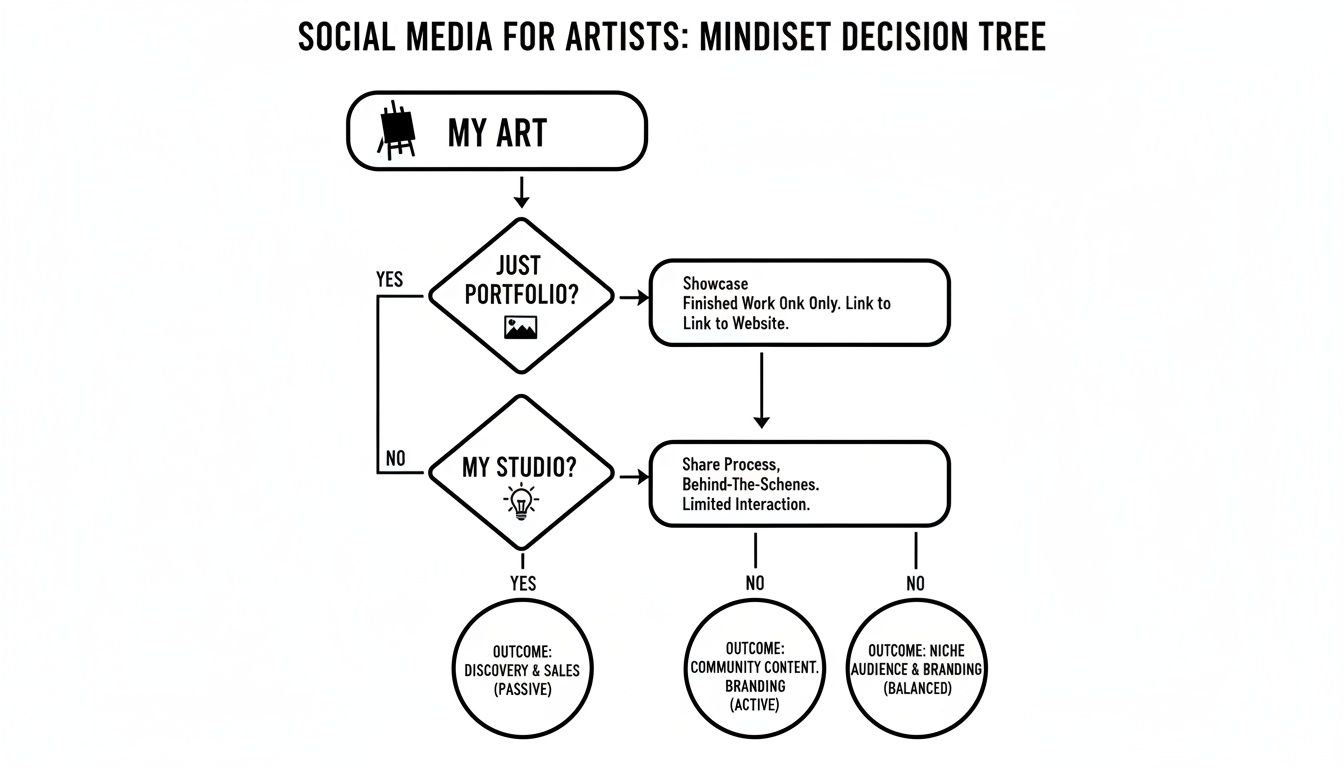
As you can see, a studio-focused mindset naturally leads to more dynamic content. That's what builds a true community and, ultimately, drives sales. Let's look at the best options for visual artists today.
A Closer Look at the Top Platforms
When it comes to showcasing visual art, a few platforms stand out. Each has a distinct culture and purpose, so understanding their nuances is key to making the right choice for your studio.
Platform Comparison for Visual Artists
| Platform | Best For | Primary Audience | Key Content Formats |
|---|---|---|---|
| Building a dedicated community and brand. | Millennials & Gen Z, art lovers, collectors, gallerists. | High-res images (Feed), behind-the-scenes (Stories), process videos (Reels). | |
| Driving long-term website traffic and sales. | Primarily women, interior designers, DIYers, inspiration-seekers. | Vertical pins of finished art, in-situ mockups, process shots. | |
| TikTok | Reaching new, massive audiences through discovery. | Gen Z & younger millennials, trend-followers, creative communities. | Short, engaging videos: time-lapses, satisfying process clips, art reveals. |
This table gives you a snapshot, but let's unpack what it means for your daily practice.
The Power Trio for Visual Artists
Instagram is still the reigning champion for most artists, and for good reason. It’s a complete toolkit. Your main feed acts as a polished portfolio, while Stories offer a raw, unfiltered look into your studio life. Then you have Reels, which are perfect for creating mesmerizing videos of your process—imagine a short clip of Skyler’s fluid acrylics swirling into an ocean wave. That motion captures attention in a way a static photo simply can't.
Next is Pinterest. It’s easy to misunderstand this platform. It’s less of a social network and more of a visual search engine where people are actively planning and looking to buy. This is huge. An interior designer might search for "large abstract ocean painting," and if you’ve played your cards right, your work is what they’ll find. By creating boards like "Coastal Home Decor" or "Modern Seascape Art," you position yourself as an expert and drive highly motivated traffic directly to your shop.
Finally, there’s TikTok. Don't be deterred by the dancing videos. A massive, thriving art community lives on this platform, and its algorithm is brilliant at pushing compelling content to brand-new audiences. The potential for discovery is immense. Short, satisfying videos—the sound of a brush on canvas, the peel of masking tape, the final varnish—can easily go viral and introduce your art to thousands of new fans overnight.
Remember, the platform is the medium, not the message. Choose the one that feels most authentic to you and your process. People connect with genuineness, not an artist chasing trends on a platform that feels forced.
Ultimately, your choice should circle back to your goals. Want to connect with interior designers? Double down on Pinterest. Looking to build a close-knit community of fans who follow your every brushstroke? Instagram is your best bet.
Understanding these differences helps you invest your time and energy where they'll deliver the best results, turning your social media from a chore into a thriving extension of your studio. You can see how Skyler’s finished pieces come together in a curated collection by exploring the works in Skyler's online gallery.
Crafting a Content Strategy That Tells Your Story
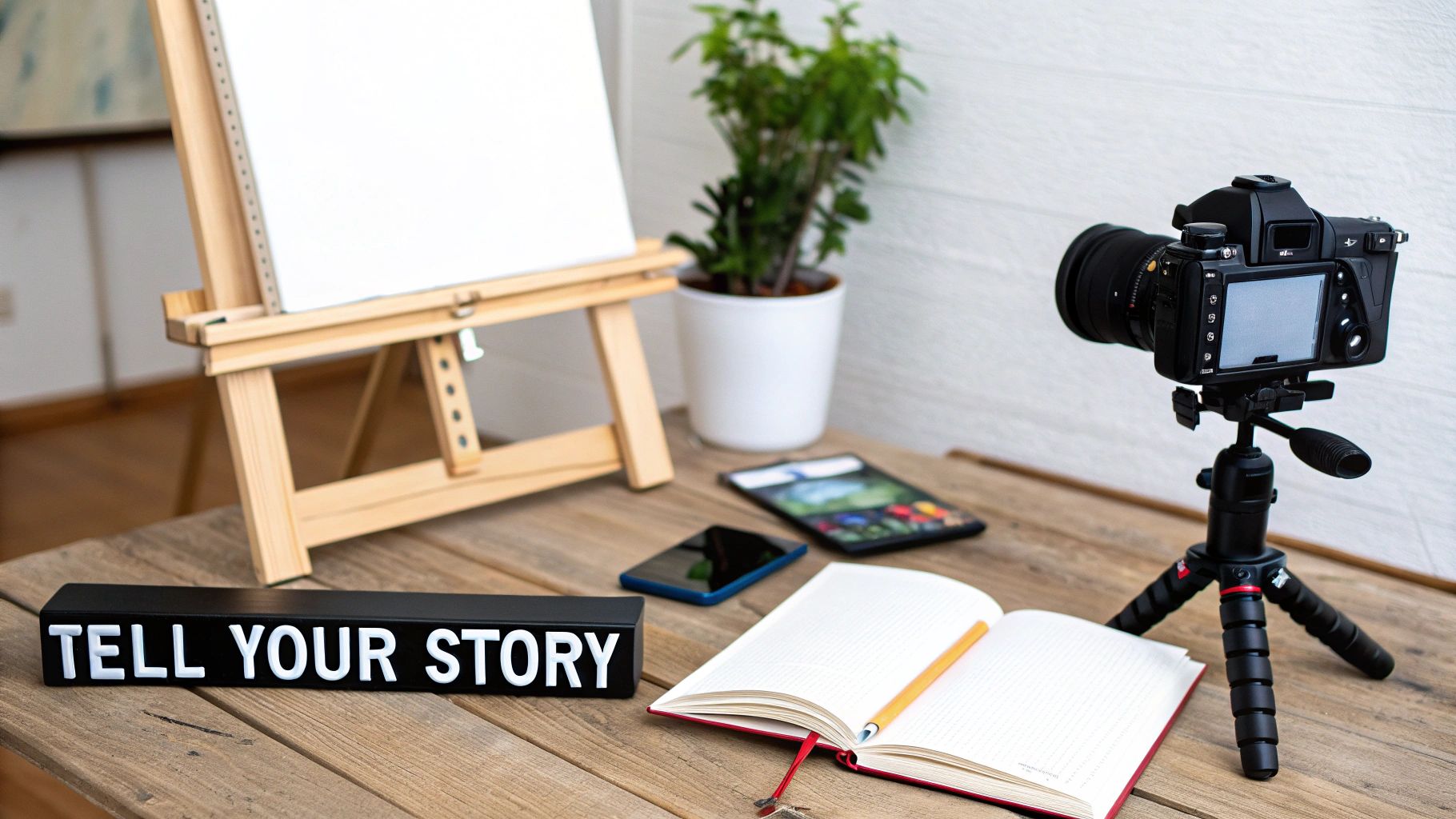
Your social media feed should be more than a simple online gallery of your finished work. If you want to build a real audience, you need a content strategy that pulls back the curtain and invites people into your world. Think of your profile as a living, breathing extension of your studio. This means moving beyond just posting your final art and starting to tell a complete story.
A great way to approach this is by building your content around a few core pillars. I like to think of it as three distinct but connected categories, with each one serving a unique purpose in telling your story and connecting with followers. This framework keeps your feed interesting and gives your audience a reason to stay invested in your journey as an artist.
The Three Pillars of Artist Content
A balanced content plan is what stops your feed from feeling repetitive. By rotating through these three pillars, you give people a complete picture of who you are as a creator, which is the absolute key to building a loyal community around your work.
The Studio Pillar: This is all about your process. Show people the messy, magical, behind-the-scenes moments that bring a piece to life. This kind of content is fascinating because it demystifies your creative process. You could share time-lapses of a painting taking shape, short videos of your hands at work, or even just a quick tour of your creative space. For an artist like Skyler, this could be a mesmerizing Reel showing acrylics mixing and flowing to create the perfect ocean wave.
The Gallery Pillar: Here's where your finished work gets its moment in the spotlight. This is your professional portfolio and the foundation of your sales pipeline, so presentation is everything. Post high-quality, beautifully lit photos and videos of your completed art. Don't just show the piece; tell its story. Include the dimensions, the medium, and the inspiration behind it. A great tip is to photograph your work in different settings to help potential buyers imagine it hanging on their own walls.
The Story Pillar: This pillar answers the question: why? At the end of the day, people connect with other people, not just with products. Use this content to share what inspires you, your artistic philosophy, and the life experiences that fuel your work. It's where you forge the strongest emotional bonds with your audience. For example, sharing a memory about how your grandmother taught you to paint with "heart and soul" makes your art—and you—far more relatable and memorable.
An artist with an engaged audience of 5,000 can often generate more sales than one with 50,000 passive followers. The difference is the connection you build by sharing your authentic story, not just your finished product.
Bringing Your Content to Life
Once you have these pillars in mind, planning a content calendar that feels diverse and compelling becomes much easier. The real magic happens when you start blending these elements together. For instance, you could post a "Studio" video on Monday showing an initial sketch, follow it with a "Story" post on Wednesday about what inspired the piece, and cap the week off with a "Gallery" post on Friday revealing the final painting.
This isn't just about filling up a schedule; it’s about building anticipation and taking your audience on a creative journey with you. You can learn more about how to create art that expresses emotion in our detailed guide. Remember to write captions that are rich with detail and aren't afraid to be a little vulnerable. Ask questions to get conversations started, and always respond to comments. That consistent, multi-faceted storytelling is what makes social media for artists so powerful, turning passive viewers into your most dedicated collectors.
Building a Community Around Your Art
The most powerful social media presences aren't about broadcasting; they're about starting a conversation. Your real goal is to turn passive scrollers into a genuine community of supporters who are invested in your work. This shift happens the moment you stop seeing your audience as just numbers and start treating them like partners in your artistic journey.
Every single post is a chance to spark that dialogue. Instead of simply dropping a photo of a finished piece into the void, pull your audience into the story behind it. You can do this by asking thoughtful questions in your captions that go far beyond a simple, "What do you think?"
For an artist like Skyler, this might look like asking, "Which of these three color palettes best captures the feeling of a calm sea for you?" Or perhaps something more personal, like, "This piece was inspired by a childhood memory of the Jersey Shore. What's a place that holds special meaning for you?" These kinds of open-ended questions create an easy entry point for connection, turning your comments section into a lively discussion.
Fostering Authentic Interactions
Responding to comments is where the real magic happens and relationships are forged. Go deeper than just a heart emoji or a quick "Thank you." When someone takes the time to share a personal story in response to your question, acknowledge it with a thoughtful reply. This simple act validates their contribution and proves there's a real person on the other side of the screen, building a sense of loyalty and mutual respect.
Instagram Stories are fantastic for these more authentic, off-the-cuff interactions. Their temporary nature lowers the pressure to be perfect and encourages more spontaneous, in-the-moment engagement.
- Live Q&A Sessions: Why not host a live Q&A from your studio while you're sketching or mixing paints? Answering questions in real-time makes your audience feel like they have a front-row seat to your creative process.
- Interactive Polls and Quizzes: Use the poll feature to let followers vote on the title of a new piece or guess which color you'll use next. It’s a small thing, but it gives them a meaningful stake in your work.
- Behind-the-Scenes Peeks: Share short videos of your workspace, the unboxing of new art supplies, or even the messy, frustrating parts of the process. This kind of vulnerability makes you far more relatable and human.
The real aim here is to make your audience feel like they're part of your journey, not just spectators looking in from the outside. This collaborative spirit builds a loyalty that drives not only sales but also powerful word-of-mouth referrals.
From Engagement to Advocacy
This consistent effort to build a community pays off, big time. Globally, 48% of consumers are interacting more with brands on social media now than they did just six months ago, and 90% use it to follow trends. Since Instagram's visual-first approach launched back in 2010, artists have gained an incredible platform to connect directly with audiences, turning scrolls into sales. For a creator like Skyler, whose art delves into identity and emotion, this space amplifies their voice and forges a direct line to collectors. You can learn more about the power of social media for brands at Sprout Social.
When your followers feel seen and valued, they naturally transition from audience members to advocates. They become the first to share your new collection, recommend your work to a friend, or even defend your art from online criticism. This is the ultimate goal of community building—creating a circle of allies who are as invested in your success as you are. For a little inspiration on collaborative efforts, check out some of our favorite art community projects.
From Follower to Collector: A Gentle Guide to Selling Your Art
Building a vibrant community around your art is incredibly fulfilling. But let's be honest—turning that passion into a sustainable career is the real goal. The trick is to guide people who love your work from a post they admire to your shop, all without feeling like a pushy salesperson. It’s about making your art accessible, not about high-pressure tactics.
Think of your social media profile as the front door to your studio. Someone sees a piece that speaks to them, and they feel a connection. Your job is to simply open that door and show them the way inside, making the journey from inspiration to purchase as smooth as possible.
Paving the Way to a Purchase
That "link in bio" is your most valuable piece of digital real estate. Don't waste it. It should point directly to your online shop or a simple, clean landing page. Give them clear options: "View Originals," "Shop Prints," "Commission a Piece." The last thing you want is for an excited potential buyer to land on your homepage and have to hunt for the painting they just fell in love with.
From there, it's all about how you invite them in. Your call-to-action (CTA) doesn't have to be a sales pitch; it's a gentle nudge.
- For a new original piece: You could write, "‘Tidal Memory’ is officially ready for its new home. You can find all the details and see more photos through the link in my bio."
- For a limited print run: Try something like, "I'm so excited to release a limited edition of just 25 prints of this piece. They drop this Friday at noon EST, and my newsletter subscribers get first access."
- For commissions: A great approach is, "Feeling inspired to bring your own story to life on canvas? I have two commission slots opening next month. You can learn more about my process over on my website."
These prompts are direct and clear, yet they feel completely natural. They respect the follower's genuine interest without making them feel pressured.
The best sales tool an artist has is their story. When someone connects with the emotion, the late nights, and the spark of inspiration behind a piece, the price tag starts to feel less like a cost and more like a true reflection of its value.
Building Anticipation and Exclusivity
Ready to release a new collection or a limited print? Turn it into an event. Don't just post it once—build a narrative over several days or even weeks. Share sneak peeks of works in progress, talk about the specific story or inspiration that fueled the collection, and use countdown timers in your Instagram Stories. You’re not just launching a product; you’re inviting your community to be part of something special.
The power of this direct connection can't be overstated. While a top artist on Spotify might rack up 19.8 billion streams in a year, visual artists are tapping into a massive $32.55 billion influencer market to build their own audiences. With 90% of consumers now following cultural moments on social media, you no longer need a traditional gallery to make a living. You can learn more about how cultural moments are tracked online at Spotify Newsroom.
Take advantage of the tools these platforms give you. For instance, Instagram Shopping lets you tag your artwork directly in your posts. A follower can tap on the painting, see the price, and click a link to buy it right then and there. The fewer clicks it takes, the more likely they are to complete the purchase. And for those who are new to buying art, a helpful resource can make all the difference. Consider linking them to a guide like our post on how to choose art for your home to give them that extra bit of confidence.
Common Questions from Artists on Social Media
As you get deeper into building your social media presence, you’ll naturally run into some very practical, nuts-and-bolts questions. It's one thing to have a grand strategy, but it’s the daily decisions that often make or break your momentum. Let's tackle some of the most common hurdles artists face.
Think of this as your go-to guide for those nagging "what if" and "how to" moments. Getting these details right can make all the difference in feeling confident and effective online.
How Often Should I Be Posting?
This is probably the number one question I hear, and the answer is simpler than you think: consistency will always beat frequency. You don't need to post every single day. In fact, that's a quick recipe for burnout and diluted quality.
A great starting point is to aim for 3-5 thoughtful, high-quality posts on your main feed per week. This gives you enough space to share finished pieces, behind-the-scenes content, and personal stories without overwhelming yourself or your audience.
For more casual, daily interaction, lean into Instagram Stories. This is where you can be spontaneous. Share a quick video of your studio, ask your followers to vote on a color palette, or just share a thought. It keeps your community engaged in a low-pressure way, reserving your main feed for your most impactful content.
What’s the Secret to Using the Right Hashtags?
There's no magic bullet, but there is a smart strategy. The goal isn't just to get seen, but to get seen by the right people. The most effective approach is to mix different types of hashtags in every post.
Here’s a breakdown of a solid hashtag strategy:
- Broad, High-Traffic Tags: Think of tags like
#Artor#Painting. These cast a wide net and give you a shot at general visibility. - Niche, Specific Tags: This is where you connect with your ideal audience. For Skyler, this would be things like
#AbstractSeascapeor#OceanInspiredArt. These attract people who are actively looking for the kind of work you create. - Community-Focused Tags: Find your people with tags like
#WomenInArt,#NonBinaryArtist, or local gallery tags. This is about building relationships within a specific art community. - Your Personal Branded Tag: Create one just for you, like
#SkylersArt. It acts as a living portfolio, making it easy for followers to find all your work in one place.
A good tip is to see what hashtags other successful artists in your niche are using. Don't just copy them, but use their choices as a starting point for your own research.
How Do I Stop People from Stealing My Art Online?
The fear of art theft is completely valid, and while you can't eliminate the risk entirely, you can make it much harder for someone to misuse your work. A few simple, protective layers can go a long way.
First, always upload lower-resolution images. They’ll still look fantastic on a screen, but they won't be good enough for someone to print and sell. This is your single most effective deterrent.
You can also place a small, tasteful watermark with your name or website on the image. It shouldn't distract from the art, but it should be there. Finally, know your rights. Familiarize yourself with how to file a copyright or IP theft report on platforms like Instagram or Pinterest. Sharing your work is how you grow, and these precautions allow you to do it with more peace of mind.
Should I Pay for Ads to Promote My Art?
My advice is to walk before you run. Paid ads can be a powerful tool, but only when you have a solid organic foundation to build upon. Pour your initial energy into creating amazing content and building a genuine community first.
Once you know what your audience responds to—which posts get the most saves, what kind of stories get the most replies—that's when you can think about paid promotion. It's about amplifying what already works.
For example, boosting a post about a new print release or a studio sale can be incredibly effective. You can target your ads with precision, reaching people interested in "contemporary art" or "coastal home decor." Start with a small, manageable budget and see it as a targeted investment to get your best work in front of new, highly-relevant eyes.
At Skyler’s Art, every piece tells a story of identity, emotion, and the sea. Discover original paintings that bring expressive energy to your space. https://skylers-art.org