Where to Buy Original Paintings: where to buy original paintings for collectors
Starting an art collection is a thrilling journey, but the first step—deciding where to look—can feel surprisingly complex. There isn't just one place to find original paintings. Your main options include online marketplaces, artists' personal websites, traditional art galleries, and even auction houses. Each offers a distinct experience, from the infinite scroll of a digital platform to the quiet, curated atmosphere of a brick-and-mortar gallery.
Think of it like choosing a restaurant. Online marketplaces are the food delivery apps of the art world, serving up endless options right to your door. Buying directly from an artist is more like visiting a specialty chef’s private table, where you hear the story behind every ingredient. And galleries? They are the Michelin-starred establishments, presenting a vetted, high-quality, and often unforgettable experience.
This decision tree can help you map out which path best suits your goals, whether you're buying for investment, for decor, or simply for the love of the art.
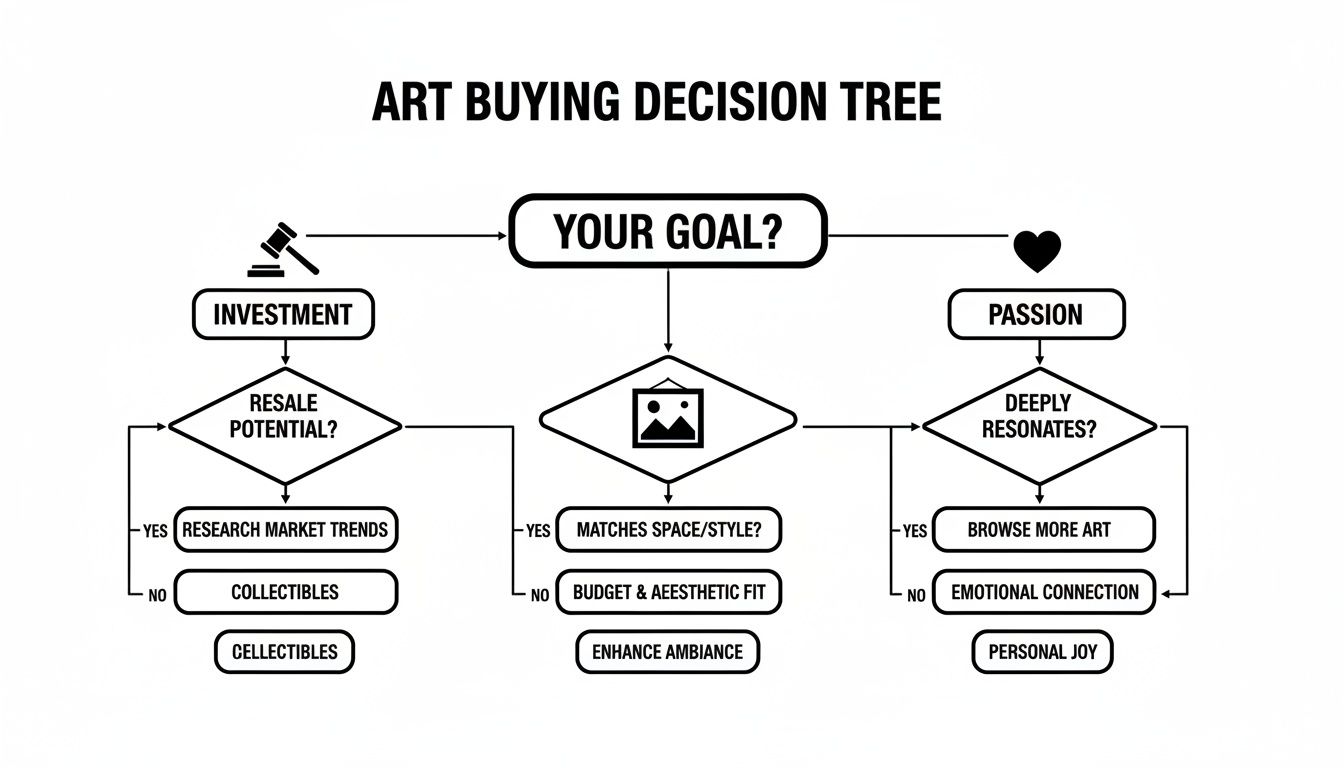
Whether you’re a new buyer just discovering different types of art or a seasoned collector hunting for a specific investment piece, your "why" is the most important first step in figuring out your "where."
Aligning Your Goals With the Right Venue
Before you even begin browsing, it's crucial to understand your own motivation. Are you looking for a bold statement piece to anchor your living room, or are you hoping to acquire an asset that might grow in value over time? Maybe the goal is simpler: to find a piece that just speaks to you.
The art market itself is incredibly dynamic. In 2026, the U.S. art market accounted for a massive 43% of global sales, valued at $57.5 billion. With the global market projected to grow by 6.1% into 2027, there’s no shortage of activity.
Interestingly, while the high-end auction market has seen some contraction, the mid-market for original paintings is flourishing. In 2026, a remarkable 59% of collectors made purchases online. This shift tells us that direct-from-artist websites and other digital platforms are becoming go-to spots for finding excellent value, often without the steep overhead of traditional channels.
Comparing Your Options at a Glance
To make the choice a little clearer, it helps to see these channels side-by-side. Each has unique benefits and potential drawbacks that will matter differently to every buyer.
This table breaks down the key differences between the primary places to purchase original art.
Comparison of Channels to Buy Original Paintings
| Channel | Best For | Price Range | Artist Connection | Authenticity Guarantee |
|---|---|---|---|---|
| Direct from Artist | Building a personal connection, discovering emerging talent, and getting the best value. | $-$$$ | Excellent | Direct. The highest possible guarantee, as it comes from the source. |
| Art Galleries | Vetted, high-quality works, expert guidance, and building long-term collector relationships. | $$$-$$$$ | Good | Strong. Galleries stake their reputation on authenticity. |
| Online Marketplaces | Browsing a massive variety, price comparison, and discovering artists globally. | $-$$$$ | Variable | Varies by platform. Some offer guarantees, others are buyer-beware. |
| Auction Houses | Acquiring works with established provenance and investment potential from well-known artists. | $$$-$$$$$ | Limited | Very Strong. Authenticity is central to the auction model. |
Ultimately, there is no single "best" place to buy art—only the best place for you. Understanding these distinctions will empower you to find a piece you love through a channel you trust.
The Main Channels for Buying Original Art
Let's dive a little deeper into what you can expect from each of these avenues.
- Online Marketplaces: Platforms like Saatchi Art and Artsy offer an incredible breadth of work at nearly every price point. They are fantastic for discovery, but the sheer volume can be overwhelming, and the connection to the artist is often indirect.
- Direct from the Artist: This is my preferred method for new collectors. Buying from an artist’s own website creates a direct, meaningful connection to the work and its creator. It often yields better pricing by cutting out gallery commissions (which can be as high as 50%) and guarantees absolute authenticity.
- Traditional Art Galleries: Galleries provide a curated experience. They’ve done the work of finding and vetting artists, so you can trust the quality. This is an excellent route for anyone looking for expert guidance and to build a lasting relationship with a gallery that represents artists you admire.
- Auction Houses: Auctions are the territory of established art with proven market value. They are ideal for investment-focused buyers who need strong provenance, but be prepared for a competitive environment and extra costs like the buyer's premium.
To explore the digital landscape in more detail, you can check out our comprehensive guide on the best places to buy original art online.
Navigating the Online Art Marketplace
Stepping into the world of online art buying can feel like walking into a museum the size of a city. The sheer volume of original paintings available is incredible, but it's crucial to know your way around. Broadly speaking, the digital art world is split into two main avenues: curated platforms and open marketplaces. Each offers a profoundly different experience for a collector.
Think of curated platforms like Saatchi Art or Artsy as the online equivalent of a well-respected gallery. These sites have a vetting process, meaning their collections are hand-picked by experts. This creates a more guided experience, where you can feel confident in the quality and discover new artists who have already met a certain standard.
On the other hand, you have open marketplaces. A platform like Etsy is more like a sprawling, vibrant art fair, bustling with thousands of independent artists selling their work directly. You can find some truly unique, affordable gems here, but the dynamic shifts—the responsibility for vetting the artist and the artwork falls squarely on your shoulders.
Taming the Digital Deluge
The endless scroll of art online is both a gift and a challenge. With millions of paintings just a click away, it's easy to get lost in what's known as the "paradox of choice." The secret to finding what you love isn't to see everything, but to become a master of the search and filter functions.
Begin with a broad idea of what you’re looking for, perhaps "ocean-inspired contemporary art" or "large-scale abstract painting." From there, start whittling down the results. Get specific with the filters:
- Size: Don't guess. Know the exact dimensions your space can handle.
- Price: Set your budget from the start so you don’t end up heartbroken over a piece you can't afford.
- Color: Many sites let you search by dominant colors, a fantastic tool for matching a room's palette.
- Orientation: Filter for the right fit—vertical, horizontal, or square.
- Location: Searching for artists in your region can be a great way to reduce shipping costs and support your local arts community.
This methodical approach transforms a potentially overwhelming task into a focused and rewarding treasure hunt. It's also worth remembering that many artists run their own professional websites, which often showcase their complete portfolio. Our guide on how artists can set up free websites for their portfolios explains how they build these essential online galleries.
Avoiding Pitfalls When Buying Art Sight Unseen
Purchasing a painting without seeing it in person is the new normal, but it demands a different level of care. The art market's shift to digital isn't just a trend; it's a fundamental change in how we discover and collect art, especially for those new to buying.
The online art space is booming. Projections show that 73% of digital art buyers in 2026 will purchase as much or more art than they did the year before. This confidence is matched by galleries, with 43% planning to increase their focus on online channels, making artist websites and digital platforms more central than ever. For a deeper dive into the numbers, you can explore global art market trends on Art Basel.
While this accessibility is wonderful, it pays to proceed with a healthy dose of caution. Before you click "buy," it's vital to do your own quality check to ensure the piece you receive is the one you fell in love with online.
Your Digital Due Diligence Checklist
To buy art online with confidence, you need a system. Think of it as your pre-flight check before bringing a new piece of art into your life.
Vet the Seller Thoroughly
Look for an artist or gallery with a polished online presence, a clear "About" section, and recent activity. Hunt for reviews, testimonials, or mentions on social media. A long history of happy collectors is one of the best indicators of a trustworthy seller.Scrutinize High-Resolution Photos
Examine every single image. A good seller will provide crisp, high-quality photos that let you zoom in on brushstrokes, canvas texture, and the signature. Look for multiple angles, detail shots, and—most importantly—an "in-situ" photo of the painting in a room to give you a true sense of its scale.Read the Description Carefully
This is the painting's official record. It should clearly state the medium (e.g., oil on linen, acrylic on canvas), precise dimensions, and creation date. Also look for notes on the finish, like a gloss or matte varnish, and confirm whether the artwork is framed or sold unframed.Understand the Return Policy
A seller who stands behind their work will always offer a clear and fair return policy. Before you purchase, make sure you understand the return window, the conditions for a return, and who covers the cost of shipping it back. This policy is your ultimate safety net if the piece just doesn't feel right once it's in your home.
The Power of Buying Directly From the Artist
When you decide to buy an original painting, few routes offer the same level of connection and transparency as purchasing directly from its creator. This approach turns a simple transaction into a deeply personal experience, forging a direct line between the artist who poured their soul onto the canvas and the collector who will live with it.
Think of it like buying produce from the farmer who grew it instead of from a large supermarket. You not only get a fresher product but also the story, the passion, and the assurance of quality straight from the source. The same principle holds true when you acquire art from an artist's studio or personal website.
The Unmatched Value and Authenticity
One of the most practical reasons to buy directly is the financial benefit. While galleries provide a valuable curatorial service, they must take a commission to operate, which can run as high as 50% of a painting’s final price. When you purchase from the artist, you sidestep that gallery fee entirely.
This means you can often acquire a stunning original piece for significantly less than its gallery price. Better yet, more of your investment goes directly into the artist's pocket, empowering them to continue their practice and create more work. It’s a powerful way to foster a sustainable ecosystem for the creatives you admire.
Beyond the price tag, buying direct is the ultimate guarantee of authenticity. There is simply no doubt about an artwork's origin when you’re communicating with the person whose hands made it. This direct validation is invaluable, especially for new collectors looking to build confidence in their taste and decisions.
Discovering and Connecting With Artists
So, where do you find these artists? In the past, this often required an introduction or a special invitation to a private studio. Today, the art world is far more open.
- Social Media: Platforms like Instagram and Pinterest have evolved into dynamic, virtual galleries. Artists share their latest works, offer behind-the-scenes glimpses into their creative process, and announce when new pieces become available. Searching hashtags like #contemporarypainting, #originalartforsale, or #oceanart can uncover a world of incredible talent. To understand how artists leverage these tools, you can explore how artists use social media to connect with collectors.
- Artist Websites: A professional artist’s website is their digital portfolio and personal storefront. It offers the most comprehensive view of their body of work and is often the primary place they list paintings for sale.
- Local Art Fairs and Open Studios: These events are fantastic for meeting artists in your own community. You get to see their work in person, have a real conversation, and experience the art outside the formal, sometimes intimidating, context of a gallery.
Building a Meaningful Relationship
Reaching out to an artist might seem daunting, but most are genuinely happy to connect with people who appreciate what they do. The key is simply to be respectful and sincere.
When you reach out, you’re not just starting a transaction; you’re starting a conversation. The story behind the art—the inspiration, the struggle, the joy—becomes part of the piece itself, adding a layer of meaning that you can share for years to come.
A simple email or direct message is the perfect way to begin. Mention a specific painting you admire and what drew you to it. Feel free to ask about their process, the story behind a collection, or their artistic journey.
This dialogue does more than just facilitate a purchase; it builds a relationship. When you buy an original painting from the person who created it, you’re not just acquiring an object. You become a patron, a supporter, and a small part of that artist’s ongoing story. The artwork arrives in your home with a personal history that deeply enriches your connection to it.
Navigating Galleries and Auction Houses

While the internet has opened up the art world, the classic venues—physical galleries and auction houses—remain the cornerstones of the market. Walking into these established spaces can feel a bit intimidating at first, but they offer a level of curation, quality, and historical context that is hard to find elsewhere. They are trusted institutions for anyone serious about acquiring original paintings from significant artists.
An art gallery is much more than a shop. Think of it as a career launchpad for artists and a trusted partner for collectors. A gallery stakes its reputation on the artists it represents, which gives you, the buyer, an immediate layer of confidence in the work's quality and authenticity.
The Art of the Gallery Relationship
Your first visit to a gallery isn't about pressure to buy; it's an invitation to start a conversation. The gallery director, or gallerist, is an expert who is genuinely passionate about the art they show. Their role is to be your guide, helping you discover work that truly connects with you and sharpening your own eye for what you love.
Over time, building a rapport with a gallerist can open doors. You might get a first look at new pieces before they're shown to the public or receive a call the moment something comes in that fits your collection. These relationships are the secret to building a thoughtful, cohesive collection. A great way to discover local galleries is by attending art events; you can find helpful resources by looking into guides on local art shows and exhibitions.
Understanding the Auction World
Auction houses offer a completely different, much faster-paced experience. Big names like Sotheby's and Christie's are where artworks with major historical and financial weight change hands. The entire process starts with the auction catalog, which is your roadmap—it details every piece for sale, including its artist, ownership history (provenance), and estimated price.
One crucial term you must know is the buyer's premium. This is an extra fee, often between 15-25%, that the auction house adds to the winning bid (the "hammer price"). You absolutely have to factor this into your budget to avoid a costly surprise. The energy of a live auction can be thrilling, but it's important to understand the market forces at play.
Recent market data shows some interesting shifts. While global auction sales grew by 12% in 2026, with paintings accounting for 35% of that market, the very top end of the market actually cooled off. Sales of pieces valued over $10 million fell by 44%. This has pushed smart buyers toward high-quality, mid-range originals, where the market is stronger than ever. This suggests that the best opportunities aren't always in the sales that make headlines. You can dive deeper into these trends and discover further insights into the global art market's growth on PR Newswire.
Which Path Is Right for You?
So, should you frequent galleries or auction rooms? The answer really comes down to your personality and goals as a collector. Each provides a distinct avenue for acquiring original art.
Galleries offer a stable, relationship-focused environment ideal for discovering new talent and receiving personal guidance. Auctions provide a dynamic, market-driven venue perfect for acquiring works that already have an established history and value.
Ultimately, both galleries and auction houses are vital parts of the art ecosystem. By getting comfortable with these traditional channels, you gain access to a vetted world of exceptional artwork, adding pieces with proven authenticity and lasting importance to your collection.
How to Verify and Value an Original Painting
Bringing an original painting into your life is a deeply personal decision, but it's also a significant financial one. To protect your investment—and your peace of mind—you need to confirm you're getting exactly what you pay for. This means verifying the artwork is authentic and understanding what gives it value.
Think of it as due diligence. Before you fall completely in love with a piece, a little detective work ensures its story holds up and its price is fair.
The single most important factor here is provenance. This is the artwork’s documented history, a paper trail that traces its life from the artist's studio all the way to you. A strong provenance is the ultimate proof of authenticity and can dramatically affect a painting's value. It’s what separates a true original from a convincing fake.
Understanding Provenance and Authenticity
Solid documentation is your best friend when buying art. It acts as the painting's official record, confirming its identity and history. As you explore where to buy original paintings, one of your first questions should always be, "What documentation comes with the piece?" The clearer the history, the more secure your purchase.
Here are the key documents that build a strong provenance:
- Certificate of Authenticity (COA): This is a formal declaration that the artwork is genuine. A COA signed by the artist is the gold standard, but one from a reputable gallery that represents the artist is also very strong.
- Gallery or Dealer Invoices: Official receipts from past sales provide a concrete record of the painting's journey through the art market.
- Exhibition History: Was the piece ever displayed in a gallery, museum, or art fair? Any catalogs or records of its inclusion add to its cultural significance and verify its existence over time.
- Previous Appraisals: Formal valuation documents from certified appraisers add another layer, confirming the work’s historical market value.
A direct purchase from an artist offers the most straightforward and unimpeachable provenance. When you buy from the creator, there is no ambiguity—the story and the authenticity come directly from the source, eliminating any risk of forgery.
Key Factors That Determine a Painting’s Value
Beyond authenticity, a painting’s price tag isn’t arbitrary. It’s determined by a blend of factors that the art market has relied on for decades. You don't need to be a certified appraiser to understand these drivers, but knowing them will help you spot a fair deal. This is especially true when looking at original acrylic paintings for sale offered by the artists themselves.
These are the primary elements that shape an artwork's market value:
- The Artist's Career and Reputation: Is the artist just starting out, mid-career, or well-established with a long track record? An artist with consistent gallery representation, museum shows, and positive critical reviews will naturally command higher prices.
- Condition of the Artwork: The physical state of the painting is crucial. Look closely for any cracking, flaking paint, discoloration, tears, or signs of repair. A piece in pristine condition is always worth more than one that has been damaged or poorly restored.
- Rarity and Subject Matter: Some periods in an artist’s career are more sought-after than others. A piece that is a prime example of their most celebrated style, or a subject they rarely painted, can have a higher value due to its rarity.
- Current Market Demand: Like any market, the art world has trends. An artist, style, or genre can become incredibly popular, driving prices up. A quick search for recent auction results or sales of similar works can give you a snapshot of current demand.
By weighing both the artwork’s history and these key value drivers, you can move forward with confidence, knowing the painting you choose is a sound and meaningful addition to your collection.
Completing Your Purchase and Caring For Your Art
You’ve found an original painting that speaks to you, and the excitement is palpable. Now comes the final, practical stage: getting the artwork from the studio or gallery safely into your home. This part of the process is less about the heart and more about the head—it's about clear communication and ensuring your new treasure is protected for life.
Before any money changes hands, it's essential to confirm every last detail with the seller. This isn't being difficult; it's being a responsible collector. You need to be crystal clear on the final price, how payment will be handled, and exactly what’s included. Does the price cover the frame? What about shipping? Getting these answers in writing, even just in an email, creates a shared understanding and prevents any surprises down the road.
Finalizing Your Art Purchase
Once you’ve agreed on the terms, you can move forward with securing the piece. This involves not just the payment itself but also orchestrating its journey to your home. Each step is a crucial part of a successful acquisition.
- Payment and Invoicing: Always insist on a formal invoice. This document should detail the artist's name, the artwork’s title and dimensions, and the agreed-upon price. It’s not just a receipt; it’s a critical piece of your ownership record.
- Shipping and Transit: Discuss the shipping options with the seller. For very valuable or fragile works, a professional art shipper is the gold standard. For smaller, more robust pieces, a standard carrier might be perfectly fine, provided the packaging is excellent. Be sure to clarify who is responsible for arranging and paying for the shipment.
- Transit Insurance: This is one area where you absolutely should not compromise. Make sure the painting is fully insured for its total value during transit. While shipping mishaps are rare, they do happen. Insurance is your only safeguard against loss or damage.
Think of this final stage like closing on a house. You wouldn't sign without a final walkthrough and clear paperwork. In the same way, you shouldn't complete your art purchase without a detailed invoice and a confirmed plan for safe, insured delivery.
The Principles of Art Care and Display
Your painting has arrived safely—a wonderful moment! But the journey isn't quite over. Proper care and display are what will preserve its beauty and value for generations to come. How and where you decide to hang your art has a direct impact on its longevity. A good environment protects it from the kind of slow, irreversible damage that can happen over time.
A painting’s greatest enemies are direct sunlight, extreme temperatures, and fluctuating humidity. UV rays are notorious for fading pigments, while big swings in temperature and moisture can make a canvas warp and the paint layer crack.
Creating the Ideal Environment for Your Painting
The goal here is simple: create a stable and gentle environment. It helps to think of your painting as a sensitive guest in your home—it has a few specific needs to stay comfortable and healthy.
- Choose the Right Location: Never, ever hang a painting where it will be hit by direct sunlight. A wall that gets plenty of indirect, ambient light is perfect. You should also steer clear of spots above radiators or in damp areas like a main bathroom, as these locations are notorious for their unstable climate.
- Mind the Lighting: When illuminating your art, stick with low-UV options like LED bulbs. Position the lights to cast an even glow across the piece without creating glare or "hot spots" that can cause damage over time.
- Basic Maintenance: A light, regular dusting is all your painting should need. Use a very soft, dry brush (like a makeup brush) to gently wipe the frame and the surface of the painting. Never use water, household cleaners, or any chemicals, as they can permanently damage the varnish and paint.
By following these fundamental guidelines, you can ensure your decision on where to buy original paintings results in a lasting source of joy, not an unexpected conservation project. You’ll be able to relax and enjoy your new artwork for years, knowing it is safe, secure, and beautifully preserved.
Frequently Asked Questions About Buying Original Art
Stepping into the art world naturally comes with a lot of questions, especially when you're considering your first major purchase. Getting clear, straightforward answers is the key to collecting with confidence.
Here, we'll tackle some of the most common queries I hear from aspiring collectors. My goal is to give you practical advice that clears up the confusion and helps you take the next step in your journey, whether you're buying for passion, investment, or simply to bring a beautiful object into your life.
Is Buying Original Paintings a Good Investment?
While original paintings certainly can be a worthwhile investment, thinking of them purely in financial terms is a risky game. An artwork’s value depends on a complex web of factors—the artist's career trajectory, the piece's condition and history (its provenance), and shifting market tastes.
The wisest approach has always been to buy art because you love it. Consider any financial appreciation a welcome bonus, not the primary reason for your purchase. That said, recent market data has shown steady growth for works by promising emerging and mid-career artists, often making them a more reliable store of value than highly speculative pieces.
What Is the Difference Between an Original Painting and a Print?
An original painting is a singular, one-of-a-kind work created entirely by the artist's hand. Every brushstroke, texture, and choice of color is unique to that canvas, making it impossible to truly replicate. It’s a direct piece of the artist's creative history.
A print, on the other hand, is a reproduction. Even "limited edition" prints—which are often signed and numbered to create scarcity—are still multiples. Because of its absolute rarity, an original painting will almost always hold far more monetary and historical significance than any print.
An original painting is an artifact of the artist’s creative process, capturing the energy and intent of a specific moment in time. A print is a high-quality photograph of that moment. Understanding this distinction is fundamental to collecting.
How Much Should I Budget for My First Original Painting?
There's no magic number for a first-time art budget, as prices span a massive range. It’s entirely possible to find small, captivating original works from talented emerging artists for a few hundred dollars on platforms like Etsy or, even better, directly from their own websites.
Once you step into a gallery, prices for works by artists on the rise often start in the low thousands and go up from there. The most critical rule for your first acquisition is to set a budget you are truly comfortable with. Focus your search on finding a piece that speaks to you from a source you trust, rather than stretching your finances for something you hope will be a big investment.
How Can I Discover New Artists to Collect?
Finding new talent is one of the most rewarding parts of becoming a collector. There are so many fantastic ways to discover artists whose work you'll connect with.
- Follow Art School Exhibitions: Keep an eye on the graduate shows from respected art schools. This is where you’ll see the next generation of talent first.
- Browse Curated Platforms: Websites like Saatchi Art do a lot of the initial vetting for you, highlighting artists who are beginning to gain real traction.
- Use Social Media: Instagram, in particular, has become a virtual studio for countless artists. Following relevant hashtags or galleries can lead you to incredible new work.
- Attend Local Events: Nothing beats seeing art in person. Visiting local art fairs and open studio weekends is a wonderful way to meet artists and see their process up close.
At Skyler’s Art, you can discover a curated collection of original paintings that blend impressionistic energy with personal storytelling. Explore the gallery of ocean-inspired scenes and emotive landscapes, and connect directly with the artist behind the work. Find your next meaningful piece at https://skylers-art.org.