What Is Glaze in Art and How Does It Transform a Piece
A glaze is a thin, translucent layer applied over an artwork to change its appearance and texture. Think of it as a whisper of color in painting, used to deepen shadows or create an inner glow. In ceramics, it's something else entirely—a concoction that fires into a hard, glassy shell, giving a piece both beauty and function.
Understanding The Role Of Glaze In Art
At its core, applying a glaze is a deliberate artistic decision to enhance the final piece. It's far more than just a protective topcoat; it’s a powerful filter that can unify, deepen, or illuminate the work underneath. While the materials and methods vary wildly between mediums, the fundamental goal is the same: to manipulate light and surface in a way that direct application of paint or clay simply can't achieve.
Glaze In Painting
In painting, a glaze is made by mixing a tiny amount of pigment with a much larger amount of medium, like linseed oil for oil paints or a specific glazing liquid for acrylics. This creates a transparent film of color that subtly alters the layers beneath it without hiding them.
The result is a remarkable sense of depth and richness. It’s what gives many classic and contemporary paintings that signature "glow from within." If you're curious about how pigments are prepared for this process, our guide on how to mix acrylic paint colors is a great place to start.
Glaze In Ceramics
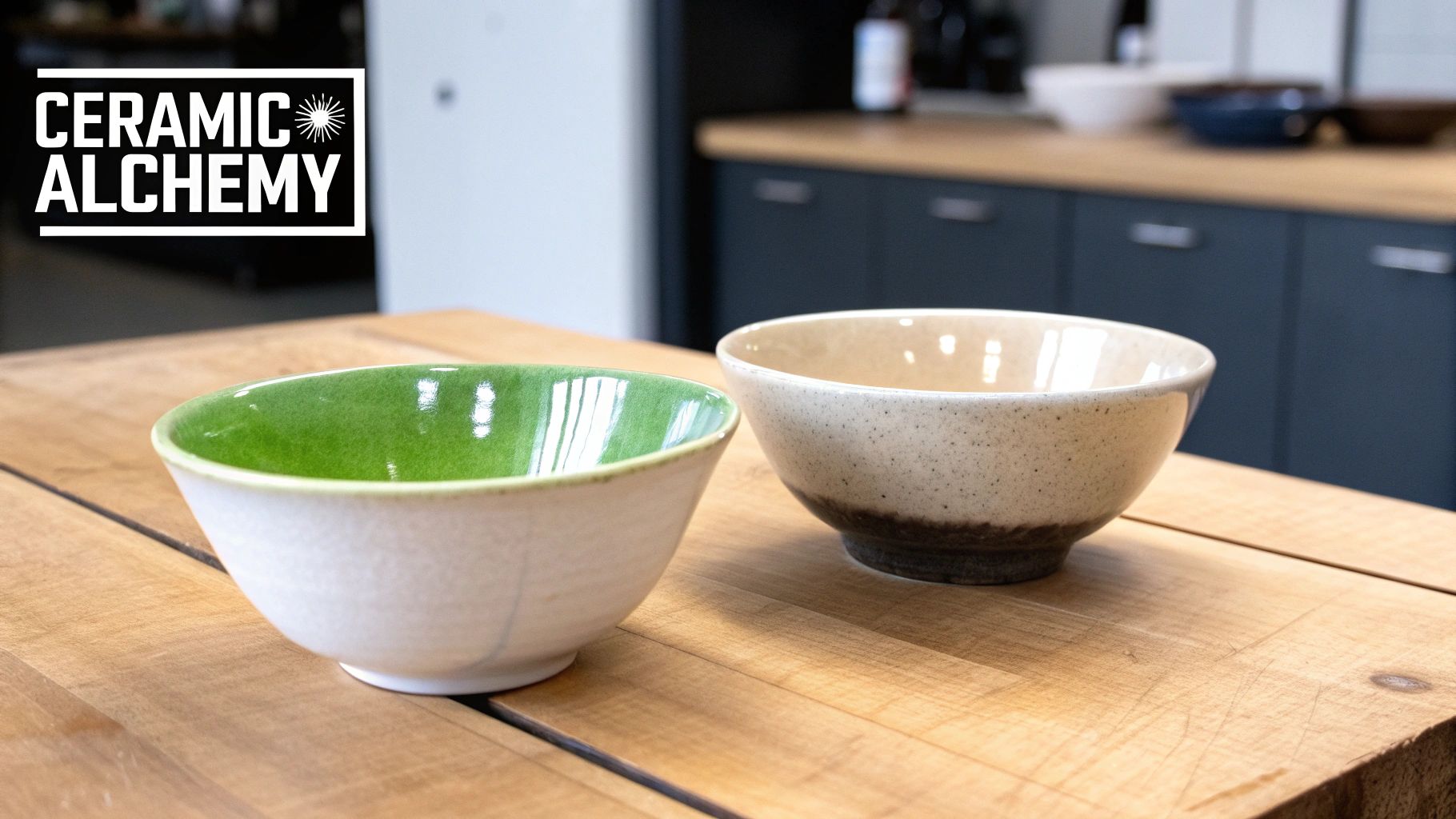
Over in the world of ceramics, glazing is a kind of chemical alchemy. A ceramic glaze isn't paint at all; it's a carefully balanced recipe of minerals suspended in water.
A ceramic glaze is a liquid suspension of finely ground minerals that is applied to the surface of a ceramic piece. When fired, it fuses into a glassy coating, serving purposes from decoration to waterproofing.
This diagram helps visualize how the term 'glaze' applies in these two distinct creative fields.
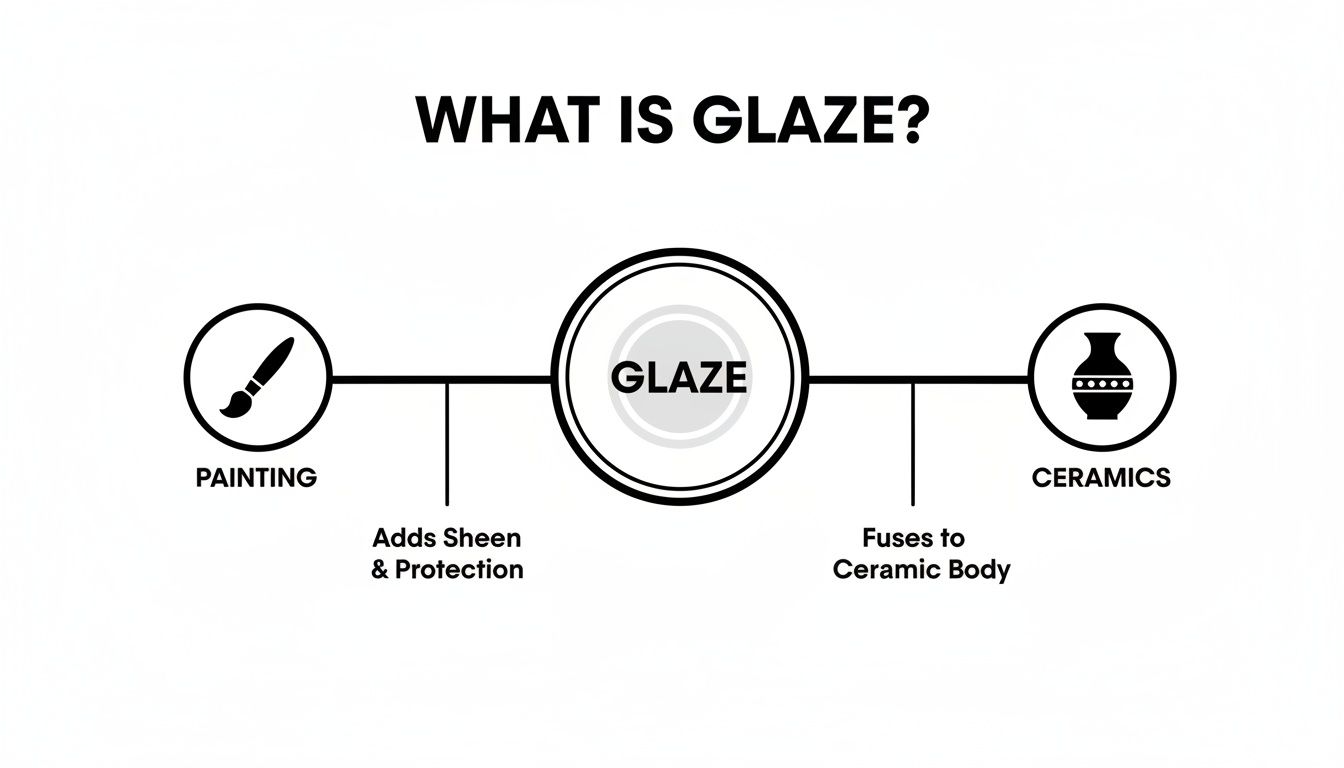
As you can see, this single word branches into two related but very different practices—one focused on creating visual depth and the other on total surface transformation.
To make the distinction even clearer, let's break down the fundamental differences side-by-side.
Glaze Fundamentals Painting vs Ceramics
| Attribute | Glaze in Painting | Glaze in Ceramics |
|---|---|---|
| Core Purpose | To modify color, add luminosity, and create depth. | To create a durable, often waterproof, decorative surface. |
| Composition | Pigment mixed with a binder/medium (e.g., oil, acrylic medium). | A suspension of minerals (silica, alumina, flux) in water. |
| Application | Applied in thin, transparent layers over dried paint. | Dipped, poured, sprayed, or brushed onto bisque-fired clay. |
| Transformation | Dries through evaporation or oxidation, remaining a thin film. | Fuses into a hard, vitreous (glass-like) layer through firing in a kiln. |
This comparison highlights how painters and ceramicists, while both using "glaze," are engaging in entirely different material processes to achieve their artistic goals.
How Painters Use Glaze to Create Depth and Luminosity
When painters talk about glazing, they aren't referring to a final, protective topcoat. Instead, it’s a foundational technique that’s woven directly into the creative process itself—a subtle yet incredibly powerful method for achieving effects you simply can't get by applying thick, opaque paint. By laying down thin, transparent veils of color, an artist can create the breathtaking realism and ethereal glow that defines masterpieces from the Old Masters to today's top artists.
The recipe for a glaze is surprisingly simple: a tiny bit of pigment mixed into a much larger amount of a glazing medium. In oil painting, this medium is often a blend of linseed oil and a solvent. For acrylics, artists use a specially formulated glazing liquid. The entire point is to create a film of color so sheer that light can pass right through it.
Building Layers of Light
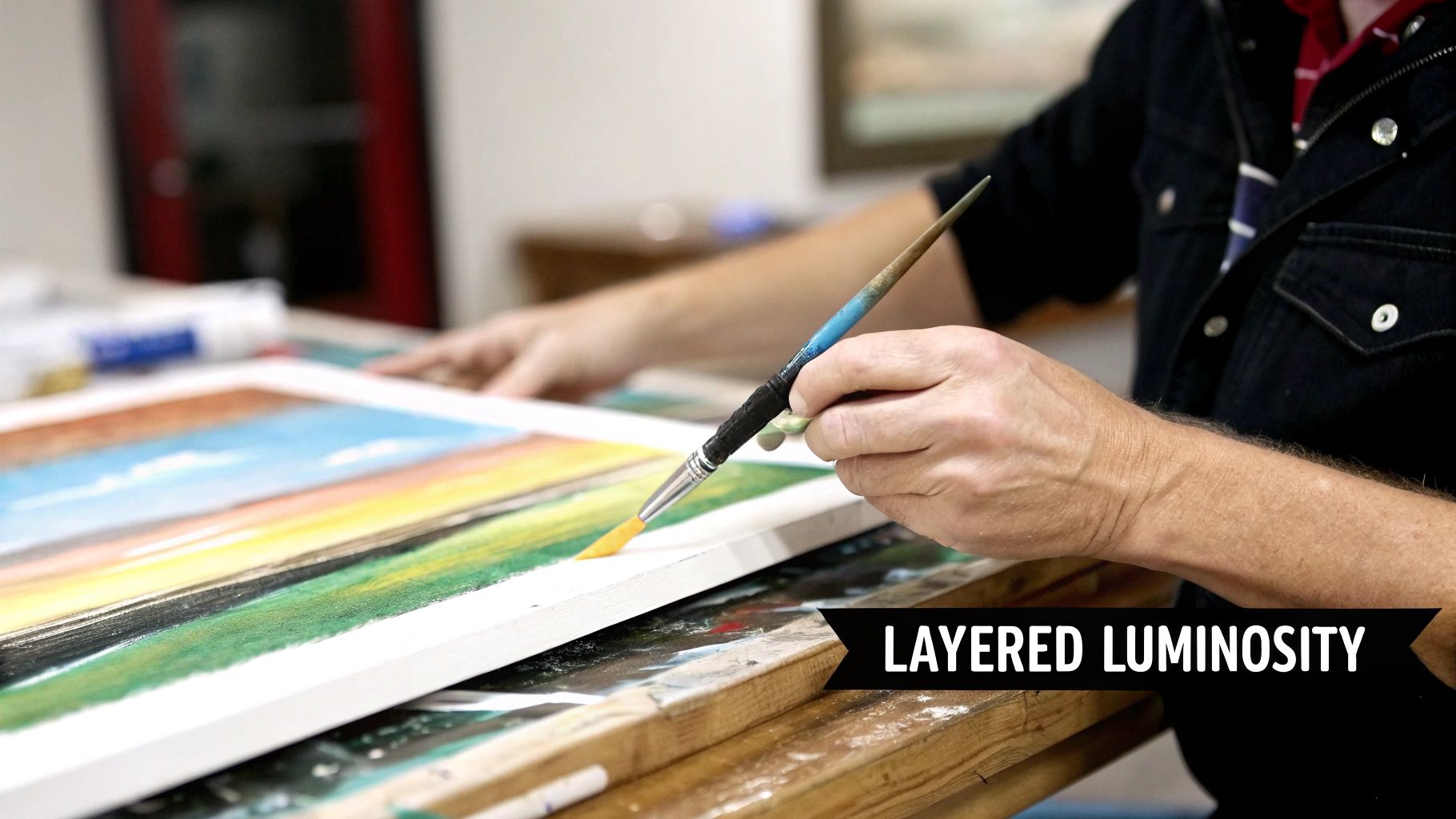
Think of it like stacking sheets of colored glass. Each new sheet you add subtly changes the color and tone, but you can still see through the entire stack to whatever is underneath. This is exactly how a painting glaze operates. An artist will carefully apply these transparent layers over a dry, and usually lighter, underpainting.
This layering process is where the magic happens. Light enters the painting, travels through all those transparent films, and hits the opaque paint of the underpainting below. It then bounces back toward your eye, picking up the color from each glaze layer on its return trip. This is what creates that signature effect often described as a ‘glow from within,’ giving the work a tangible depth and luminosity that feels almost alive.
The true power of a glaze lies in its ability to manipulate light. Rather than just reflecting off the surface, light becomes an active participant within the painting's layers, creating a sense of volume and atmosphere that direct painting cannot replicate.
Practical Applications of Glazing
Artists turn to this technique for several specific reasons, each contributing to the richness and complexity of the final piece. Glazing isn't just an aesthetic flourish; it's a strategic tool in a painter's arsenal.
- Deepening Shadows: Instead of mixing a single flat, dark color for a shadow, an artist can glaze transparent darks over a lighter area. This builds up a shadow that feels rich and complex, avoiding the dull, lifeless look of a flat patch of paint.
- Adjusting Hues: If a particular color in a painting feels just a little bit off, a thin glaze can subtly shift its hue without having to repaint the whole section. A sheer yellow glaze over a blue area, for example, can create incredibly nuanced and natural-looking greens.
- Unifying a Composition: A very thin glaze applied across the entire painting can be used to harmonize all the different elements. This simple step can tie disparate colors together, creating a more cohesive and atmospheric scene.
This meticulous approach of adding transparent layers also has a profound impact on the surface quality. If you want to explore another method that dramatically alters a painting's surface, you can learn more about how to create texture in paintings in our detailed guide. Ultimately, glazing is what can transform a flat canvas into a world of profound depth, inviting you to look not just at the painting, but into it.
The Chemical Alchemy of Ceramic Glazing
Leaving behind the delicate world of paint on canvas, we step into the fiery transformation that is ceramic glazing. A ceramic glaze is worlds apart from its painterly cousin. Before firing, it's little more than a powdery, chalk-like coating—a mix of finely ground minerals suspended in water, offering no hint of the brilliance to come.
But once inside the kiln, a true chemical alchemy begins. The intense heat melts these minerals, fusing them into a single, unified layer that bonds permanently with the clay. What emerges is a hard, glass-like surface—known as a vitreous coating—that is both beautiful and incredibly durable.
The Core Components of a Glaze
Thinking of a glaze recipe like a fundamental baking formula helps demystify the process. It's built on three essential types of ingredients, each playing a crucial part. Getting the balance right determines everything from the glaze's melting point to its final look and feel.
Silica (The Glass-Former): This is the star of the show. Silica is the core ingredient that actually melts down to form the smooth, glassy coating you see on a finished piece of pottery.
Alumina (The Stabilizer): Without alumina, the molten silica would simply slide right off the pottery during firing. Alumina acts as a thickener, adding just enough viscosity to ensure the glaze stays put, even on vertical surfaces.
Flux (The Melter): On its own, silica has a ridiculously high melting point, far hotter than most kilns can reach. A flux is an oxide added to the mix specifically to lower silica's melting temperature, making the whole glass-forming process possible.
These three elements have to work together perfectly. The flux gets the melting started, the silica creates the glass, and the alumina makes sure it all stays in place. This careful balance is the secret behind every successful glaze.
A ceramic glaze is less a coating and more a controlled chemical reaction. The artist isn't just applying color; they are orchestrating a fusion of elements that will only reveal their true nature in the transformative heat of the kiln.
This entire process is what turns a simple clay object into a lasting, functional work of art. The fused glass layer makes the pottery watertight and easy to clean. More than that, it opens up a universe of aesthetic possibilities. By adding metallic oxides—like cobalt for deep blues or iron for rich, earthy reds—artists can unlock an infinite spectrum of colors and textures. From rustic matte finishes to brilliant high-gloss sheens that dance with light, the glaze is what gives each ceramic piece its unique soul.
Achieving Specific Artistic Effects with Glazing
Once you understand the basic mechanics, the real magic of a glaze comes into focus—the why. It's about the specific visual and emotional effects an artist is trying to achieve. These techniques aren't happy accidents; they are the result of deep technical knowledge meeting a clear artistic vision. A masterfully applied glaze can elevate an ordinary piece into something with genuine mood and character.
Think of the serene glow of a classical portrait or the rustic, earthy finish of an artisanal mug. More often than not, the glaze is what delivers that final emotional punch. It's the bridge between raw material and a finished work that truly speaks to the viewer.
Creating Nuance in Painting
In painting, glazing is an exercise in pure subtlety and control. Artists use these impossibly thin, transparent layers to create effects that are simply out of reach with direct, opaque paint application. The entire point is to manipulate light and color, building complexity and atmosphere from the inside out.
Painters can pull off some incredible tricks with glazing:
- Enhanced Color Saturation: A thin glaze of a pure color—say, a brilliant red over a lighter underpainting—can make that red appear far richer and more vibrant than if it were just mixed with white paint. This is how artists achieve those stunning, jewel-like tones.
- Compositional Unity: Applying a single, incredibly sheer glaze over an entire painting can subtly tie all the different elements together. This is a powerful tool for setting a specific mood, like the warm, golden light of a sunset or the cool, muted tones of a misty morning.
- Unparalleled Optical Depth: By carefully building up multiple layers of glaze, an artist creates a real, tangible sense of depth. Each layer catches and refracts light differently, pulling the viewer's eye into the painting instead of just letting it rest on the surface. To see how else artists can manipulate a painting's surface, you might find our guide on textured acrylic painting techniques interesting.
The glaze in a painting is not a final coat but an integral part of its structure. It is the artist's method for orchestrating a conversation between light, color, and the layers of the work itself, inviting a deeper visual engagement.
Orchestrating Effects in Ceramics
For ceramicists, the kiln is a stage, and glazes are the performers. The final result is a carefully orchestrated dance between different glaze formulas, the texture of the clay body, and the intense heat of the firing process. The outcomes can be unique and often dramatic, but they are born from planned chemical reactions, not just luck.
This deep knowledge of what a glaze is allows a ceramist to coax out very specific textures and patterns.
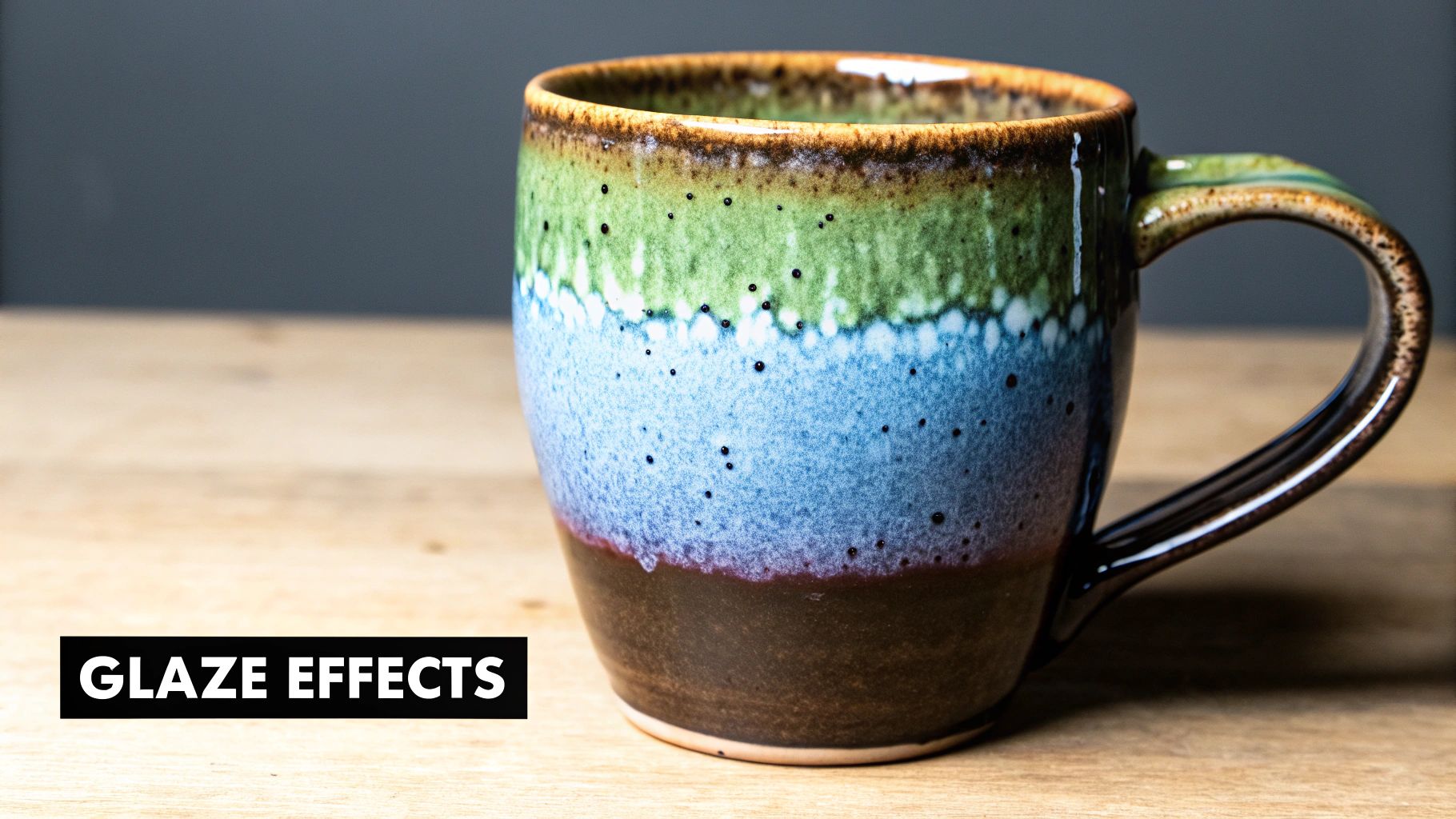
- Color Breaking: This is a beautiful effect where a glaze thins out over sharp edges or raised textures, allowing the color of the clay body or an underglaze to peek through. It acts as a natural outline, highlighting the form and adding a wonderful sense of dimension.
- Crystalline Formations: With precise recipes and carefully controlled cooling cycles, artists can actually encourage zinc and silica to grow into stunning, frost-like crystal formations within the glaze itself. Each pattern is completely unique to that single firing.
- Mottled and Variegated Patterns: By layering different glazes that have different melting points, artists can create rich, mottled surfaces that flow into one another, mimicking natural materials like weathered stone or lichen.
The global demand for these unique aesthetic qualities is huge. The glaze market, valued at USD 104.50 million in 2023, is projected to climb to USD 156.64 million by 2032. This growth underscores just how vital glazes are for elevating art from merely functional to deeply expressive. You can explore more insights about the expanding global glaze market on infinitymarketresearch.com.
A Collector’s Guide to Appreciating and Preserving Glazed Art
For anyone who collects, designs with, or buys art, understanding glaze isn't just theory—it’s a practical tool. Being able to spot masterful glazing is one of the best ways to judge an artwork's quality, value, and the artist's true skill. Whether you're looking at a canvas or a piece of pottery, a well-executed glaze is a clear sign of intention and expertise.
When you're examining a painting, look for a depth that seems to glow from within the layers themselves. Try viewing it in different lighting; a skillfully glazed surface will show subtle shifts in color and light that a flatly painted surface just can't replicate. The real tell is often in the shadows—that’s where you’ll see an incredible richness and complexity.
In ceramics, the quality of the glaze has a direct impact on both its beauty and its price tag. An even, consistent coat without accidental drips or bare spots shows real control and craftsmanship. Pay attention to how the glaze works with the shape. Does it "break" perfectly over the edges to show off the texture underneath, or does it pool in a way that creates a stunning point of interest?
Preserving Your Glazed Artwork
Taking proper care of glazed surfaces is absolutely crucial for keeping them in pristine condition. Paintings and ceramics each have their own weak spots, and knowing how to protect them will ensure they last a lifetime and beyond.
The right approach to preservation really depends on the medium:
- For Paintings: The biggest enemies are UV light and physical damage. Keep glazed paintings out of direct sunlight, as it will inevitably fade the pigments. When you need to dust, only use a soft, dry cloth. Moisture and cleaning chemicals can easily compromise those delicate layers of glaze.
- For Ceramics: The primary risk here is thermal shock. This happens when the temperature changes too quickly, causing the glaze to crack or develop a web of fine lines called "crazing." Keep your ceramic pieces away from heat sources like vents or fireplaces and avoid spots with big temperature swings. A gentle wipe with a soft cloth and a little water is all you need for cleaning.
Proper stewardship of art is as important as the initial acquisition. Understanding the material nature of a glaze empowers you to protect its unique visual qualities, preserving the artist's original vision for generations.
The demand for these materials is massive. The ceramic glazes market alone was valued at USD 5 billion in 2023 and is expected to reach USD 6.41 billion by 2031. In North America, the market is driven by a passion for artisanal ceramics, making it a fantastic place for collectors to find one-of-a-kind work. You can find more details about the growing ceramic glazes market at Verified Market Research.
By becoming a more informed collector, you don't just make smarter purchases—you become a better caretaker for the art you love. This insight is especially useful when you're looking at distinctive works, like the original acrylic paintings for sale in Skyler's collection.
Why Understanding Glaze Enriches Your Art Experience
So, at the end of the day, what is glaze? It’s so much more than a simple finishing coat. Think of it as a fundamental language artists use to speak with light, color, and texture—transforming a piece from a static object into a living, breathing experience.
Whether an artist is chasing that ethereal glow in a painting or crafting a vibrant, resilient surface on a piece of pottery, glazing is where patience, skill, and a bit of science all come together. It's a meticulous process, but it's absolutely essential for achieving the kind of aesthetic and emotional depth that a single, direct layer of paint or clay simply can't.
A Deeper Connection Through Craft
When you start to appreciate the sheer complexity behind a glazed surface, you begin to connect with the artwork on a much deeper level. You're no longer just seeing a finished product; you're recognizing the countless layers of intention and craftsmanship that went into its creation. This simple shift in perspective can transform the act of looking into a rich, rewarding dialogue with the piece itself.
Understanding glaze is like learning the grammar of art. It allows you to read the artist’s full story, appreciating not just the final image but the deliberate sentences of color and texture that built the narrative.
This growing appreciation isn't just a niche interest; it's reflected in the market. The global ceramics market was valued at USD 12.3 billion in 2025, and the demand for pottery glazes is a significant part of that growth. As you can see from the growing ceramic glaze market on futuredatastats.com, glazes are the bridge between function and feeling, adding durability while drawing us into moody, motion-filled stories.
Equipped with this knowledge, you're better able to see the hidden depths and thoughtful choices embedded within the art you admire. If you're looking for guidance on bringing pieces with this kind of depth into your own space, be sure to check out our guide on how to choose art for your home.
Common Questions About Art Glazes
As you dive deeper into the art world, whether as a collector, a student, or simply an enthusiast, you'll inevitably run into questions about glazing. It's a fundamental technique, but it can be a bit confusing. Let's clear up a few of the most common points to help you better appreciate the craftsmanship behind a piece and make more informed decisions.
Can You Apply a Glaze Over Any Type of Paint?
This is a great question, and the answer is a firm "no." For a glaze to be successful and last for generations, it has to be chemically compatible with what’s underneath it.
The golden rule is to stick with the same medium. An acrylic glaze goes over dried acrylic paint, and an oil glaze goes over dried oil paint. Think of it like building with Legos versus K'nex—they just aren't designed to lock together properly.
Attempting to put an acrylic glaze over an oil painting, for instance, is a recipe for disaster. The layers won't bond correctly, leading to cracking, peeling, and a complete breakdown of the artwork's structure over time. It's a mistake that can permanently compromise the piece.
What Is the Difference Between a Glaze and a Varnish?
It's easy to confuse these two, but they serve entirely different roles. A glaze is part of the painting itself; it's a creative tool. It's a thin, transparent layer of color an artist uses to adjust hues, build up a sense of depth, and give the work that beautiful, luminous quality. Once it's on, it's a permanent part of the art.
A varnish, on the other hand, is a final, protective layer. It's a clear, and most importantly, removable coat applied only after the painting is completely finished and cured. Its only job is to act as a bodyguard for the art, shielding it from dust, UV damage, and airborne grime.
Are All Ceramic Glazes Safe for Food and Drinks?
Absolutely not. This is a crucial distinction, especially for anyone who buys or makes functional pottery. Whether a ceramic glaze is food-safe comes down to its chemical makeup.
Some glazes contain heavy metals like lead or cadmium. If these metals can leach out of the glaze—and they often can—they are toxic and completely unsafe for any surface that will touch food or drink.
So, when you're looking at a handmade mug, bowl, or plate, it's vital to know that the artist used a glaze specifically formulated and tested to be "food-safe." This certification is your assurance that no harmful chemicals will migrate from the beautiful pottery into your morning coffee or evening meal.
At Skyler’s Art, every brushstroke and layer is applied with intention, creating pieces with emotional depth and visual luminosity. Explore original works that tell a story at https://skylers-art.org.