A Guide to the Community Artist Collective
Ever feel like you’re creating in a vacuum? A community artist collective is the answer to that. It’s a group of creators who decide to band together—pooling resources, sharing skills, and genuinely supporting one another's artistic journeys. Think of it as a powerful, collaborative alternative to the isolation of a solo studio.
Understanding the Community Artist Collective
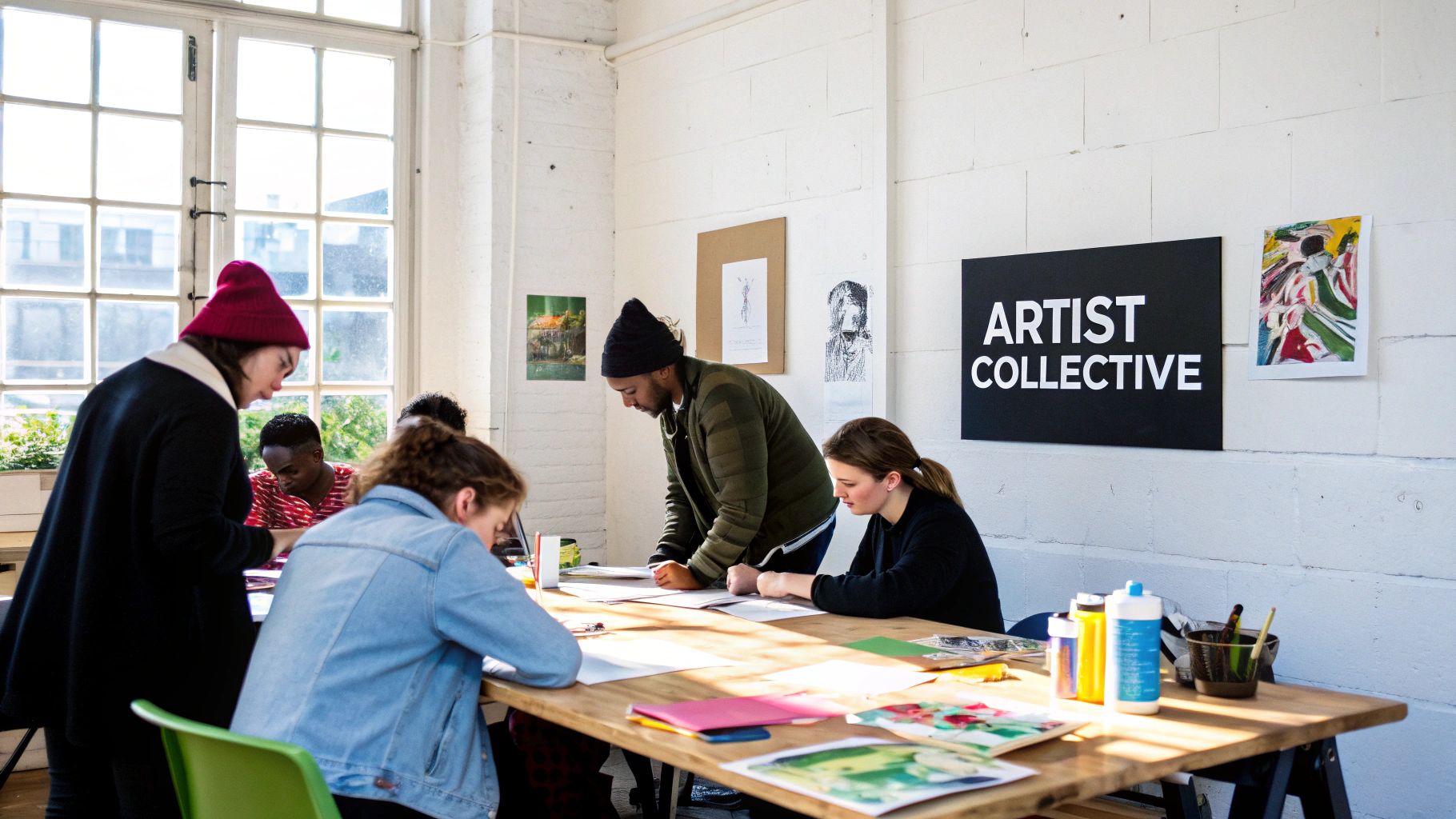
Forget the stiff, formal structure of a traditional gallery. A community artist collective is more like a living, breathing creative ecosystem. It's a deliberate move away from the often lonely path of art-making, replacing it with a framework built on shared energy and mutual encouragement.
At its heart, a collective is a group of artists who intentionally come together to accomplish things they couldn't easily manage on their own.
The Collective as a Band
A great way to picture it is to think of a collective as a band. Each musician is a talented artist with their own unique instrument and style. They could absolutely have a solo career, but they choose to unite.
When a powerful vocalist, a skilled guitarist, and a steady drummer combine their talents, they create a sound that’s richer and more dynamic than anything they could produce alone. Their combined effort has a much bigger impact.
In the same way, an artist collective magnifies the vision of each member. A painter, a sculptor, and a photographer might team up, each bringing a distinct perspective. Together, they can put on larger exhibitions, split the rent on a fantastic studio, and build a collective brand that raises everyone's profile. The group's success lifts each artist within it.
Core Principles of a Collective
While every collective develops its own unique culture, the most successful ones are almost always built on the same foundational pillars. For artists interested in the wider network supporting creative work, the Alliance for Artist Communities provides excellent insights into how these supportive environments are fostered.
Let's break down the essential components that form the foundation of a successful collective. The table below outlines these key pillars, explaining their function and how they look in the real world.
Key Pillars of a Thriving Artist Collective
| Pillar | Core Function | Real-World Example |
|---|---|---|
| Shared Resources | Pooling funds and assets to access otherwise unaffordable tools, spaces, or opportunities. | Members chip in to rent a large, light-filled studio with a professional-grade printing press that no single artist could afford. |
| Mutual Support | Creating a trusted network for emotional, creative, and professional encouragement. | A member receives constructive, honest feedback on a new series of works before a big show, helping them refine their vision. |
| Collaborative Growth | Fostering an environment of shared learning, skill exchange, and joint creative projects. | A digital artist teaches a traditional painter how to use Procreate, leading to a collaborative multimedia project. |
| Shared Identity | Building a collective brand and presence that elevates the group while celebrating individual styles. | The collective hosts a biannual "Open Studios" event under a unified brand, drawing a much larger crowd than individual artists could. |
Ultimately, these pillars work together to create a dynamic space where artists can experiment, connect, and grow—both individually and as a unified force in the art world.
The Real Benefits of Joining a Collective
The idea of an artist collective sounds great in theory, but where the rubber really meets the road is in the practical, day-to-day advantages. These groups offer real solutions to the hurdles every artist eventually faces, helping turn a creative passion into a sustainable practice. The benefits aren't just one-dimensional; they touch on everything from your bank account to your state of mind.
One of the first things you'll notice is the economic relief. By pooling resources, members can suddenly afford things that would be completely out of reach on a solo artist’s budget. It's less about just splitting costs and more about forming a strategic alliance.
Shared Resources and Financial Power
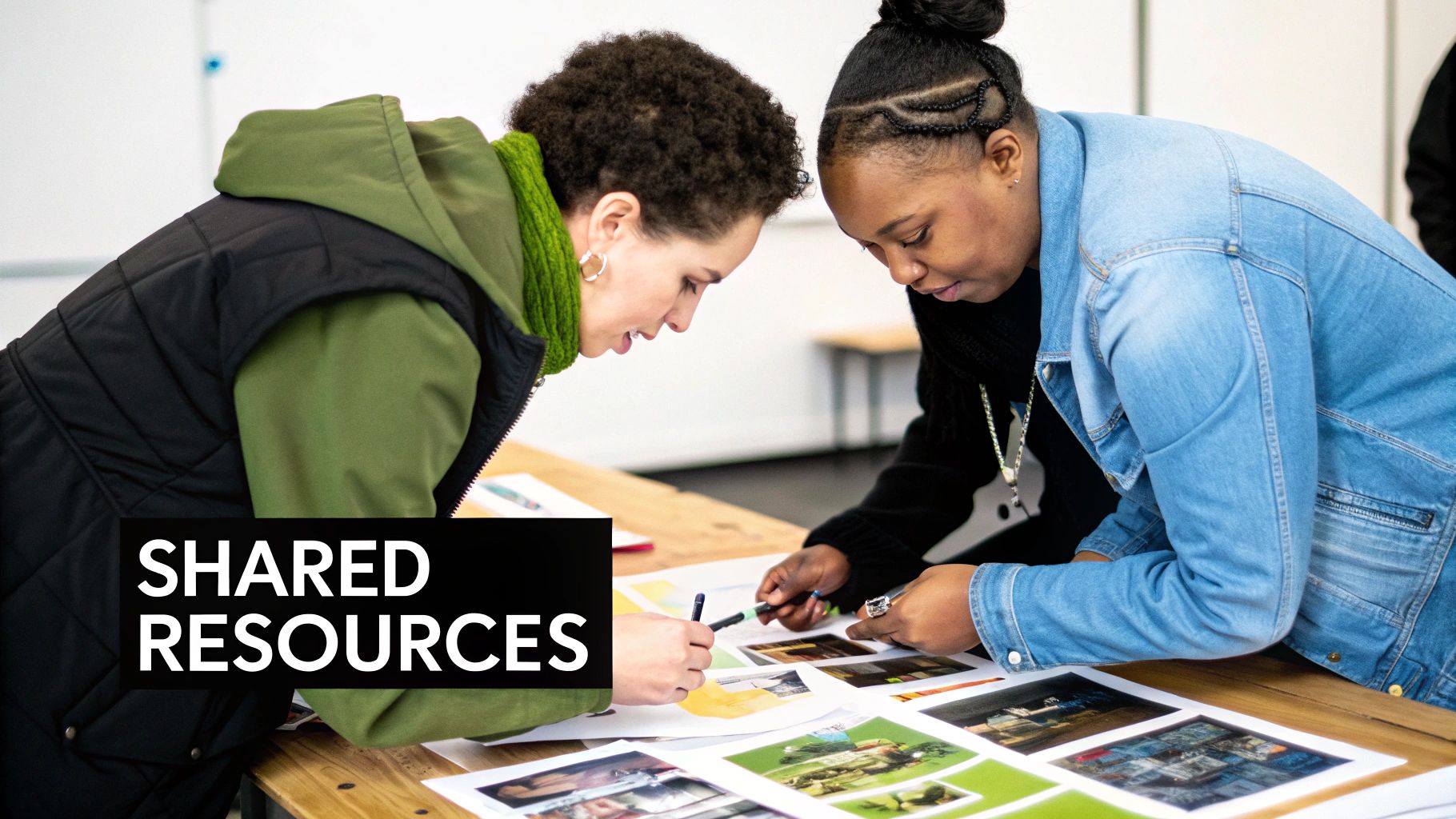
The power of sharing resources is a game-changer. A collective structure makes it possible to secure a high-quality studio space, invest in that professional-grade kiln or printing press you've been dreaming of, or cover the steep booth fees for a major art fair.
This collaborative spirit goes beyond physical tools and space. Think about marketing. A joint promotional campaign will always have a much bigger impact than a dozen separate, smaller efforts. When everyone chips in for a slick website, professional photography, or a targeted ad campaign, the collective builds a powerful brand that elevates every single member, boosting visibility and, ultimately, sales.
A community artist collective acts as both a professional launchpad and a creative family. It provides the financial and structural support needed to take risks, alongside the emotional network required to sustain a creative life.
This collective strength is more important than ever. The Arts Vibrancy Index often points to communities where independent artists—the very people who form these collectives—are the main drivers of culture and the local economy. In a recent report, San Francisco actually overtook New York City for the first time since 2018 in arts vibrancy, a shift driven by factors like artist employment and arts funding. You can explore more about how artist communities shape cultural vitality.
Overcoming Isolation and Fostering Growth
Maybe the most significant benefit of joining a community artist collective is that it cures the profound loneliness of creative work. Spending endless hours alone in a studio can easily lead to burnout and a crisis of confidence. A collective gives you a built-in network of people who just get it.
This supportive community becomes a safe place to experiment and grow. It opens the door to a few key opportunities you won’t find working alone:
- Honest Feedback: You can share a work-in-progress and get constructive criticism from people you trust, helping you sharpen your vision and master your technique.
- Emotional Support: The group is there to cheer you on through creative blocks and celebrate your wins, which is crucial for staying motivated and resilient.
- Creative Incubation: Just by being around other artists and seeing how they tackle problems, you get inspired to push your own creative boundaries and try things you might have been too intimidated to attempt on your own.
This synergy turns the artistic process from a solitary struggle into a shared adventure. To see this in action, you can check out our guide on inspiring art community projects. An environment like this doesn’t just keep you going; it pushes your work to an entirely new level.
Common Structures and Working Models
There’s no single blueprint for a community artist collective. The best ones are shaped by the personalities and goals of the people inside them. The structure a group chooses is everything—it dictates how they'll exhibit work, share tools, or connect with the wider community.
Getting this right from the start is crucial. The model you pick determines how you make decisions, handle money, and divide up the work. Some groups thrive with a loose, informal vibe, while others need a more defined organization to get things done.
Foundational Organizational Models
Most collectives are built on one of two foundational models: the cooperative or the nonprofit. Each has its own distinct flavor.
The artist cooperative is probably the most familiar setup. Think of it as a democracy where the members are also the owners. Everyone chips in for costs, shares the workload, and splits any profits. Decisions are usually made by a group vote, which gives everyone a real sense of ownership and equality. This works especially well for smaller groups focused on sharing resources, like a studio or expensive equipment. This idea of splitting costs is a huge advantage, something we touch on in our guide to finding and affordably renting space for woodworking.
On the other hand, some collectives choose to become a formal nonprofit. This path is a great fit for groups with a mission centered on education or public service. Operating as a nonprofit opens the door to applying for grants and accepting tax-deductible donations, which can create a much more stable financial base for ambitious projects. This route does come with more formal requirements, like establishing a board of directors and navigating stricter legal and financial rules.
Essential Roles Within a Collective
No matter the formal structure, a thriving collective depends on its members taking on specific jobs to keep the gears turning. These roles can certainly be flexible and shared, but defining them helps prevent burnout and keeps things from falling through the cracks.
The strength of a community artist collective lies in its members' willingness to contribute not just their art, but also their unique skills in organization, communication, and financial management. A well-defined role structure ensures that passion is supported by practicality.
Here are a few of the core roles that make a collective tick:
- Exhibition Coordinator: This artist (or small team) is the point person for shows. They hunt for venues, manage member submissions, and handle the nitty-gritty of installing and promoting exhibitions.
- Treasurer or Finance Lead: This role is all about the money. They manage the group's budget, collect dues, pay the bills, and keep transparent financial records so every member knows where things stand.
- Communications Lead: The voice of the collective. This person runs the website, keeps social media active, sends out newsletters, and handles any contact with the press.
- Membership Coordinator: This member is the friendly face for new artists. They manage the application and onboarding process, keep the member list updated, and work to make sure everyone feels welcome and included.
How to Find or Start Your Own Artist Collective
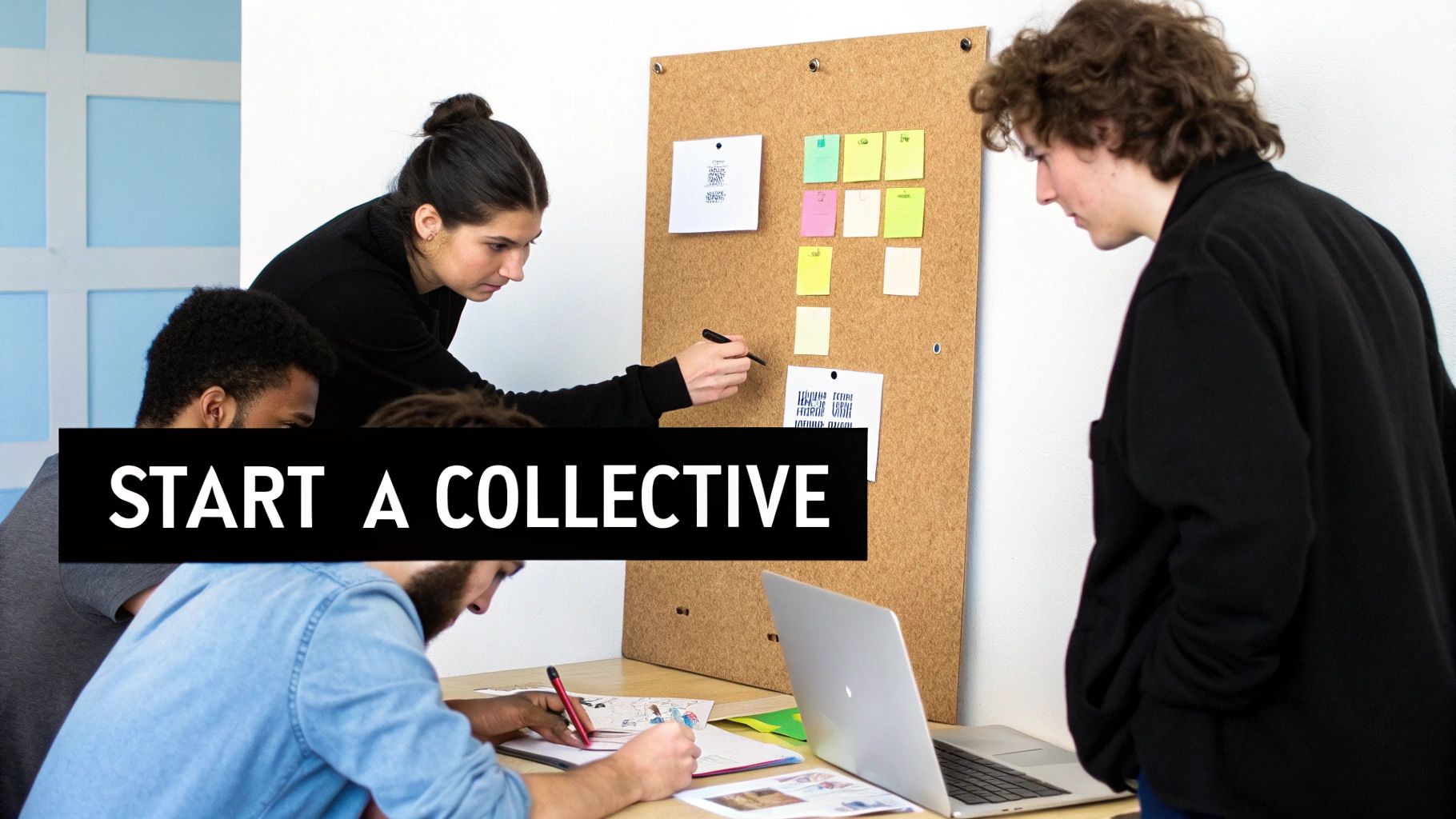
Whether you're looking to join an established group or feel the pull to build something new from scratch, getting involved starts with connection. It's about reaching out to fellow creatives who share your passion and your vision for what art can become when people work together.
For those wanting to join an existing collective, the process is one of active discovery. You aren't just looking for a studio space; you're looking for your people—a group whose artistic and professional goals resonate with your own.
Finding an Existing Artist Collective
The best way to find the right community artist collective is to look both online and in your own backyard. Combining digital searches with real-world networking will give you a much clearer picture of your local creative scene.
Here are a few proven ways to start your search:
- Connect with Local Arts Councils: These organizations are hubs of information and often keep lists of local art groups and collectives. They're an incredible resource for finding active, established communities in your area.
- Network at Art Events: Make a point to attend gallery openings, art fairs, and open studio nights. These events are perfect for meeting other artists, striking up conversations, and hearing about collectives straight from the members themselves.
- Use Social Media Strategically: Platforms like Instagram and Facebook are invaluable. Search for hashtags like #artistcollective, #[YourCity]Artists, or #artcoop. Many collectives use social media to showcase their work and find new members.
Finding the right fit can take time, but it's an investment in your creative future. For a deeper dive, our guide on finding art collectives near me offers even more tips for tracking down local opportunities.
Launching Your Own Collective
What if you can't find a group that feels right? Or what if you have a unique vision you're burning to bring to life? Starting your own collective can be an incredibly powerful and fulfilling path. It takes initiative, but it all begins with one fundamental step: bringing together like-minded artists.
Starting a collective is about creating the community you wish to be a part of. It transforms a solitary artistic practice into a shared mission, empowering every member to achieve more than they could alone.
Building a new community artist collective from the ground up can feel daunting, but you can break it down into a few clear stages. The key is to focus on building a solid foundation first.
Here’s a simple roadmap to get you started:
- Gather Your Core Group: Start small. Identify 3-5 artists whose work and work ethic you genuinely respect. Open up a conversation about your shared goals, your creative frustrations, and what an ideal support system might look like.
- Define Your Shared Vision: Get to the heart of why you're forming. Is the main goal to share a studio? To exhibit together? Or to rally around a specific medium or social cause? A clear, concise mission statement will be your North Star for every decision that follows.
- Draft a Simple Agreement: Before things get complicated, create a basic document that outlines expectations. It doesn't need to be complex, but it should cover essentials like financial contributions (dues), shared responsibilities (like studio cleanup or marketing tasks), and how the group will make decisions. A little clarity now prevents a lot of conflict later.
- Handle the Initial Logistics: Figure out where you'll meet, whether it's a rented space or a member's living room. It's also wise to open a joint bank account to keep collective funds transparent and manageable from day one.
- Promote Your New Collective: Once you have your foundation, it's time to announce yourselves. Create a simple website or social media profile to share your mission and start attracting new members, collaborators, and supporters.
Spotlighting Successful and Inclusive Collectives
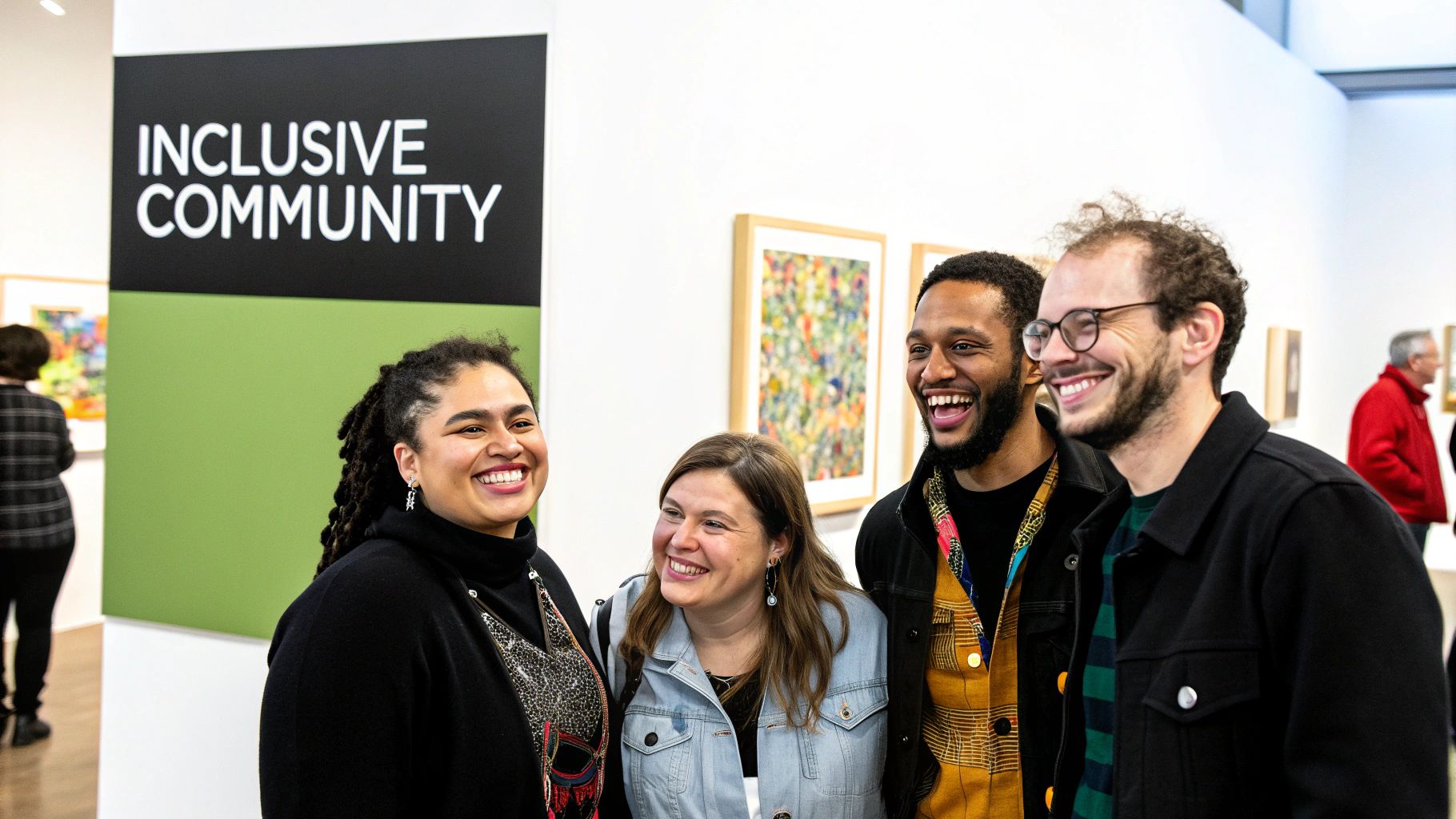
The best way to grasp the real power of a community artist collective is to see it in practice. All across the country, groups are proving that when artists unite around shared values, they can achieve incredible things—not just for themselves, but for their entire creative ecosystem.
These collectives aren't just about sharing a studio space; they are living, breathing engines of social change and artistic discovery. Many are laser-focused on breaking down the old-guard barriers that have historically kept so many brilliant creators out of the mainstream art world.
By intentionally building safe and nurturing environments, these groups empower artists who have long been underrepresented. This includes creators who are Black, Indigenous, and People of Color (BIPOC), members of the LGBTQ+ community, and artists with disabilities.
Champions of Inclusivity
If you look closely at the most successful collectives, you'll find a common thread: an unapologetic commitment to inclusivity. They operate on the fundamental belief that a wider range of voices doesn't just enrich the conversation—it completely transforms it. This approach fosters a resilient community where artists feel safe enough to take risks and create their most honest work.
This isn't happening in a bubble. The broader arts sector is finally catching on to the critical role these collectives play. In a recent survey, an incredible 87% of Grantmakers in the Arts respondents reported increasing their funding for BIPOC artists, the highest rate ever recorded. This shift highlights how a community artist collective has become a vital channel for getting resources and support where they're most needed. You can read more about these important funding trends on the GIA website.
Inclusivity isn’t just a buzzword or a side project; it's the very foundation of a modern, thriving artist collective. By centering the experiences of marginalized creators, these groups are both correcting deep-seated imbalances and pioneering some of today's most vital and relevant art.
Making a Real-World Impact
The influence of these collectives radiates far beyond their own walls. They are active catalysts for cultural change, breathing new life into local art scenes and paving the way for the next generation of creators.
Just look at what these groups are accomplishing:
- For The Gworls: This Black, trans-led collective is a powerful example of art as direct action. They throw celebratory parties and events to raise money that directly helps Black transgender people pay for rent and gender-affirming surgeries, blending community joy with critical mutual aid.
- ArtLifting: By championing artists affected by disabilities and housing insecurity, ArtLifting provides a professional platform to sell and license their work. It's a model that offers a direct path to financial independence and shatters public misconceptions about who gets to be a successful artist.
- The Black School: Part experimental art school, part design studio, this collective uses Black history and radical thought to guide its work. It functions as an educational hub, empowering community members to become agents of change through design, creative expression, and political education.
Each of these examples shows a community artist collective in its most potent form: as a force for both profound personal empowerment and lasting systemic change.
Sustaining a Healthy and Thriving Collective
Getting a community artist collective off the ground is a massive achievement. The real work, however, is keeping it alive and well for the long haul. A successful collective is a lot like a living organism; it needs constant attention, mutual respect, and a shared dedication to its health to avoid becoming stagnant and to keep serving its members.
The foundations of a lasting collective are built on clear, sensible frameworks. First and foremost, you need transparent communication. This means holding regular meetings, using shared digital calendars, and creating an open environment where everyone feels safe enough to voice their concerns. Just as critical is establishing a fair, agreed-upon method for handling disagreements before they get out of hand, which helps protect the group's supportive culture.
Evolving and Adapting for Longevity
A collective that never changes is one that won't last. The groups that truly succeed are the ones that stay flexible, ready to adjust their mission and structure as the needs of their members shift over time. This kind of adaptability is essential for keeping the talent you have and for attracting new artists who resonate with the group's evolving purpose.
Here are a few practical strategies to keep the momentum going:
- Active Recruitment: Make it a point to regularly look for new members. They bring fresh energy and different perspectives, which helps ensure the collective stays dynamic and relevant.
- Skill Sharing Workshops: Plan internal events where members can teach each other new techniques or share creative insights. This not only strengthens bonds within the group but also expands everyone's artistic toolbox.
- Transparent Financials: Keep meticulous and open financial records. Trust is built when every member can see exactly how funds are being managed and spent, making everyone feel more invested in the collective's stability.
This forward-thinking approach is vital, especially in a resilient art market. While global art sales hit an estimated $65 billion, the total number of transactions actually grew by 4%. This growth was largely driven by more affordable artworks—the very kind that collectives excel at bringing to a wider audience. You can dive deeper into these global art market findings to get the full picture.
A healthy collective is not defined by its lack of problems, but by its capacity to solve them constructively. Its longevity depends on the shared commitment to navigate challenges with respect, transparency, and a focus on the collective mission.
In the end, a strong community artist collective is fueled by the passion of its members. By putting clear communication, fair processes, and a willingness to evolve at the forefront, your group can build a lasting legacy of creativity and support. To give your collective an even bigger boost, take a look at our guide on social media for artists.
A Few Common Questions
It's natural to have questions when you're thinking about joining or starting a collective. Let's walk through some of the most common ones that come up.
What’s the Expected Time Commitment?
The time you'll need to contribute can vary dramatically from one community artist collective to another. It really depends on the group's structure and goals.
Some collectives are quite laid-back, where your main responsibility might just be paying dues and showing up for the big annual exhibition. Others, especially cooperatives that run a physical gallery or a shared studio, will have more hands-on requirements. For instance, you might be asked to gallery-sit for a few hours each month, help with event promotion, or join a committee.
The best way to know for sure is to ask for their membership agreement upfront. This document should spell out exactly what’s expected in terms of time and effort, so you can see if it’s a good fit for your own schedule.
How Do Collectives Deal With Conflict?
When you bring a group of passionate, creative people together, disagreements are bound to happen. The real measure of a strong collective isn't avoiding conflict, but handling it in a healthy, productive way.
A strong collective is defined not by the absence of conflict, but by its commitment to resolving it with respect and transparency, ensuring the group's mission and supportive culture are preserved.
Most established groups have a formal process for this written right into their bylaws. It might involve mediation with a neutral member or bringing the issue to a full group vote. When you’re looking into a collective, don't hesitate to ask them what their process for resolving creative or personal disagreements looks like. It’s a great indicator of a well-run organization.
At Skyler’s Art, I believe that community and authentic expression are what give art its power. Each of my original paintings is infused with that spirit, aiming to bring the calming, restorative energy of the sea into your home. You can explore the full collection on my website.