Inside the Tilsner Artist Co Op A Guide to St. Paul’s Creative Heart
The Tilsner Artist Co-op is a celebrated live/work community that offers affordable, stable housing and studio space for artists right in the heart of St. Paul’s historic Lowertown district. It's a member-owned cooperative, meaning the creatives who live here don't just rent their space—they actively build and shape their own environment.
What Defines This St Paul Creative Hub
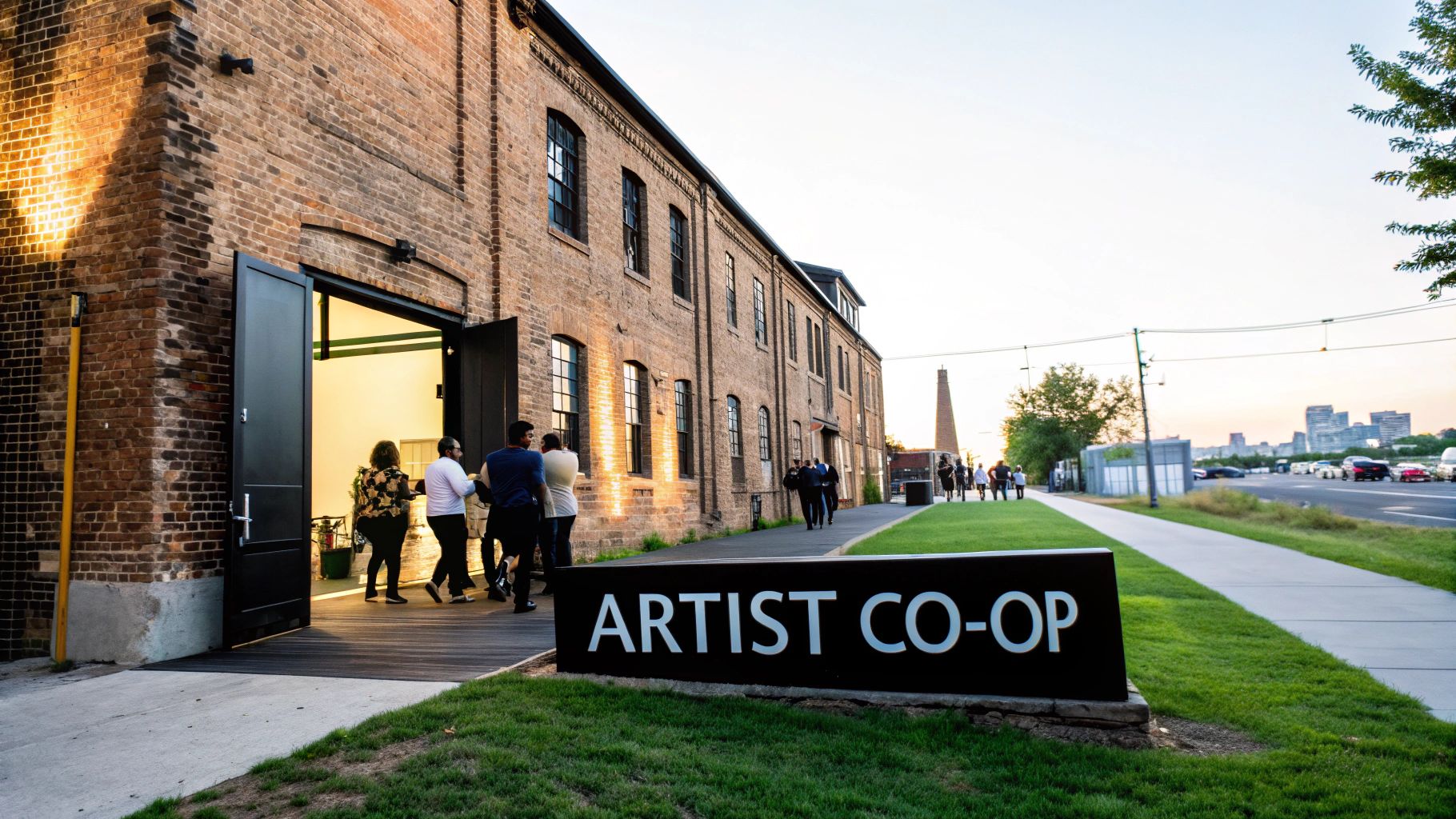
At its core, the Tilsner is so much more than an apartment building. It’s a dynamic ecosystem designed from the ground up to sustain creative careers. Think of it less like a traditional residence and more like a fusion of a collaborative studio, a vibrant community center, and a gallery, all under one historic roof. This unique structure provides an essential foundation for artists trying to make their way in an urban setting.
What truly sets it apart is the cooperative model. Members aren't simply tenants paying rent; they are shareholders who collectively own and manage the property. This shared ownership is empowering, giving residents a direct voice in the building’s day-to-day operations, maintenance decisions, and long-term vision.
A Cornerstone of the Lowertown Arts District
The Tilsner stands as a landmark institution, one that played a pivotal role in the artistic revitalization of its St. Paul neighborhood. Its mission goes far beyond providing walls and a roof. The goal is to create a secure, permanent space where art can flourish without the constant, looming pressure of rising market rents. That kind of stability is absolutely vital for long-term creative development.
The community is also intentionally designed to foster interaction and mutual support among its members. This kind of environment pushes back against the isolation many artists face, naturally creating opportunities for shared inspiration, skill-sharing, and professional growth. The benefits of this model are tangible:
- Affordable Stability: Members gain meaningful control over their living and working costs.
- Collaborative Environment: Living and working in close proximity to other artists sparks new ideas and joint projects.
- Community Governance: Residents actively participate in shaping their community’s policies and priorities.
For artists, a cooperative is a powerful tool. It transforms housing from a mere expense into an asset and a support system, allowing them to invest their resources back into their craft.
Grasping this cooperative framework is the first real step for anyone interested in this unique community, from an aspiring member like Skyler to a local art patron. To get more context on how artists join forces, you can learn more about the role of a community artist collective and its impact on local culture. It offers a valuable lens through which to view one of the city's most vital creative spaces.
The Story of a Warehouse Reborn
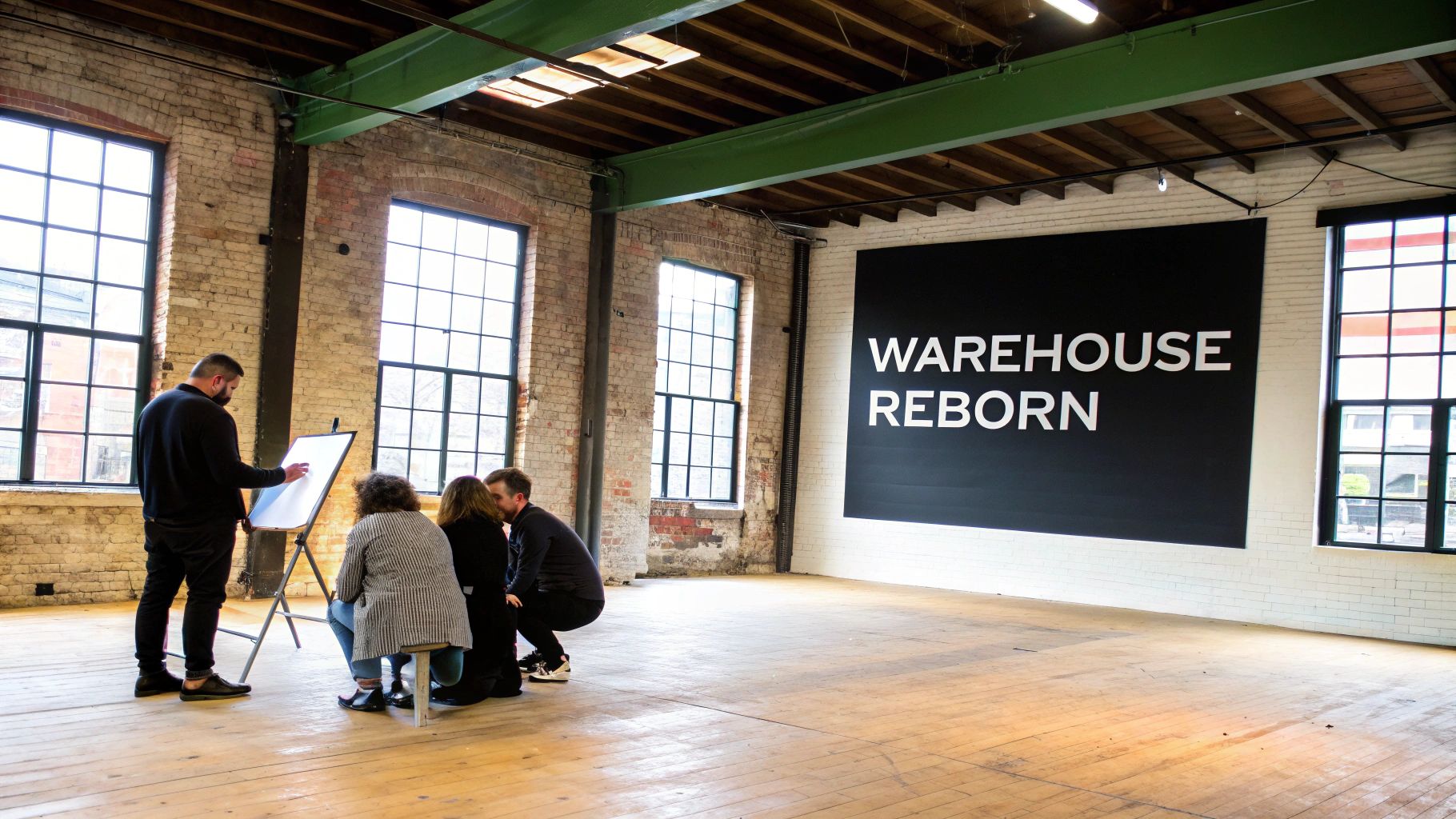
The story of the Tilsner Artist Co‑op is really a story about community, preservation, and rebirth. Its roots go back to St. Paul's Lowertown neighborhood in the mid-1980s, a time when old buildings were falling apart and local artists desperately needed affordable places to live and work. The co-op wasn’t just about saving a building; it was about solving a real problem for the city’s creative soul.
Back then, many of Lowertown’s beautiful historic warehouses were either empty or slated for demolition. At the same time, rising rents were pushing artists out of their studios. It was the perfect storm, creating an urgent need for a solution that could keep artists in the neighborhood and give these old structures a new purpose.
From Demolition to Destination
The Tilsner building itself, a stunning Victorian Romanesque warehouse built in 1895, was on the chopping block. Thankfully, the nonprofit developer Artspace saw its potential. They envisioned more than just a renovation; they saw a chance to create a self-sustaining community where artists could not only live but also build lasting careers, free from the constant pressure of the real estate market.
This wasn't just a hopeful guess—they had proof. A prior project, the Lowertown Lofts Artist Coop, opened in August 1985 with only 29 units and was flooded with over 300 applications from artists. This overwhelming 10-fold oversubscription rate was a clear signal of the massive, unmet demand for affordable live/work space. It gave the Tilsner project the momentum it needed to move forward. You can dig deeper into this history on the St. Paul Art Collective's website.
A Catalyst for Neighborhood Revival
The mission became crystal clear: transform a deteriorating warehouse into a vibrant center for the arts. The project did more than that—it became a true catalyst for the revival of the entire Lowertown district. By creating 66 affordable live/work units, the Tilsner didn't just offer housing; it created a permanent, stable anchor for the arts community.
The transformation of the Tilsner warehouse illustrates a core principle of creative placemaking: investing in artists is an investment in the vitality and soul of a city.
This origin story is key to understanding what the Tilsner is all about today. It wasn't some top-down commercial development. It was a grassroots, community-led answer to a real need. That spirit of authenticity and shared purpose still defines the co-op, making it a model for other art community projects aiming to weave creative life into the fabric of a city. The building stands as a powerful testament to what’s possible when a community decides to save both its architectural heritage and its creative heart.
A Look Inside the Creative Spaces
When you walk into the Tilsner Artist Co-op, you immediately feel the building’s history. It was once a working warehouse, and instead of hiding that past, the space celebrates it. The architectural soul of the building hasn't been stripped away; it’s been repurposed into a sanctuary for artists.
The first things you'll notice are the incredibly high ceilings and the original, weathered brick walls. They give you a sense of scale and history, providing a dramatic backdrop for the art being created within them. For painters and sculptors, this means having the vertical room to dream big and work on massive pieces. Huge, original windows drench the lofts in consistent, beautiful natural light—something every visual artist knows is priceless.
This careful transformation is what makes the Tilsner so special. It’s a space that honors its industrial roots while perfectly serving the needs of today's working artists.
Spaces Designed for Every Discipline
The Tilsner isn't a cookie-cutter apartment building; the lofts were intentionally designed with variety in mind to support a wide range of creative practices. This diversity is key to building a vibrant, well-rounded community where different art forms can coexist and influence one another.
For example, many lofts have wide-open floor plans that are perfect for a painter who needs to step back from a large canvas or a photographer setting up a shoot. Other units are laid out in a way that helps with sound dampening, making them ideal for musicians and sound artists. This inherent flexibility is why the Tilsner Artist Co-op has become a home for so many different kinds of creators.
- Painters and Sculptors: Find all the room they need with high ceilings and expansive, uninterrupted walls.
- Musicians: Can work in units with layouts better suited for managing acoustics.
- Writers and Digital Artists: Discover quiet, well-lit corners perfect for deep, focused work.
- Woodworkers and Craftspeople: Have the space to configure dedicated workshop areas. If you're looking to rent space for woodworking, you'll appreciate how specific features can make or break a craft-focused studio.
To give you a clearer picture, here is a quick overview of what makes the Tilsner building unique.
Tilsner Artist Co-op at a Glance
| Feature | Description |
|---|---|
| Building Type | Historic warehouse conversion |
| Ceiling Height | Soaring, typically 12-14 feet |
| Walls | Original exposed brick |
| Windows | Large, industrial-style, providing abundant natural light |
| Unit Layouts | Varied to accommodate diverse artistic disciplines |
| Common Areas | Shared galleries, meeting rooms, and workshop spaces |
This combination of historic character and modern utility creates an environment that both inspires and supports the resident artists.
Fostering Community Through Shared Areas
The Tilsner is about more than just the private studios. The building’s design intentionally pushes residents to connect, collaborate, and build a real community. This spirit is woven into the architecture itself, turning simple hallways and common rooms into dynamic hubs of creative exchange.
Shared galleries, meeting areas, and workshop spaces become natural gathering spots. This is where artists share ideas over coffee, offer feedback on a new piece, or start planning a joint project. These communal zones are every bit as vital as the private lofts; they are the connective tissue that binds the cooperative together.
The building’s layout is a physical manifestation of its cooperative mission: to provide both the private sanctuary artists need to create and the shared spaces they need to connect.
You can see this philosophy in action during major events like the St. Paul Art Crawl. The entire building comes alive. Private studios open their doors to the public, hallways become crowded art markets, and the usual separation between artist and audience completely disappears. It’s a powerful, direct link between the creators and the community that supports them.
How to Become a Member
For any artist who has ever pictured themselves as part of the Tilsner Artist Co‑op, the first step is understanding how to get there. The path to membership is thoughtfully designed to bring in people who are not just committed to their art but are also ready to roll up their sleeves and contribute to this unique, member-run community. This is much more than a typical housing application; it’s an invitation to become a co-owner.
The process kicks off with a formal application that looks at two critical areas: your artistic background and your financial standing. Because the co-op is dedicated to providing affordable housing, every applicant must meet certain income guidelines. These rules are in place to ensure the Tilsner continues to serve the working artists it was founded to support.
Understanding the Eligibility Criteria
To even be considered for membership, you need to show a serious, ongoing commitment to your creative work. This isn't about someone subjectively judging your art. Instead, the selection committee is looking for proof that art is a central, driving force in your life. You might demonstrate this through a history of exhibitions, a substantial portfolio of finished work, or other professional artistic endeavors.
In addition to your artistic credentials, you'll need to meet the income requirements tied to the affordable units. It's important to remember that these guidelines can shift over time, so you should always connect with the building's management to get the most up-to-date figures before you apply. This dual focus on both art and income is what keeps the cooperative firmly rooted in its mission.
This infographic lays out the main stages you can expect on your journey to membership.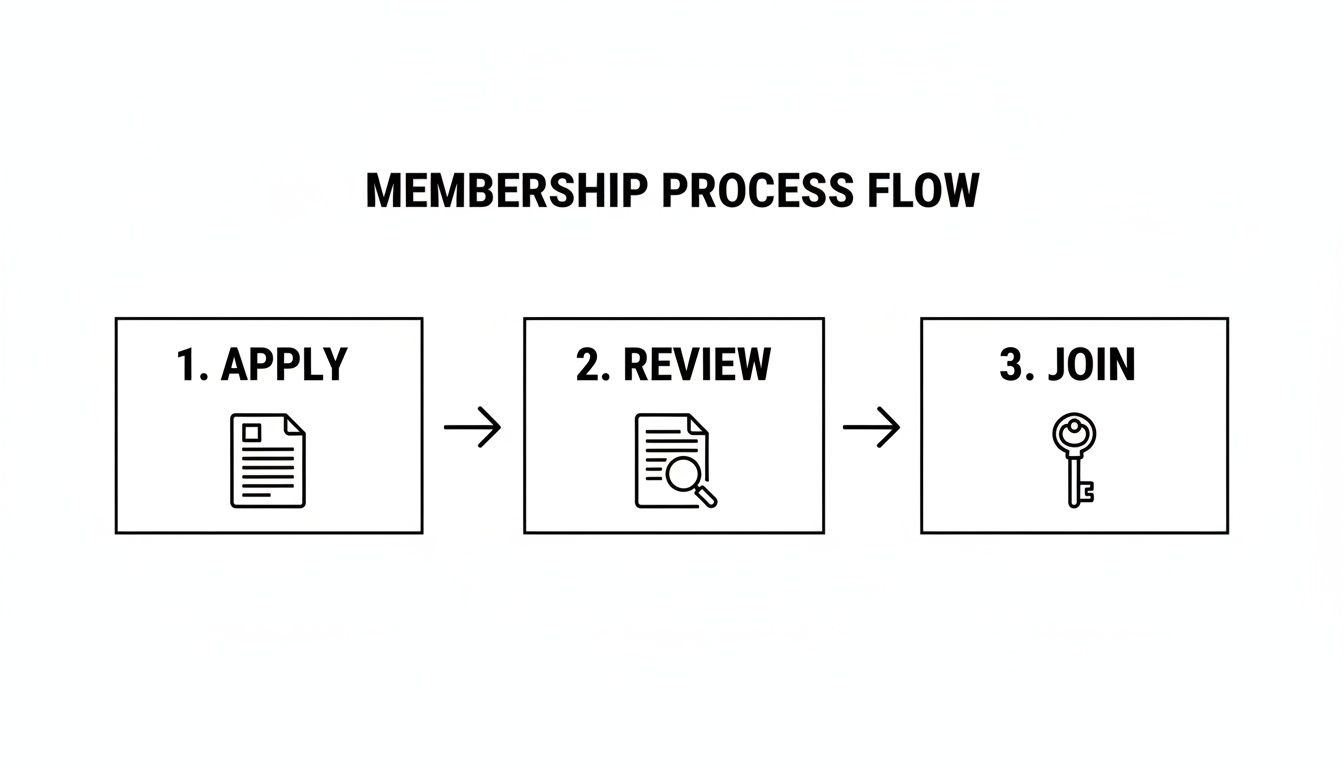
As you can see, the path involves distinct application, review, and acceptance phases, and each one calls for careful preparation on your part.
Crafting a Strong Application
A powerful application is all about telling your personal story as an artist. The two most important tools you have are your portfolio and your artist statement. When used effectively, they should paint a clear, compelling picture of who you are and what fuels your creative practice.
Think about these key elements as you build your application:
- A Curated Portfolio: Select work that truly showcases your technical skill and your unique artistic voice. Don't just throw everything in; choose a focused, cohesive collection of pieces. Quality will always speak louder than quantity.
- A Thoughtful Artist Statement: This is your chance to give your work context. Talk about your motivations, your process, and the central themes you explore. Draw a line from your personal artistic journey to your desire to join a cooperative community.
- Demonstrated Commitment: Be sure to include a resume or a list of activities that prove your dedication. This could cover exhibitions, artist residencies, publications, or any other relevant professional experience.
"A strong application isn't just a collection of your best work; it's a narrative that shows the selection committee how you and your practice will enrich the cooperative's creative ecosystem."
In the end, your goal is to show how you fit into the community’s collaborative spirit. For anyone exploring similar options, our guide on finding art collectives near me offers more insight into what these kinds of communities value. By taking the time to prepare your materials with care, you give the committee every reason to see you as a future contributor to the Tilsner’s incredible legacy.
The Real Value of Cooperative Life
While affordable live/work space is certainly a major draw, the true value of joining the Tilsner Artist Co‑op runs much deeper than just a predictable monthly payment. It represents a fundamental change in how an artist can build a sustainable career and a rich creative life, offering a kind of stability the traditional rental market simply can't provide.
Instead of just paying a landlord, members are contributing to a shared mortgage and operating expenses. Think of it less like rent and more like an investment. Over time, members build real equity in the property, turning their housing costs into a tangible financial asset. This economic foundation gives artists the security they need to take creative risks and plan for the future.
More Than Just a Studio
Perhaps the most significant benefit is the built-in community network that actively works against the isolation many artists feel. Imagine stepping out of your studio and into a casual hallway chat with a sculptor who just figured out a new casting technique. Or getting immediate, insightful feedback on a grant proposal from a writer who lives just down the hall.
This environment fosters a constant, natural cross-pollination of ideas and skills. The cooperative structure itself encourages members to share their knowledge, creating a living library of expertise right within the building's walls. This supportive atmosphere is invaluable, especially for artists navigating the often-complex path of a professional career.
A cooperative is an ecosystem where shared resources—whether knowledge, tools, or emotional support—multiply the potential for every member's success. It replaces competition with genuine collaboration.
This structure also opens doors to direct career opportunities. Events like the St. Paul Art Crawl transform the entire building into a sprawling gallery, giving residents a chance to connect directly with collectors and art lovers. It effectively turns their home and studio into a point of sale, bypassing the typical barriers and commissions of the traditional gallery system. The professional network you build isn't just external; it starts with the artists living and working right beside you.
Tangible Economic and Social Impact
The Tilsner Artists' Cooperative is a living testament to how artist live/work spaces can generate measurable economic and social benefits for urban neighborhoods. In-depth analysis points to a strong positive effect on property values and overall development in St. Paul's Lowertown.
For instance, a market study from Metris Arts Consulting pinpointed the mean residential unit sale price at $151,021. This figure demonstrates a stable appreciation that directly benefits the artist-owners over the long haul. You can explore the full findings on Artspace's website.
This model provides a clear pathway for artists to invest in their own futures while also investing in their community. For those curious about how such communities are supported on a wider scale, the work of the Alliance for Artist Communities is a great resource. Ultimately, co-op life offers a solid foundation for a thriving creative career.
Your Questions About the Tilsner, Answered
Thinking about visiting the Tilsner, or maybe even applying to live there? You're not alone. It’s a unique place, and naturally, people have a lot of questions. We’ve put together some straightforward answers to the things we get asked most often, giving you a clear look at how this landmark St. Paul cooperative really works.
From when you can visit to what it takes to be a member, here’s what you need to know.
Can I Visit the Tilsner Artist Co-Op?
This is probably the most common question we hear. While the Tilsner is a private home and studio space for its artists, the doors do open to the public for special events.
By far, the best time to see inside is during the semi-annual St. Paul Art Crawl. The entire building transforms into a sprawling, multi-level gallery where resident artists open up their personal studios. It’s an incredible opportunity to meet the artists, see where they work, and buy art directly from them. Keep an eye on the official St. Paul Art Collective website for the next crawl dates.
What Is the Application and Waitlist Process Like?
Getting into the Tilsner is a deliberate process. Aspiring members need to show two key things: that they meet the financial criteria for affordable housing and that they have a serious, active commitment to their art. It’s less about one great piece and more about demonstrating that creative work is a fundamental part of your life.
Once you submit an application, it’s reviewed by a committee of current Tilsner members. Given the high demand for a spot in the Tilsner Artist Co Op, there is almost always a waiting list. How long you might wait can change dramatically depending on when units become available. The best way to get the latest on the waitlist status is to contact the building's management directly.
If there's one piece of advice for applicants, it's this: be patient and thorough. The waitlist exists for a reason, and a thoughtful, well-prepared application is your crucial first step.
What Kinds of Artists Live There?
The Tilsner is a true melting pot of creativity. The community is intentionally diverse, bringing together artists from a huge range of disciplines. That mix is what makes the environment so dynamic and full of opportunities for collaboration and fresh ideas.
Inside, you’ll find a vibrant community of:
- Painters, printmakers, and illustrators
- Sculptors working with metal, clay, and mixed media
- Photographers and filmmakers
- Writers, poets, and journalists
- Musicians, composers, and sound artists
- Dancers and performance artists
What matters most is a deep, ongoing dedication to one's craft, not the specific medium. This philosophy is key to building the rich, eclectic community that the Tilsner is known for.
What Are a Member's Responsibilities?
Life in a co-op is a world away from a typical apartment rental. Members aren't just tenants; they are co-owners of the building, and that comes with a shared sense of responsibility.
This is a hands-on community. Everyone is expected to contribute their time and expertise by serving on committees that handle everything from finance and maintenance to new member selection. Participating in regular meetings and voting on key decisions is also part of the deal. This active involvement is what keeps the co-op running, ensures its affordability, and builds the strong community bonds that make the Tilsner truly special.
At Skyler’s Art, that same spirit of authentic creation is poured into every piece. If you connect with art that tells a deeply personal story through emotive brushwork, I invite you to explore my online gallery. You might just find a new work to bring into your own home. See the full collection today at https://skylers-art.org.