A Guide to the Green Space Arts Collective Movement
At its heart, a green space arts collective is where creativity takes root in the natural world. It’s a group of artists who come together to create, but with a shared purpose that’s deeply connected to nature and sustainability.
What Is a Green Space Arts Collective
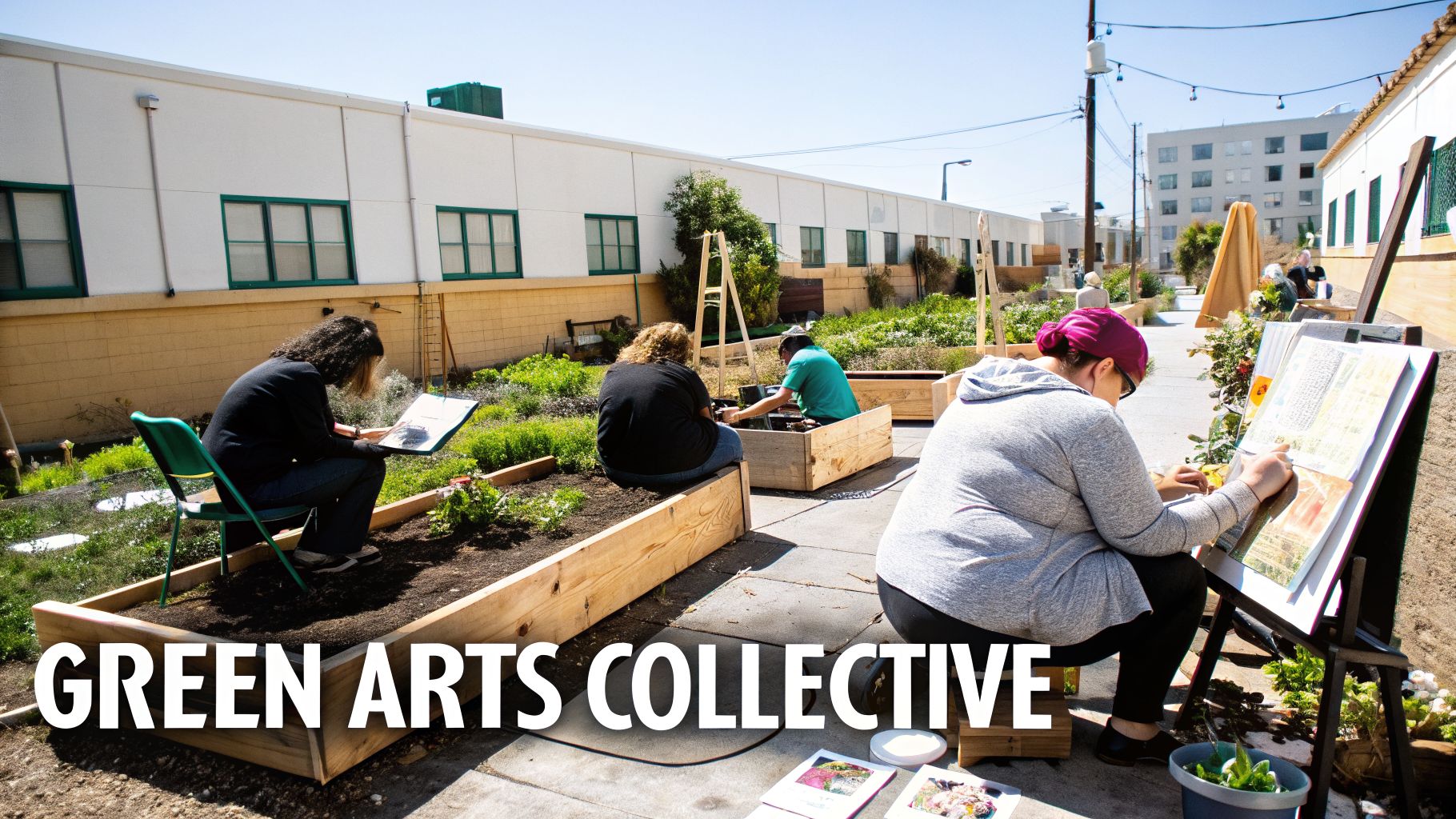
A green space arts collective is an organized community of artists who collaborate, share resources, and produce work in a way that emphasizes a bond with the environment. This "green" focus can take many forms. The collective might work out of a community park, transform a neglected urban lot into a garden studio, or operate from a building that champions sustainable practices.
Think of it like a community garden. While each gardener tends to their own unique plot, everyone benefits from shared tools, a common water source, and communal knowledge. The person who excels at growing tomatoes can offer advice to someone struggling with their squash, and the collective harvest is always richer than what any one person could achieve alone.
A green space arts collective operates on a similar principle. It provides fertile ground where diverse artistic talents—from painters and sculptors to performers and digital artists—are nurtured in a supportive, resource-rich setting.
This model offers a powerful alternative to the isolation of a solitary studio, addressing a deep-seated need for connection and shared goals. As cities expand and affordable creative spaces become scarce, these collectives are emerging as essential sanctuaries. They aren't just about making art; they're about building resilient, creative communities.
Core Components of a Green Space Arts Collective
To fully grasp their impact, it helps to break down the key pillars that define these collectives. The table below outlines the fundamental components and the direct benefits they provide to member artists.
| Component | Description | Benefit for Artists |
|---|---|---|
| Shared Physical Space | Access to a communal studio, gallery, or outdoor area like a garden or park. | Reduces the financial burden of high rent and overhead costs, making a professional practice more attainable. |
| Collaborative Community | A built-in network of peers for feedback, skill-sharing, and joint projects. | Breaks the isolation of solo work, sparking new ideas and fostering creative growth through peer support. |
| Environmental Focus | A guiding mission centered on sustainability, ecology, or nature. | Provides a meaningful platform for creating work about ecological issues and connects artists with a shared passion. |
| Pooled Resources | Shared access to expensive or specialized equipment, such as kilns, printing presses, or digital software. | Lowers the barrier to entry for trying new mediums and allows for more ambitious, professional-level work. |
These elements work together to create an environment where artists can not only survive but truly thrive. This structure proves that art can be a powerful force for both community building and environmental stewardship.
The Benefits in Practice
The advantages of joining a green space arts collective extend beyond just the practical.
Shared Resources and Lower Costs: The high cost of studio space and specialized equipment is a major hurdle for many artists. By pooling resources, collectives make professional tools and dedicated workspaces far more accessible and affordable for everyone involved.
A Built-in Collaborative Network: Working alone can lead to creative stagnation. A collective provides an instant community of peers for critiques, inspiration, and collaboration. This dynamic energy often pushes artists to experiment and grow in ways they wouldn't on their own. You can learn more about this dynamic in our guide to the community artist collective.
A Platform for Environmental Consciousness: The core commitment to nature sets these groups apart. This could mean creating art from reclaimed materials, curating shows with ecological themes, or actively participating in stewardship projects like park cleanups. For artists passionate about sustainability, this offers a powerful and authentic way to merge their practice with their values.
The Professional Benefits of Joining an Arts Collective
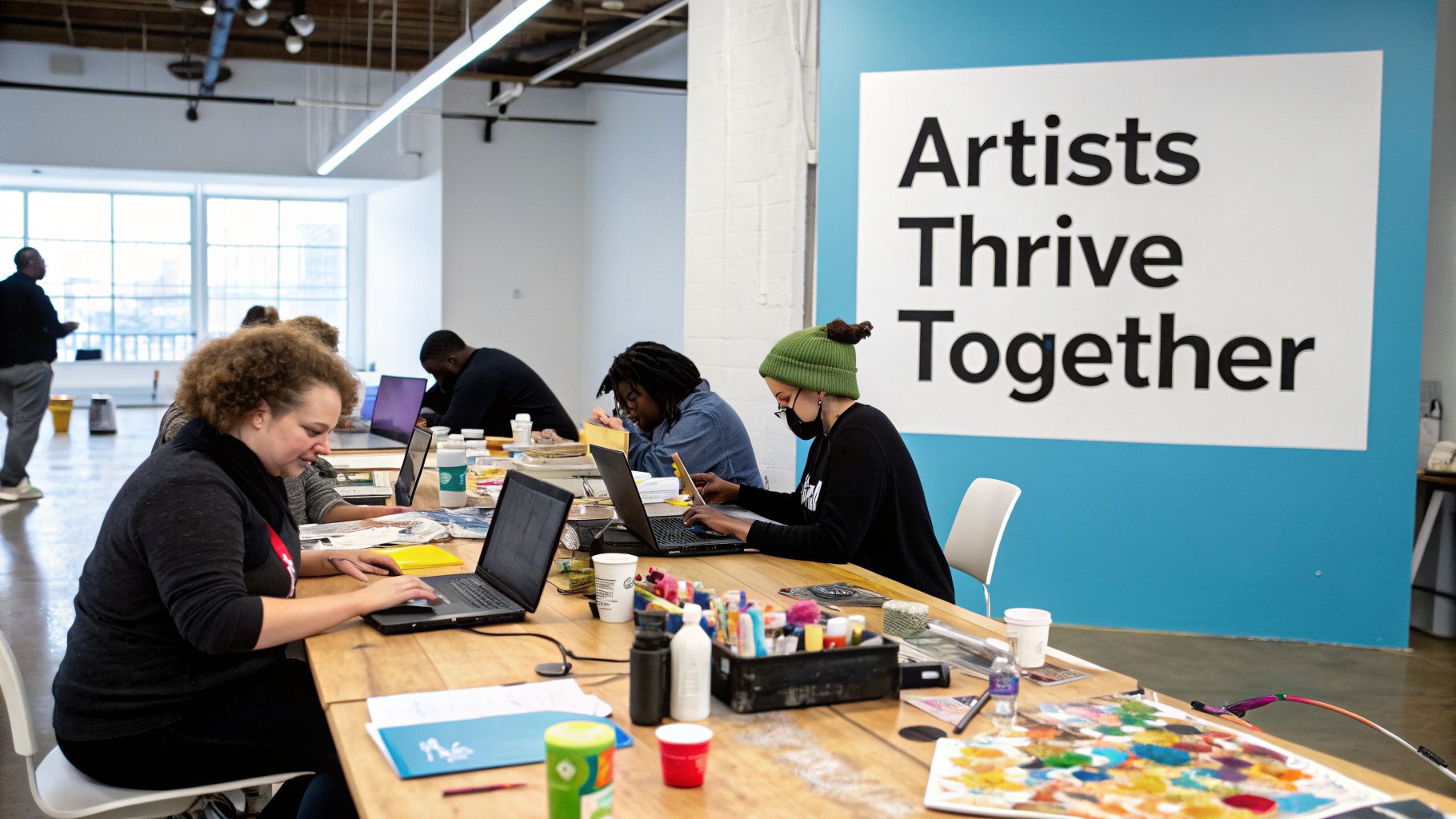
Going it alone as an artist can be a tough road. The creative life is often a solitary one, and the financial pressures can feel relentless. Joining an arts collective, especially a green space arts collective, offers a powerful antidote to this isolation and instability. The benefits go far beyond just sharing a studio; they create a resilient foundation for a more impactful and long-lasting career.
The professional advantages really boil down to three key areas: Community, Visibility, and Sustainability. Each one addresses a fundamental need for artists at any stage, fostering an environment where your work—and your career—can truly thrive.
The Power of Community and Collaboration
The loneliness of the studio is a real and well-documented struggle. A collective instantly swaps that solitude for a dynamic community of fellow artists. This network isn't just for show; it becomes a daily source of inspiration, honest feedback, and crucial emotional support.
This setup naturally encourages peer-to-peer mentorship. You might see an experienced sculptor give pointers to a painter just starting to work in 3D, or a digital artist share a few software shortcuts with a traditional printmaker. It’s this kind of organic knowledge-sharing that helps everyone grow faster and feel more confident taking creative risks.
The collective becomes a living library of skills and experiences. The creative energy generated within a shared space is palpable and can push artists to overcome creative blocks and explore new directions in their work.
Imagine a group of members deciding to pool their talents for a large-scale installation in a local park—a project far too ambitious for any one of them to tackle alone. This kind of teamwork not only results in incredible new art but also builds strong professional relationships and a portfolio of collaborative work. The hands-on experience of managing budgets, timelines, and group dynamics is an invaluable professional asset in itself.
Amplifying Visibility and Reach
For any single artist, getting noticed is an uphill climb. A collective, on the other hand, acts as a megaphone, amplifying the work of its members through the power of a unified brand. It's the classic difference between a single voice trying to be heard and a full chorus.
A green space arts collective, in particular, often has a more established public profile and better marketing resources than an individual could ever afford. This translates directly into career-defining opportunities.
- Group Exhibitions: Simply being part of a group show exposes your work to a much wider audience. You get in front of curators, gallerists, and collectors who are already drawn to the collective’s reputation.
- Media Outreach: Journalists and art critics are far more likely to cover a collective’s event or announcement than an individual’s. A group effort carries more weight and is simply more newsworthy.
- Collective Branding: Your association with a respected collective lends instant credibility to your personal brand. It signals a level of professionalism and commitment that can open doors to galleries, grants, and commissions.
This shared platform allows everyone to pool their resources for things like a professional website, printed promotional materials, and event marketing, achieving a level of polish that would be out of reach for most artists on their own.
Building a Sustainable Practice
In the context of a collective, sustainability means two things: financial health and environmental responsibility. Both are absolutely critical for building a practice that lasts.
Financially, the most immediate benefit is sharing overhead costs. Splitting the bill for rent, utilities, insurance, and big-ticket items like a printing press or kiln dramatically lowers the financial bar for maintaining a professional studio. If you’re curious about how these financial models are structured, our overview of artists co-ops is a great place to start.
At the same time, the specific focus of a green space arts collective fosters environmentally conscious studio habits. This might look like:
- Switching to non-toxic or recycled materials.
- Creating robust waste reduction and recycling programs.
- Hosting workshops on eco-friendly art techniques.
This commitment does more than just align your art with your values. It also appeals to a growing audience of environmentally aware buyers and institutions, creating a unique story around your work and adding another layer of depth to your professional profile.
Case Studies of Thriving Green Space Collectives
Theory is one thing, but seeing how green space arts collectives work in the real world is where their value truly comes alive. The best way to understand their impact is to look at groups that are already doing it—and doing it well. By exploring two very different organizations, one with a long, steady history and another forged in a modern crisis, we can see just how flexible this model can be.
What you'll notice is that there’s no single recipe for success. These groups flourish because they are deeply connected to their communities, shaping themselves around the specific social, financial, and creative needs of their local artists.
An Established Model of Economic Support
Some of the most effective arts organizations have been operating like green space collectives for decades, long before the term was common. Take, for example, a well-known dance and performance art organization in New York City. Founded with a simple but powerful mission—to give choreographers rehearsal space they could actually afford—it has become a cornerstone of the city's cultural life.
Its entire model is built on providing affordable rentals. In a city where real estate costs can crush creativity, this approach has given generations of dancers and choreographers the breathing room to develop new work without constant financial worry.
The group functions as shared ground, prioritizing access over profit. This has created a stable ecosystem where artists feel secure enough to take creative risks and focus on their craft, not just on survival.
The ripple effect is enormous. By supporting thousands of artists over the years, the organization has played a direct role in cementing New York’s status as a global hub for dance. This model proves that sustained, practical support for artists builds cultural wealth for an entire community, much like the stable, artist-owned structure of the Tilsner Artist Co-op.
A Responsive Collective for Social Advocacy
While some collectives are built for longevity, others explode into existence as a direct response to an urgent threat. A newer collective in Miami is a perfect example of artists organizing to fight back against gentrification and the displacement that so often follows. As rising rents began pushing creatives out of their neighborhoods, a group of artists banded together not just to share resources, but to protect their community's cultural soul.
This collective isn't defined by a permanent building but by its nimble, socially-driven projects. Their work is about creating powerful, often temporary, public interventions that shine a spotlight on what’s at stake.
Their "DISplace" exhibition series is a brilliant case in point. This widely recognized project tackles artist displacement head-on by staging art in vacant lots, buildings slated for demolition, or other spaces with deep meaning for the local arts scene. The events are designed to do several things at once:
- Advocacy: They create a can't-miss platform to start public conversations about how urban development impacts cultural communities.
- Community Building: They bring together artists, neighbors, and local activists, strengthening the bonds of a community under pressure.
- Artistic Innovation: They push artists to make site-specific work that engages directly with social issues, often taking their practice in compelling new directions.
By rallying around a cause, this green space arts collective shows us another powerful way to operate. It proves that a collective can be a potent force for social change, using art as a way to defend the very fabric of a neighborhood.
How to Find or Start Your Own Arts Collective
So, the idea of joining forces with other artists has sparked your interest. It's a powerful concept, but figuring out where to begin can feel a little daunting. The good news is, there isn't just one way forward. You really have two main paths: you can find your place within an existing group, or you can take the leap and build something new from the ground up.
Both routes are rewarding in their own right, but they demand different kinds of energy and planning. Let's walk through what it takes to either join an established green space arts collective or lay the foundation for a brand-new one.
Locating and Joining an Existing Collective
Finding the right collective is a lot like finding the right creative partner. It’s all about research, patience, and a genuine connection. Your main goal here is to find a group whose mission and creative energy truly resonate with your own artistic practice.
The first step is to do some digging online. Simple, targeted searches like "artist collective [your city]" or "community art space" are a great starting point. Don't forget to check social media, especially Instagram, where many collectives post their work and announce calls for new members. Local arts council websites and community calendars are also treasure troves of information.
Once you have a shortlist of promising groups, it's time to move from the digital world to the real one.
- Attend Openings and Events: There is no substitute for showing up. Go to their gallery openings, open studio days, and workshops to get a real feel for the group's atmosphere and meet the artists in their element.
- Talk to Artists: Don't be shy. Strike up a conversation with members and ask about their experiences. How is the group run? What do they value most about being a part of it? This is your chance to get the inside story.
- Build Your Proposal: When you’ve found a collective that feels like the right fit, it’s time to prepare a thoughtful application. This typically involves your portfolio, an artist statement, and a cover letter explaining why you want to join and what you hope to contribute.
Joining a collective is a two-way street. You aren't just applying for a spot; you're looking to become an active part of a creative ecosystem. Make sure your application shows you’ve done your homework and that you’re genuinely excited to participate in their mission.
The Blueprint for Starting a New Collective
What if you look around and can’t find a group that matches your vision? Or maybe you just have that entrepreneurial fire and a desire to build something yourself. Starting your own green space arts collective is a massive undertaking, but it can also be one of the most fulfilling projects of your career. This path requires leadership, a knack for organization, and a clear, shared purpose from day one.
Interestingly, the journey doesn't begin with a physical space—it starts with a mission and a core team. A look at successful new collectives, like the youth-led Eitar initiative in Jerusalem, reveals they often form around a single, powerful question: "What is our role as artists in these times?" Answering that for yourself and your group is the most crucial first step.
The flowchart below shows two common ways a collective can operate. It contrasts the formal, structured approach of an established organization with the more flexible, community-focused nature of a responsive group.
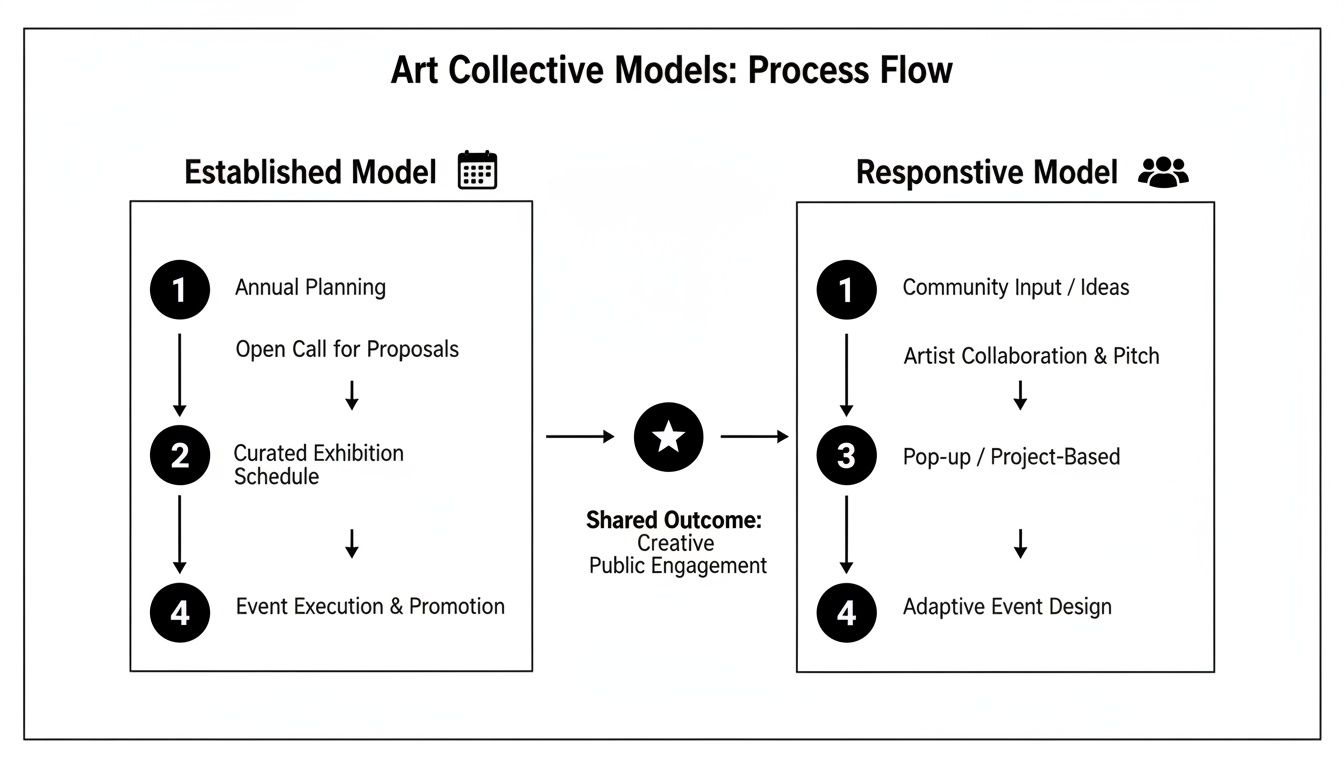
As you can see, new collectives often start out as responsive models, growing directly out of a community need before they develop more formal structures. With that in mind, here's a practical plan for getting started.
- Define a Clear Mission: What is the central purpose of your collective? Are you aiming to create affordable studio space, advocate for environmental causes, or explore a specific artistic medium? This mission statement will guide all your future decisions.
- Assemble a Founding Team: You absolutely cannot do this alone. Find a small group of committed, reliable artists who are just as passionate about the vision as you are. A core team of 3-5 members is often perfect for making decisions effectively in the early days.
- Establish Governance: Decide how you’ll make decisions together. Will it be a fully democratic, consensus-based system, or will a small leadership board guide the group? A transparent and fair structure is vital for preventing conflict and ensuring longevity.
- Create a Financial Plan: You need to map out your startup costs and ongoing expenses, including things like rent, utilities, insurance, and marketing. Figure out a membership dues structure, look into grant opportunities, and plan for some initial fundraising.
- Secure a Space: This is often the biggest challenge. Think outside the box and look at unconventional properties—vacant storefronts, rooms in community centers, or even partnerships with local parks. Your financial plan will dictate what's realistic. To help with your hunt, check out our guide on how to find art collectives near me.
Innovative Programming and Partnership Strategies
A successful green space arts collective is much more than just a shared studio. Its real energy comes from inventive programming and smart alliances that guarantee its health and relevance for the long haul. Just having a space isn't enough. To truly thrive, a collective has to be a hub of activity, creating opportunities that pull in the public, attract support, and build a solid financial base.
This really boils down to two things. First, there’s the creative output—the events, shows, and workshops that become the public face of the collective. Second, there’s the underlying support system—the partnerships and funding that make all that creative work possible in the first place.
Designing Engaging Public Programming
The best programs a green space arts collective can offer are the ones that dissolve the walls between the studio and the surrounding community. It’s about creating an experience, not just showing off a finished object. The goal is to spark curiosity, encourage conversation, and show people, in a very real way, why your collective matters.
Think about a mix of events that can appeal to different people and show off the unique skills of your members.
- Themed Exhibitions: Instead of a generic group show, why not build an exhibition around a powerful idea? A theme like "Reclaimed Nature" could showcase art made from recycled materials, while "Urban Ecology" might explore the fascinating overlap between city life and the natural world.
- Artist-Led Workshops: Let your members share what they know. A printmaker could lead a weekend workshop on using natural plant dyes, or a sculptor could teach a class on turning found objects into art. These events not only generate income but also establish your artists as local experts.
- Open Studio Weekends: This is a classic for a reason. Inviting the public in to see artists at work, ask questions, and buy art directly from the source is incredibly powerful. It demystifies the creative process and forges a genuine connection between makers and their audience.
When you transform the collective into an active cultural destination, you build a loyal following. People will come back not just to see art, but to be part of a vibrant community they feel connected to.
Of course, these programs are essential for getting noticed and building community, but they need a solid financial footing. This is where strategic partnerships become an absolutely critical part of your game plan.
Forging Strategic Partnerships and Securing Funding
No collective can survive in a bubble. Building a network of allies is crucial for financial stability and for reaching a wider audience. These relationships can bring in funding, in-kind donations, and new faces, creating a resilient web of support for your mission.
Think locally and get creative. Your most valuable partners are often the businesses and organizations right in your own backyard. A local restaurant might cater an opening night in exchange for a sponsorship credit, or a nearby hardware store could donate materials for a public art project. For example, Governors Island in New York frequently teams up with arts organizations for its popular Ice Sculpture Show, giving artists a major platform.
Beyond local sponsors, you need a diverse funding strategy to stay healthy over the long term. Never rely on just one source of income.
- Grant Applications: Countless foundations and arts councils offer grants aimed specifically at community-based art. When you apply, focus on telling a compelling story about your collective's impact, using concrete examples and data to prove your value.
- Membership Models: Design a membership plan with clear, tiered benefits. A basic tier might offer studio access, while higher tiers could include perks like a solo exhibition opportunity or marketing support.
- Fundraising Campaigns: Run focused campaigns to pay for specific needs, like a new kiln for the ceramics studio or a scholarship fund for an emerging artist. Crowdfunding platforms are perfect for these smaller, goal-oriented drives.
By weaving together exciting programming with a smart funding strategy, a green space arts collective can build a sustainable model that leaves a lasting legacy. If you're looking for more ideas on how to get started, you can learn more about different types of art community projects in our detailed guide.
Engaging with Collectives as a Practicing Artist
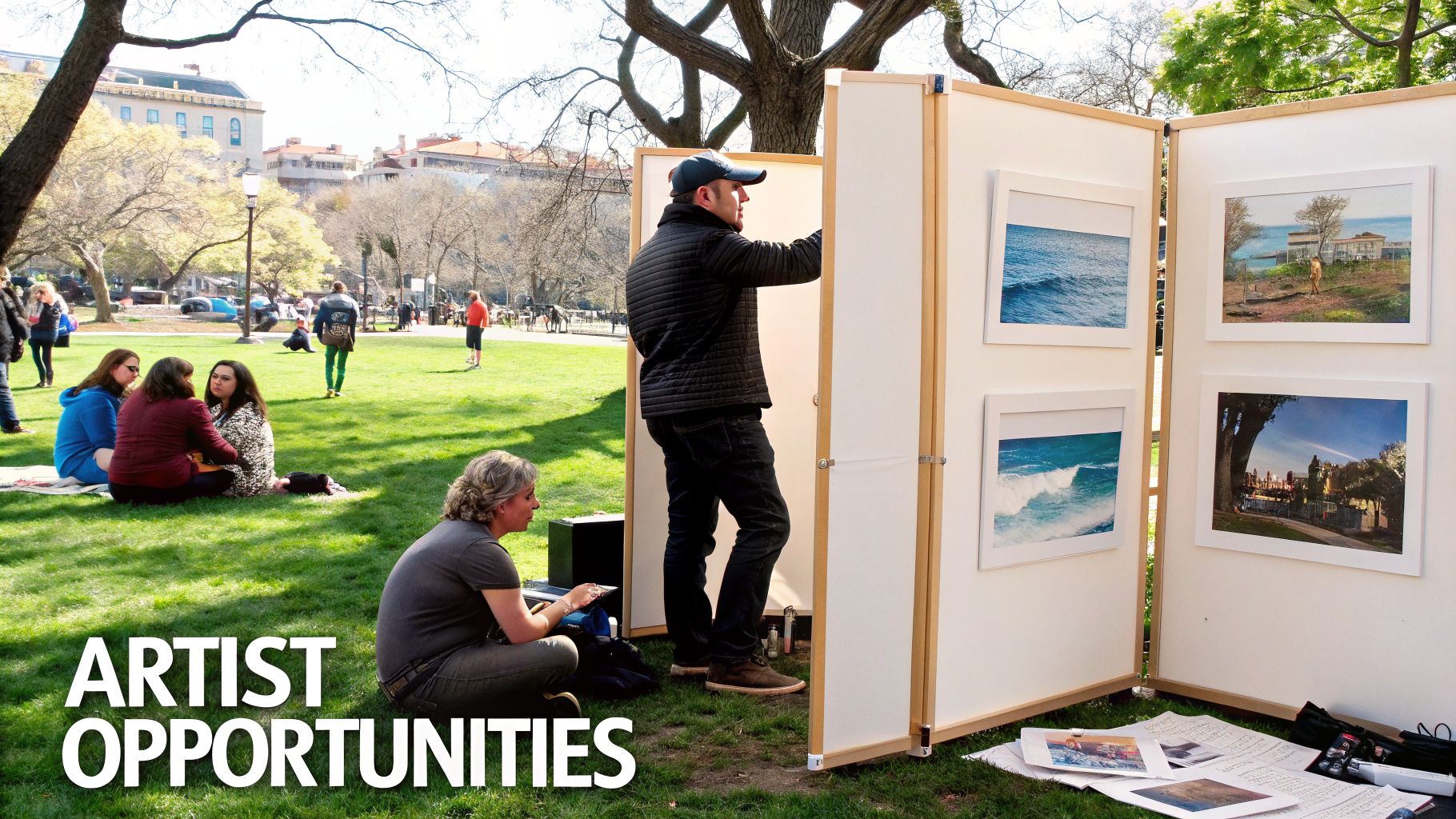
For any working artist, a green space arts collective opens up a world of possibilities that exist far outside the traditional gallery system. It’s an opportunity to find your community, draw new inspiration from the natural world, and show your work in settings people won't soon forget. But how do you actually turn that potential into real growth for your career? The secret is to view it as a two-way street—it’s as much about what you bring to the table as what you hope to get out of it.
Take an artist like Skyler, for example, whose entire practice is built around the ocean. For them, a green space collective could be a game-changer. Instead of just waiting on a gallery’s schedule, Skyler could pitch a pop-up exhibition of their seascapes in a local park or coastal preserve. By partnering with a collective, they could bring their art directly into the very environment that fuels their creativity.
This kind of initiative lets you sidestep the usual gatekeepers and forge a much more direct, immersive connection with your audience. You don't even need to be a member to get the ball rolling; a thoughtful proposal that resonates with a collective's mission can open some truly unexpected doors.
Pathways to Participation
Getting involved with a collective can look different for every artist, and the right approach really depends on what you're trying to achieve. Are you looking to develop new work, grow your professional network, or share your skills?
There are really three main ways for an artist to connect with a green space arts collective:
- Propose a Project: Come up with a specific, site-responsive idea you're passionate about. It could be a temporary outdoor installation, a collaborative mural, or even a group show centered on a theme like ecological resilience.
- Apply for a Residency: Many collectives offer residencies that give you dedicated time and space to create. This is perfect for developing a new body of work away from daily distractions, and it usually ends with an exhibition or an artist talk.
- Join as a Member: If you're looking for deep, long-term involvement, becoming a member is the way to go. It means committing to the collective's vision and often involves having a say in its direction and programming.
The most rewarding partnerships are built on a spirit of creative generosity. When you offer your unique vision and skills, you become a vital part of the group’s ecosystem, creating a cycle of mutual support where everyone wins.
Contributing to the Community
Beyond just showing your own work, one of the best ways to build real connections within a collective is by sharing your skills. Your value as a collaborator goes far beyond what you put on a canvas. Think about the specialized knowledge you have that others could learn from.
For instance, an artist with a knack for watercolor, like our example Skyler, could offer a workshop on plein air painting techniques for other members. A sculptor might lead a session on creating with reclaimed materials found on-site. When you share your expertise, you not only enrich the entire collective but also establish yourself as a mentor and leader within the community.
In the end, engaging with a green space arts collective isn't just about finding another place to hang your art. It’s about becoming part of a movement that champions community, sustainability, and creative collaboration. By showing up and actively participating—proposing ideas, creating new work, and teaching others—you can push your own practice forward while helping to build a more connected and vibrant art world for everyone.
Frequently Asked Questions
As you explore the idea of a green space arts collective, a few practical questions are bound to come up. Whether you're an artist thinking about joining or a community member wanting to get involved, here are some straightforward answers to the most common queries.
Do I Need to Be an Environmental Artist to Join?
That’s a common misconception, but the answer is almost always no. While many collectives are deeply invested in ecological themes, the "green space" part of the name can mean a few different things. It might refer to the collective’s physical home in a park or garden, or it could be about a shared commitment to sustainable studio practices, like recycling materials and sharing resources.
Most groups are far more interested in an artist's commitment to community and collaboration than in the specific subject matter of their work. What truly matters is finding a green space arts collective where you feel a genuine connection to the group's mission and how they work together.
The term "green" is broad. It can mean working outdoors, using sustainable materials, or simply sharing resources to reduce collective consumption. The key is a shared ethos, not a narrow thematic focus.
What Are the Financial Commitments of Joining a Collective?
This is a crucial question, as the financial models can differ significantly from one collective to the next. It’s always smart to get a clear breakdown of costs before you make any decisions.
- Monthly Dues: The most common structure involves a set monthly fee from each member. This typically covers shared expenses like studio rent, utilities, and insurance.
- Co-op Models: Some groups operate more like a co-op. You might find lower monthly dues, but members are expected to contribute a certain number of volunteer hours to help manage the space or run events.
- Project-Based Costs: You’ll also find collectives that form around a single project, like a group exhibition. In this scenario, members simply split the specific costs for that one event, with no long-term financial strings attached.
Before you join, always ask for a detailed list of financial obligations. You'll want to know if there are extra fees for things like exhibition marketing or shared art supplies.
At Skyler’s Art, the connection between nature, community, and creativity is at the heart of every piece. Discover original ocean-inspired paintings that capture the restorative power of the sea and support an artist dedicated to authentic expression. Explore the gallery and find a piece that speaks to you at https://skylers-art.org.