
Coastal Wall Art for Living Room a Guide to Serene Spaces

Coastal wall art is the secret to turning your living room into a light-filled, serene retreat that feels like a permanent seaside escape. It’s far more than just decoration. Think of it as an emotional anchor, infusing your home with the calming energy of the ocean through a palette of soft blues, sandy neutrals, and sun-bleached whites. The goal is an atmosphere of pure, effortless relaxation.
The Enduring Appeal of Coastal Art
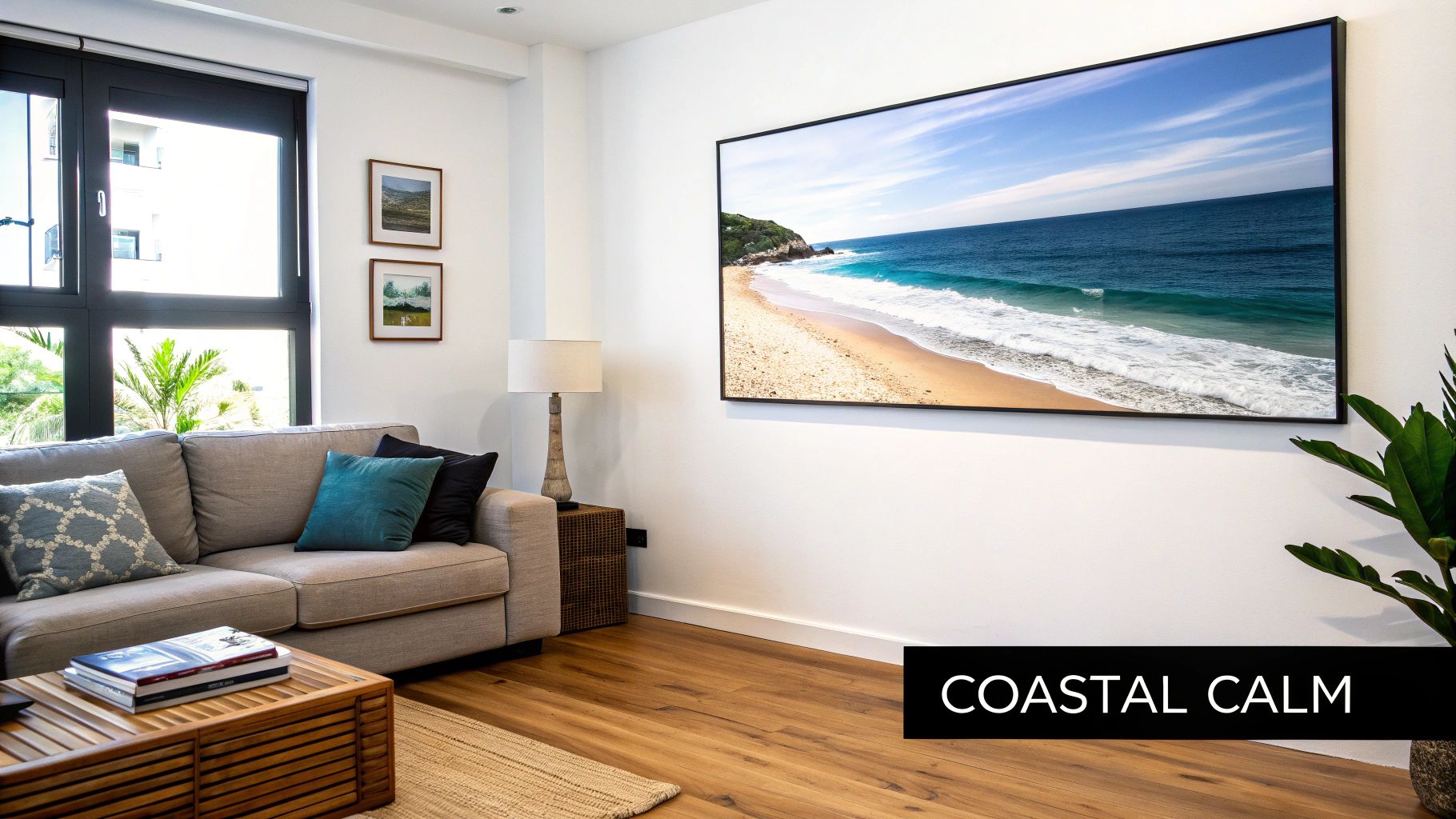
The desire to bring the outdoors in is a timeless interior design principle, and few styles capture this better than the coastal aesthetic. This approach is built on a foundation of light, air, and natural elements, which together create spaces that feel both refreshing and deeply peaceful.
Forget the clichés. True coastal design is less about a collection of nautical motifs and more about capturing a feeling—the quiet of an early morning beach walk, the gentle rhythm of the waves, or the warmth of the sun on your skin.
Why Ocean-Inspired Themes Resonate
At its core, coastal art taps into our profound, almost primal connection to nature. The visual language of the sea, with its expansive horizons, rhythmic waves, and organic textures, has a remarkable psychological impact. When you bring these elements into your living room, they get to work.
- Foster a Sense of Calm: The blues and greens that dominate seascapes are scientifically known to reduce stress and promote tranquility.
- Create an Illusion of Space: Art that depicts vast oceans or open skies can instantly make a room feel larger, airier, and more open.
- Establish a Connection to Nature: It serves as a constant, gentle reminder of the natural world, grounding your home’s atmosphere in something real and timeless.
This powerful effect explains a massive trend: homeowners are increasingly looking for art that makes their living spaces uniquely personal. The global wall art market is projected to reach an incredible US$99.1 billion by 2033, a growth driven by our collective desire to turn a house into a true sanctuary. In North America, the U.S. market alone is forecasted to hit USD 27.47 billion by 2026 as people hunt for more meaningful pieces.
Choosing coastal wall art is about curating an experience. It’s a deliberate decision to infuse your most-used space with serenity, making the living room a genuine escape from the demands of daily life.
Ultimately, the right piece of coastal art does more than just fill an empty wall; it sets the emotional tone for the entire room. To get this right, you need to understand how art that expresses emotion can fundamentally shape your environment. This guide is your practical roadmap, taking you from defining your personal style to mastering placement and care.
Defining Your Personal Coastal Style
Before you even think about buying a piece of art, take a moment to consider the story you want your living room to tell. "Coastal" isn't just one look; it's a huge umbrella covering everything from a windswept Maine cottage to a sun-drenched Greek villa. Pinpointing your specific vibe is the first, and most important, step.
Think of it as setting the mood. Are you aiming for the quiet, understated calm of a modern beach house, or the classic, timeless feel of a nautical New England home? When you know the atmosphere you're after, you can choose art that feels like it truly belongs.
Distinguishing Between Coastal Aesthetics
The coastal design family has a few distinct personalities. Getting to know them helps you find the one that speaks to you, ensuring your art doesn't just hang on the wall, but actually enhances the room's character. Getting this right creates harmony; getting it wrong can make the whole space feel slightly off.
Modern Coastal: This style is all about clean lines, organic textures, and a less-is-more color palette. It’s built on sandy beiges, soft greys, and crisp whites to create a space that feels serene and uncluttered. Abstract seascapes or minimalist ocean photography are perfect here.
Classic Nautical: This is the traditional look we all know and love, anchored by a crisp navy blue and white color scheme. You’ll see motifs like anchors, stripes, and sailboats that feel right at home in a historic seaside town. Think framed boat blueprints or classic harbor scenes.
Getting this clarity from the start is a game-changer. As you begin looking, our complete guide on how to choose art for your home offers more great advice on connecting art to your personal style.
Exploring Mediterranean and Tropical Vibes
Beyond the classics, two other coastal interpretations bring a wonderful sense of warmth and energy into a home, and they've become incredibly popular.
The Mediterranean coastal style, for instance, is having a major moment. We’ve seen online searches for 'Mediterranean wall art' more than double since the beginning of the year. People are clearly drawn to the sun-drenched, earthy feel of coastal villages. This trend leans toward oversized canvases and framed prints, especially those with earthy landscapes and neutral, nature-inspired abstracts.
Mediterranean Coastal: Imagine a warm, rustic, and earthy retreat. This look uses terracotta, sun-bleached woods, and shades of ochre and deep sea blue. The ideal artwork could be a textured painting of a seaside cliff or a print of a sun-washed village scene.
And for those who want something more lush and energetic, there's Tropical Coastal. This style is bold and vibrant, filled with patterns of palm leaves, bright florals, and rich greens and turquoises. It’s the perfect backdrop for artwork with vivid colors and dynamic textures, bringing the lively spirit of an island paradise straight into your living room.
Mastering Scale and Placement for Maximum Impact
Choosing the perfect piece of coastal wall art for your living room is only the first step. Where and how you hang it is what truly brings the room to life. The right artwork, hung incorrectly, can feel lost or even make a space feel smaller, disrupting the room's entire balance. But with a bit of thoughtful placement, that same piece can become a powerful anchor for your design.
Think of your main artwork as a visual cornerstone, grounding the furniture it sits above. One of the most common mistakes I see is art that's simply too small for the wall or the sofa it's meant to complement. An undersized canvas floating above a large sofa looks disconnected, almost like an afterthought, and completely loses its power to make a statement. Luckily, there’s a simple interior design principle that solves this problem every time.
The Two-Thirds Rule for Perfect Proportions
To create a visually satisfying and balanced look, just follow the two-thirds rule. This is a straightforward guideline: your artwork should be roughly two-thirds the width of the furniture it hangs above.
For instance, if your sofa is 90 inches wide, your artwork (or a collection of pieces in a gallery wall) should span about 60 inches. This simple ratio creates a deliberate and pleasing relationship between the furniture and the art, making the whole arrangement feel cohesive.
Before you start measuring, it's also helpful to have a clear vision for your coastal theme. The various sub-styles can influence not just the art you choose, but also how you might group or display it for the best effect.
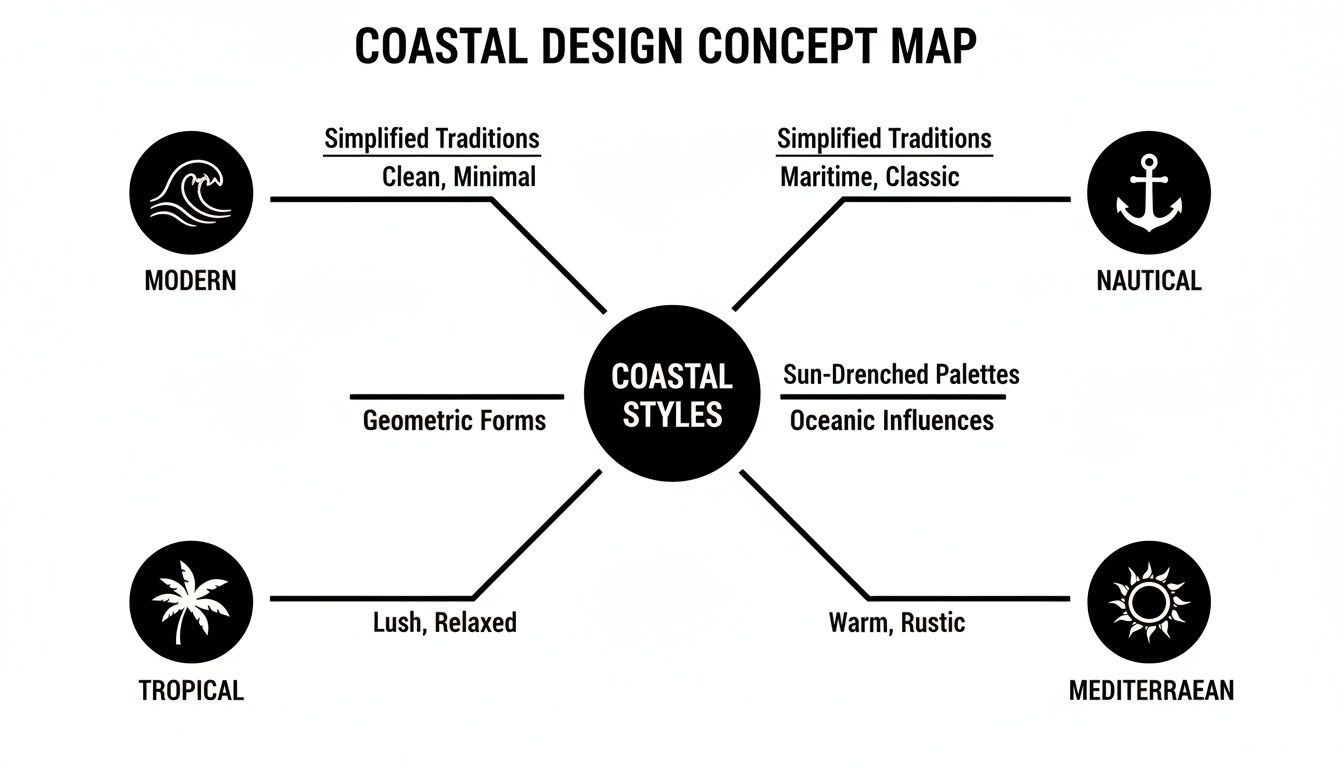
Whether you’re drawn to the clean lines of a Modern coastal look or the rustic warmth of the Mediterranean, having a clear direction will help you make more intentional placement choices.
To make this even easier, here's a quick reference table to guide you.
Choosing the Right Art Size for Your Living Room
| Furniture Width | Recommended Art Width | Example Placement |
|---|---|---|
| 60 inches (Loveseat) | 40 inches | A single landscape or two vertical prints |
| 72 inches (Small Sofa) | 48 inches | A large statement piece or a triptych |
| 90 inches (Standard Sofa) | 60 inches | A significant oversized canvas |
| 108 inches (Large Sofa) | 72 inches | An expansive panoramic or curated gallery wall |
Using this as a starting point will help you avoid the frustration of bringing home a piece that just doesn't feel right in your space.
Finding the Ideal Hanging Height
Once you've got the perfect size, the final piece of the puzzle is hanging it at the right height. Art galleries and museums have this down to a science, and you can use their standard practice right in your own home.
The 57-Inch Standard: As a rule of thumb, aim to hang your artwork so its center point is 57 to 60 inches from the floor. This height represents the average human eye level, placing the art directly in the viewer's natural line of sight for immediate engagement.
Adjusting for Furniture: When hanging art above a sofa, console, or headboard, leave a gap of 6 to 8 inches between the top of the furniture and the bottom of the frame. This creates just enough separation to let each piece breathe while maintaining a strong visual connection.
Getting larger pieces hung securely and perfectly level can be tricky. For a detailed walkthrough, our guide on how to hang large canvas art provides all the step-by-step instructions you’ll need.
Whether you decide on a single, dramatic statement piece or a curated gallery of smaller coastal prints, mastering these simple principles of scale and placement is what will truly elevate your art and transform your living room into the harmonious coastal sanctuary you envision.
Weaving Your Art into the Room's Fabric
Once you've found the perfect spot for your coastal art, the real magic begins: making it feel like it truly belongs in the room. This is the part where you start thinking like a designer, using the artwork as your North Star for color and texture to create a living space that feels completely intentional and put-together.
Think of your new piece of coastal wall art for living room decor as a condensed version of your ideal color palette. It’s not just a picture on the wall; it's the anchor for every design decision that follows.
Pulling Color from the Canvas
The most straightforward way to build a cohesive look is to borrow colors directly from the artwork and sprinkle them throughout the space. This technique instantly creates a visual thread that ties everything together.
Echo a Dominant Hue: Notice a prominent color in your art? Maybe it's a deep, stormy ocean blue. Now, echo that exact blue in a few key places—a set of plush throw pillows, a soft blanket casually draped over the sofa, or even a ceramic vase on the mantel. This simple repetition makes the entire room feel unified.
Create a Pop with Contrast: For a more energetic and vibrant feel, look for a color in your art and then find its opposite on the color wheel. If your beach scene is filled with warm, golden sands, introducing a few accents in a soft lilac or periwinkle blue can create a stunning, yet beautifully balanced, look.
Go for Monochromatic Calm: To cultivate a truly serene and sophisticated atmosphere, lean into a single color family. If your artwork is a subtle study of misty sea foam and soft whites, layering various shades and tints of those same tones will give your room a calm, gallery-like quality.
When you pull colors directly from your artwork, you're essentially guaranteeing a harmonious result. It takes all the guesswork out of picking accents and ensures every piece in the room is part of the same visual conversation.
Bringing Texture into Play
Color is only half the story. To truly bring a coastal theme to life, you need to engage the sense of touch. A coastal vibe is all about texture—the rough grain of weathered driftwood, the fine grit of sand, the smooth, cool surface of sea glass.
Let the texture in your painting inspire the textures around your room. If you chose a piece with thick, visible brushstrokes that convey the wild energy of the waves, you can mirror that tactile feeling with a nubby linen sofa, a hand-woven jute rug, or curtains made from raw silk. This interplay between what you see and what you can feel is what makes a space feel layered, rich, and thoughtfully designed. As you dive deeper, understanding the fundamentals of color psychology in interior design can add another powerful layer to your choices.
Illuminating and Framing Your Coastal Artwork
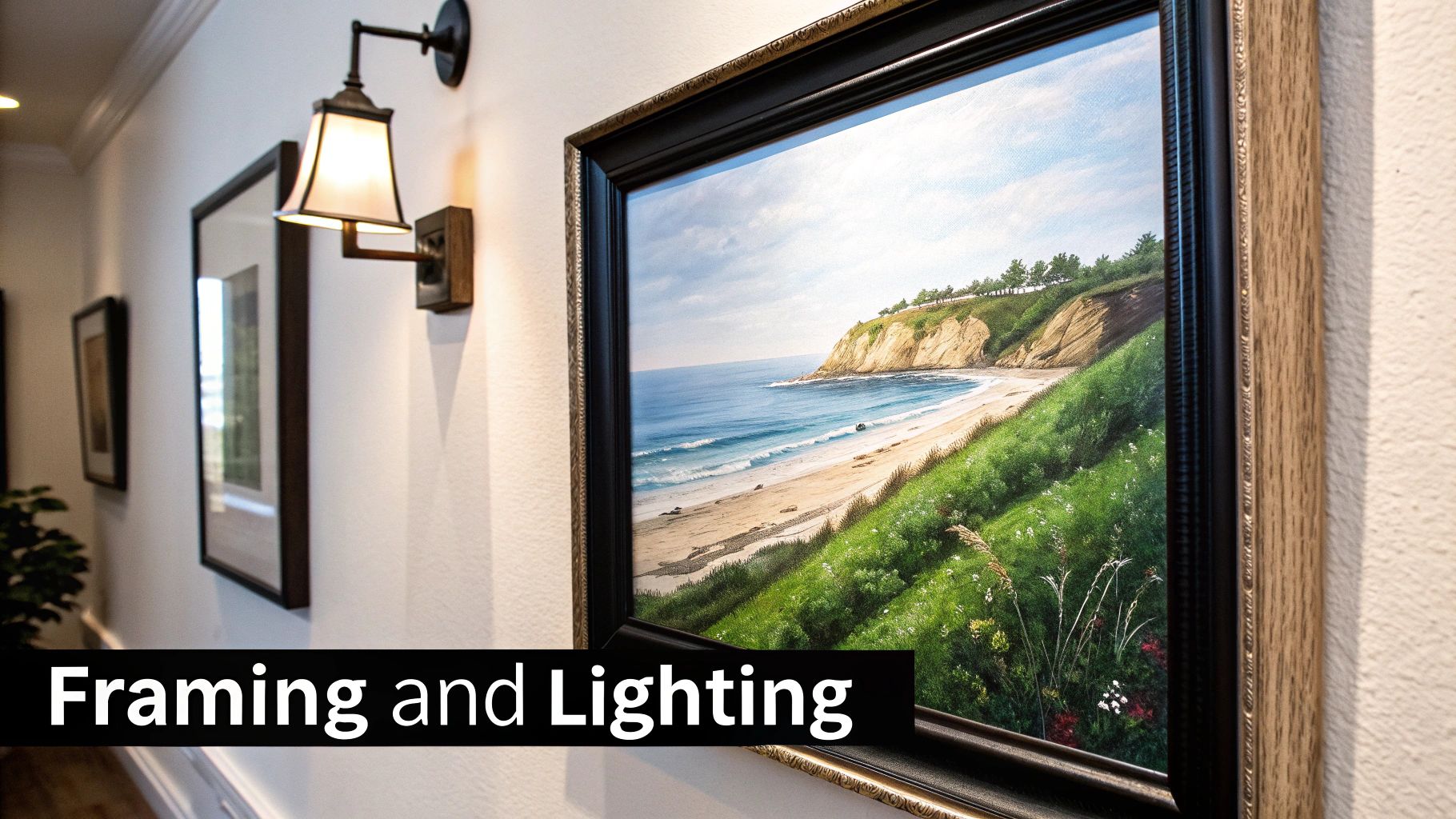
The artwork itself is only half the story. The way you present your piece—how it's framed and lit—is just as important. Get it right, and a beautiful painting becomes a truly breathtaking focal point. These finishing touches aren't just details; they are what amplify the art’s emotional pull and protect your investment for years to come.
I like to think of lighting as the final brushstroke that brings the entire scene to life. The wrong light can completely wash out delicate colors or cast strange, distracting shadows. But the right light? It makes every detail pop.
Selecting the Right Lighting
To really make your coastal wall art for living room shine, you need to think about both the type of light and its color temperature. Each one will subtly shift how you and your guests experience the artwork.
- Picture Lights: These are the classic choice for a reason. Mounted right above the artwork, they provide that focused, gallery-style illumination that commands attention.
- Track Lighting: If you want flexibility, this is your best bet. The adjustable heads let you aim beams of light exactly where you need them, whether it’s for a single piece or a larger collection.
- Wall Washers: For very large canvases or gallery walls, these fixtures cast a broad, even glow across the entire surface, creating a soft, ambient effect that feels sophisticated and inviting.
Don't forget the bulb's color temperature, which is measured in Kelvins (K). This small detail makes a world of difference. A warm light (2700K-3000K) will enrich the golden tones in a sunset scene, making the room feel cozy. On the other hand, a cooler, more neutral light (3500K-4500K) will bring out the crisp blues and whites of a bright ocean view, making the colors feel true-to-life and vibrant.
Choosing a Complementary Frame
A frame is so much more than just a protective border; it’s the visual bridge connecting the art to your room’s decor. Your choice should elevate the painting, not compete with it.
A well-chosen frame completes the artistic statement. It should feel like a natural extension of both the art and the room's established coastal narrative, creating a seamless and polished presentation.
For a room with a rustic or classic nautical feel, a weathered driftwood frame adds wonderful texture and a sense of history. For a more modern coastal aesthetic, a minimalist white or natural wood gallery frame is perfect—it keeps the focus right where it belongs: on the art.
This growing appreciation for thoughtful presentation is part of a larger movement. North America is expected to command 43.60% of the global wall art market, which is projected to grow from USD 70.94 billion in 2026 to USD 145.49 billion by 2034. A huge part of this is driven by a 146% surge in online art sales, as more people look for unique pieces to personalize their homes. You can explore more about these market trends to see just how much art is influencing modern interior design.
Caring For Your Original Coastal Art
An original piece of coastal art is so much more than a simple decoration. It's an investment, a piece of the artist's spirit, and it deserves a little attention to keep it looking its best for years to come. With the right care, the vibrant colors and texture will remain as captivating as the day you first hung it on your wall.
Think of environmental factors as the silent enemies of your art. Things like direct sunlight, humidity, and even dust can slowly cause damage over time. That’s why a little forethought about where and how you display your piece is the best first step you can take.
Protecting Your Investment
To keep your artwork safe, a few proactive habits go a long way. The sun's UV rays are probably the biggest culprit, causing colors to fade and lose their intensity. In fact, an estimated 90% of all interior fading comes from sunlight, so where you hang your art really matters.
- Avoid Direct Sunlight: Try to find a spot that doesn't get hit with harsh, direct sun, particularly in the afternoon when it's strongest. If you have limited options, think about adding a UV-protective film to your windows—it's a great way to shield your interiors without sacrificing natural light.
- Control Humidity: A stable environment is key. Aim to keep your room's humidity somewhere between 40-50%. Big swings in moisture can make a canvas sag or cause a wooden frame to warp over time. In damper climates, a dehumidifier can be a smart move.
- Manage Dust: Every few months, give your painting a gentle dusting with a clean, soft-bristle brush (a sable artist's brush works perfectly). Steer clear of rags or feather dusters, which can catch on the paint's texture and leave behind tiny fibers.
Proper care is an ongoing practice, not a one-time task. Integrating these simple habits into your routine will preserve the integrity and value of your artwork, ensuring it continues to bring the spirit of the coast into your home for years.
Safe Installation Practices
Hanging your coastal art securely is the final, crucial step. Using the right tools and a careful approach ensures your piece is not only displayed beautifully but also stays safely on the wall.
First, get your tools ready: you’ll need a measuring tape, a pencil, a level, and the right kind of wall hooks for your specific wall type (drywall anchors are different from masonry nails, for instance).
Lightly mark the wall where the hook will go, making sure it’s centered where you want the artwork. Before you put any holes in the wall, use your level to double-check that your mark will result in a perfectly straight placement. Once you're sure, install the hook and hang your piece.
For those inspired to grow their collection, you can always explore our gallery of original acrylic paintings for sale to find your next treasured piece.
Frequently Asked Questions About Coastal Wall Art
Even after you've found a piece you love, a few practical questions often pop up before you're ready to hang it. Getting these final details right is what separates a good-looking room from one that feels truly harmonious and complete. Let’s tackle some of the most common questions I hear from clients.
How Do I Mix Original Paintings with Prints?
This is a fantastic way to build an art collection with personality and depth, and it's much more accessible than you might think. The trick is to avoid making it look like a random assortment. You want it to feel curated.
The secret is to establish a clear focal point. Let your original painting be the hero of the story. Give it pride of place—center it over your sofa or on the most prominent wall. Then, arrange the prints around it as supporting characters that enhance its beauty, not compete with it.
To pull it all together beautifully, think about these three elements:
- A Unified Theme: Stick to a common thread, whether it's different views of the same coastline, a collection of marine botanicals, or abstract interpretations of the sea.
- A Consistent Palette: Make sure every piece shares at least one or two key colors. This creates a visual through-line that connects everything.
- Matching Frames: This is the easiest trick in the book. Using the same frame style or color for both your original and the prints instantly creates a cohesive, polished gallery wall.
Can Coastal Wall Art Work in a Non-Coastal Room?
Absolutely. In fact, sometimes that’s where it has the most impact. It's a common misconception that you need a house full of driftwood and seashells to justify a beautiful seascape.
Think of a piece of coastal art not as a thematic decoration, but as a 'window.' It’s a visual escape that brings a sense of calm, nature, and open space into any room, no matter the style.
A stunning ocean painting can be a powerful focal point in a modern apartment or a traditional study. It adds an emotional layer and a breath of fresh air without clashing with your existing decor.
What Is the Biggest Mistake to Avoid?
I see it all the time: choosing art that is simply too small for the wall. It’s easily the most common mistake people make. An undersized piece of coastal wall art for a living room gets swallowed by the space, looking like an afterthought rather than an intentional design choice.
As a rule of thumb, always follow the two-thirds guideline. Your artwork (or the entire gallery grouping) should be about two-thirds the width of the furniture it’s hanging over, like your sofa or a console table.
When in doubt, always go bigger. A larger, more impactful piece makes a confident statement. If you're unsure, grab some painter's tape and mark out the dimensions on your wall. It’s a simple way to visualize the scale before you make the investment.
At Skyler's Art, we believe art should do more than just decorate a wall—it should create a feeling. If you're searching for that perfect piece to bring the tranquil spirit of the coast into your home, I invite you to explore our collection of original, ocean-inspired paintings. Find the piece that speaks to you at https://skylers-art.org.