7 Essential Artist Residencies in Chicago for 2026: A Painter’s Guide
For painters, particularly those working with the fluid nuances of acrylic and watercolor, dedicated time and space are not luxuries-they are necessities. Artist residencies offer a unique sanctuary to deepen one's practice, free from daily distractions and within a focused, creative environment. This is especially true for LGBTQ+ artists, for whom finding an inclusive and supportive community is paramount to authentic creation and professional growth. Chicago, with its robust and diverse arts ecosystem, presents a wealth of opportunities that cater specifically to these needs, making it a premier destination for artistic development.
This guide provides a curated and comprehensive look into seven distinct artist residencies in Chicago and the immediate area. Moving beyond simple descriptions, we offer practical insights tailored to help you make an informed decision. We will analyze each program's structure, studio facilities, potential costs or stipends, and critical application windows, paying special attention to how they serve the specific needs of painters and foster an inclusive, welcoming atmosphere.
Each entry includes a detailed summary and direct links to application portals, equipping you with the necessary tools to proceed. Whether you are a Chicago-based artist seeking a dedicated local studio or an artist from afar looking to immerse yourself in a new creative landscape, this resource is designed to help you navigate your options effectively. Our goal is to assist you in identifying the ideal program and preparing a compelling application for the 2026 residency cycle.
1. Hyde Park Art Center — Jackman Goldwasser Residency
The Jackman Goldwasser Residency at the Hyde Park Art Center is one of the most prestigious long-term, studio-based artist residencies in Chicago. This program offers a year-long, rent-free private studio, providing a significant resource for Chicago-based artists aiming to dedicate substantial time to their practice without the financial burden of studio costs. Its deep integration within a major community art hub makes it a powerful platform for professional growth and visibility.
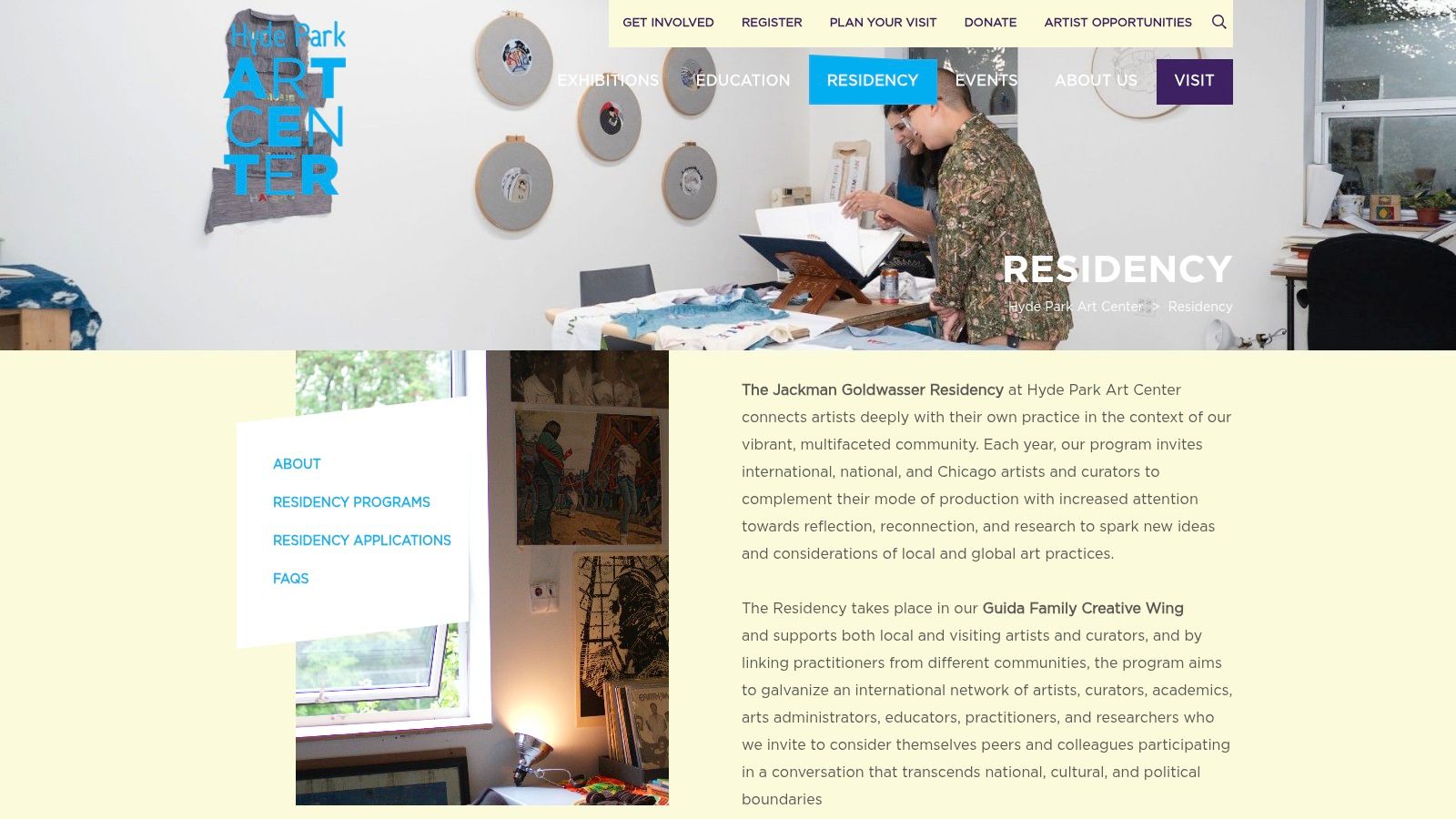
The program is designed to foster a rich, supportive environment where artists can experiment and produce a significant body of work. Beyond the physical space, residents receive a $1,500 stipend to help offset material costs, access to one free class per semester, and structured professional development opportunities, including studio visits with prominent curators, gallerists, and collectors.
Program Highlights & Key Offerings
| Feature | Details |
|---|---|
| Duration & Cost | One year, completely cost-free with a $1,500 stipend. |
| Eligibility | Open exclusively to Chicago-based visual artists. |
| Studio Access | Private, 24/7 access to a studio in the Guida Family Creative Wing. |
| Professional Development | Scheduled studio visits, artist talks, and networking events. |
| Public Engagement | Required participation in quarterly Open Studios and public programs. |
| Application Cycle | Infrequent; the next application is anticipated in 2027. |
Suitability for Painters and LGBTQ+ Artists
The private studios are well-suited for painters, including those working with acrylics and watercolors, as they offer ample space and privacy to develop large-scale projects or an entire exhibition's worth of work. The 24/7 access allows for flexible, intensive work sessions. For artists still refining their aesthetic, the program's long duration provides a stable environment to experiment and discover how to develop your art style.
Hyde Park Art Center has a demonstrated history of inclusive programming and curatorial practices that actively support and showcase LGBTQ+ artists. The residency's emphasis on community engagement within this diverse and welcoming institution ensures that queer artists have a platform to connect with a broad audience and a network of supportive peers and professionals.
Practical Application Tips
Given the residency's high competitiveness and infrequent application windows, preparation is paramount. Applicants should focus on presenting a cohesive and compelling body of work that demonstrates a clear artistic vision and direction. The statement of intent is critical; it must articulate specific, ambitious goals for the year-long residency and explain how the resources offered will be instrumental in achieving them. Start preparing your portfolio and drafting your proposals well in advance of the 2027 application period to position yourself as a strong candidate.
Website: https://www.hydeparkart.org/residency/
2. Chicago Artists Coalition — Artist & Curatorial Residency
The Chicago Artists Coalition (CAC) residency is a highly structured, career-focused program designed to accelerate the professional trajectory of emerging and mid-career artists and curators. This cohort-based model fosters a collaborative environment, pairing a group of approximately 15 artists with 5 curators for a year-long engagement. It is distinct among artist residencies in Chicago for its emphasis on mentorship, professional skills development, and its direct pathway to a culminating exhibition.
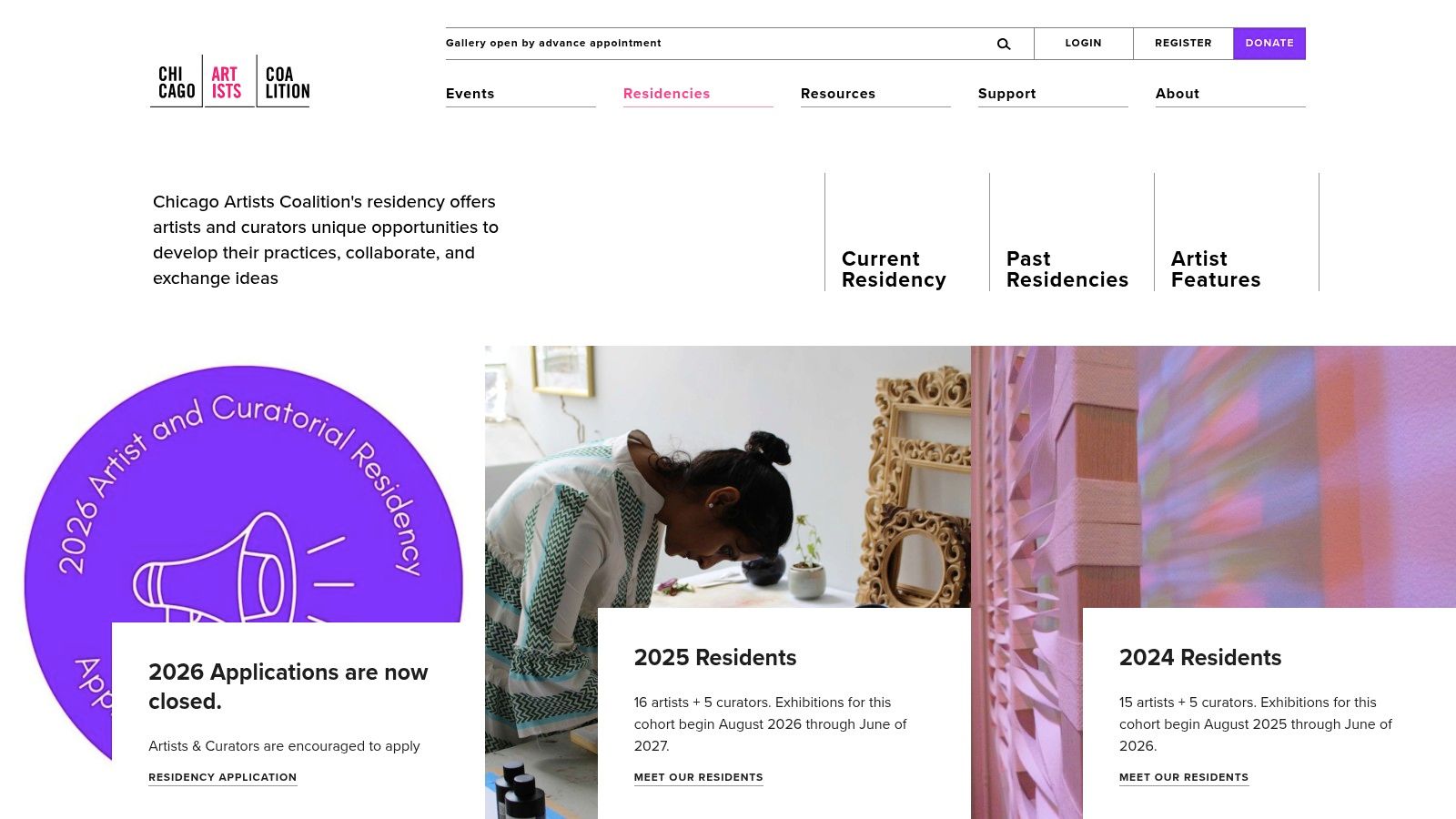
Unlike purely studio-based residencies, the CAC program is curriculum-driven, providing residents with critical tools for navigating the art world. Participants benefit from regular critiques, workshops on topics like grant writing and marketing, and direct networking opportunities with gallerists, collectors, and established artists. This structured support system aims to build sustainable careers and integrate residents deeply into Chicago’s vibrant arts ecosystem.
Program Highlights & Key Offerings
| Feature | Details |
|---|---|
| Duration & Cost | One year, no program tuition. A modest application fee is required. |
| Eligibility | Open to Chicago-based visual artists and curators. |
| Stipend & Support | Residents receive a $350 stipend, a production budget, and preparator hours for the final exhibition. |
| Professional Development | Focused workshops, mentorship, critiques, and curated networking events. |
| Exhibition Opportunity | Culminates in a group exhibition at the CAC gallery, curated by the residency's curatorial cohort. |
| Application Cycle | Annual; applications typically open in late spring or early summer. |
Suitability for Painters and LGBTQ+ Artists
For painters working in acrylics or watercolors, the CAC residency offers a unique advantage: a direct path to exhibition. While it is not a studio-based program, the production support and guaranteed exhibition space provide a concrete goal for creating a new, cohesive body of work. The collaborative environment with curators offers invaluable feedback during the creative process, helping artists refine their concepts for public presentation.
The CAC has a strong and public commitment to diversity and inclusion, consistently featuring LGBTQ+ artists and curators in its programming and exhibitions. The cohort model creates a supportive peer network, which can be particularly beneficial for queer artists seeking to build community. The residency’s focus on professional development provides LGBTQ+ artists with the strategic tools needed to gain visibility and establish themselves in a competitive field, a critical step for those seeking to secure art gallery jobs in Chicago or other professional arts roles.
Practical Application Tips
Success in the CAC application hinges on demonstrating a clear vision and readiness for professional acceleration. Your portfolio should be tightly curated to show a consistent and developed practice. The statement of purpose is crucial; it must articulate not only your artistic goals but also how the program's specific resources, like curatorial collaboration and professional workshops, will directly advance your career. Highlight your interest in community and collaboration, as this is a core value of the cohort-based program.
Website: https://chicagoartistscoalition.org/residencies
3. Lillstreet Art Center — Artist-in-Residence (AIR)
The Artist-in-Residence (AIR) program at Lillstreet Art Center offers a unique, community-embedded experience for emerging and established artists. Unlike solitary studio residencies, this program is integrated within a bustling multidisciplinary art center, providing residents with a personal workspace, extensive facilities access, teaching opportunities, and a supportive cohort of peers. It is an ideal environment for artists who thrive in a collaborative atmosphere and wish to gain practical experience in arts education alongside their studio practice.
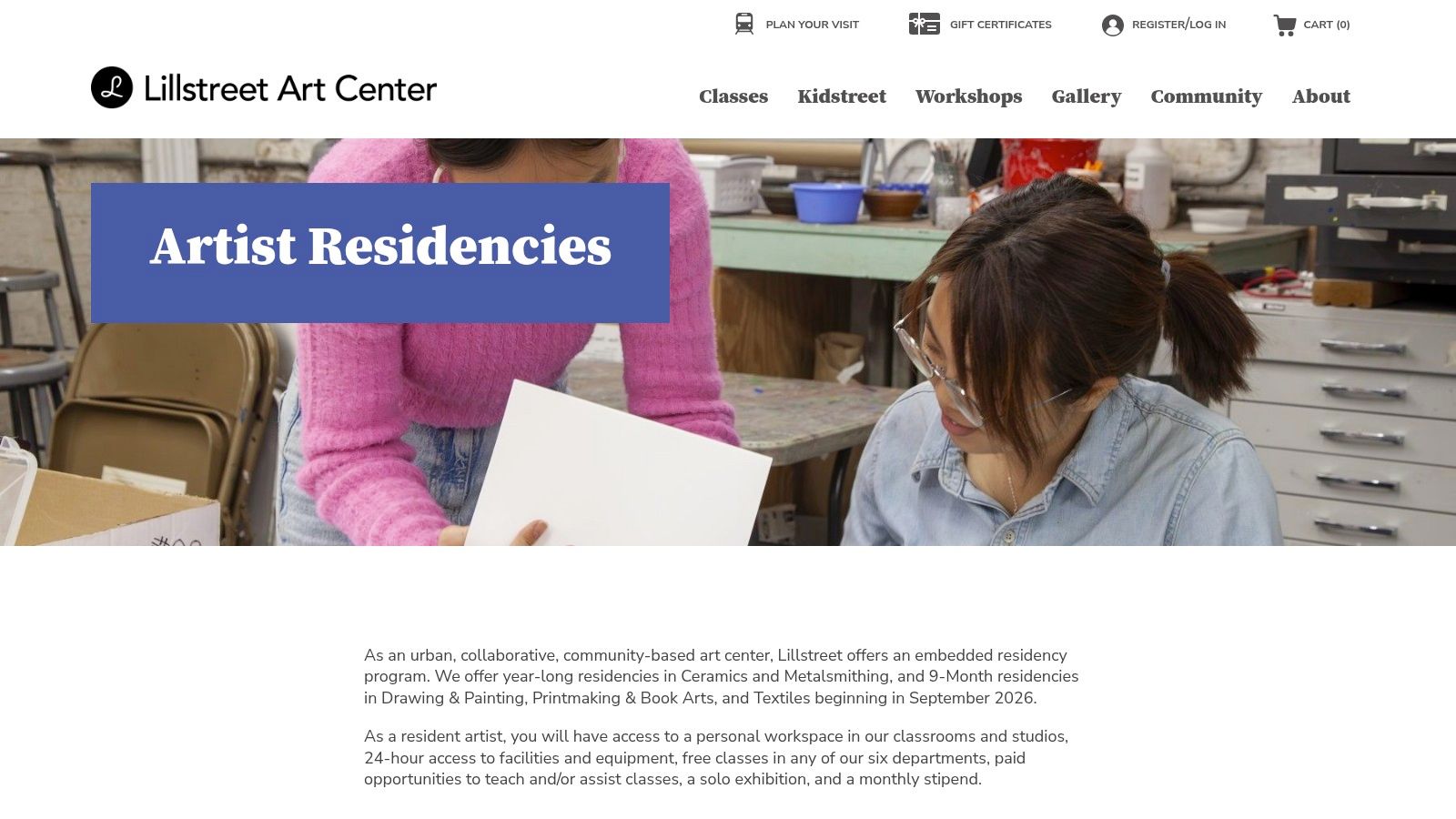
This residency provides tracks for both year-long (September to August) and 9-month (September to May) commitments across various departments, including Drawing & Painting. Residents receive a monthly stipend to support their work, 24/7 access to their department's studios, and the opportunity to take free classes across any department. A key component of the program is professional development, which includes paid teaching roles, culminating in a solo exhibition, making it one of the most well-rounded artist residencies in Chicago for career growth.
Program Highlights & Key Offerings
| Feature | Details |
|---|---|
| Duration & Cost | 9-month or 1-year terms. Cost-free with a monthly stipend. |
| Eligibility | Open to artists demonstrating a strong body of work and interest in community engagement. |
| Studio Access | Personal workspace and 24/7 access to extensive department facilities. |
| Professional Development | Paid teaching opportunities (starting at $28/hour), free classes, and a solo exhibition. |
| Public Engagement | Required teaching and active participation in the Lillstreet community. |
| Application Cycle | Applications are typically due in early spring for the residency beginning in September. |
Suitability for Painters and LGBTQ+ Artists
The Drawing & Painting residency is perfectly suited for painters working with acrylics and watercolors. The personal workspace combined with access to larger studio facilities provides the flexibility needed for various scales of work. The program’s structure encourages skill-sharing and cross-disciplinary learning; a painter could take a free printmaking class to learn new techniques to incorporate into their practice. For artists looking to build a professional portfolio, the teaching experience and solo exhibition are invaluable assets.
Lillstreet Art Center fosters a vibrant and inclusive community that is welcoming to all artists, including those from the LGBTQ+ community. The cohort model and daily interaction with students and fellow instructors create a rich network of support. This community-centric approach provides a safe and affirming space for queer artists to create work, share their perspectives through teaching, and connect with a diverse audience during their culminating solo exhibition.
Practical Application Tips
A strong application will highlight not only your artistic merit but also your passion for community and education. Your portfolio should be professional and cohesive; leveraging one of the best websites for artists free of charge to display your work can be highly effective. In your letter of intent, clearly articulate why the community-based, teaching-focused environment at Lillstreet is a good fit for your specific career goals. Emphasize any prior teaching or community art experience and detail how you plan to engage with the Lillstreet community while advancing your own artistic practice during the residency.
Website: https://lillstreet.com/artist-residencies
4. Ragdale Foundation (Lake Forest, IL)
Located just 30 miles north of the city, the Ragdale Foundation offers a distinct and highly sought-after retreat-style residency on a historic campus. Rather than a long-term urban studio model, Ragdale provides immersive 18-day sessions designed for focused creation in a tranquil, restorative environment. This program is ideal for artists seeking to step away from daily life to concentrate intensely on a specific project within a supportive, interdisciplinary community.
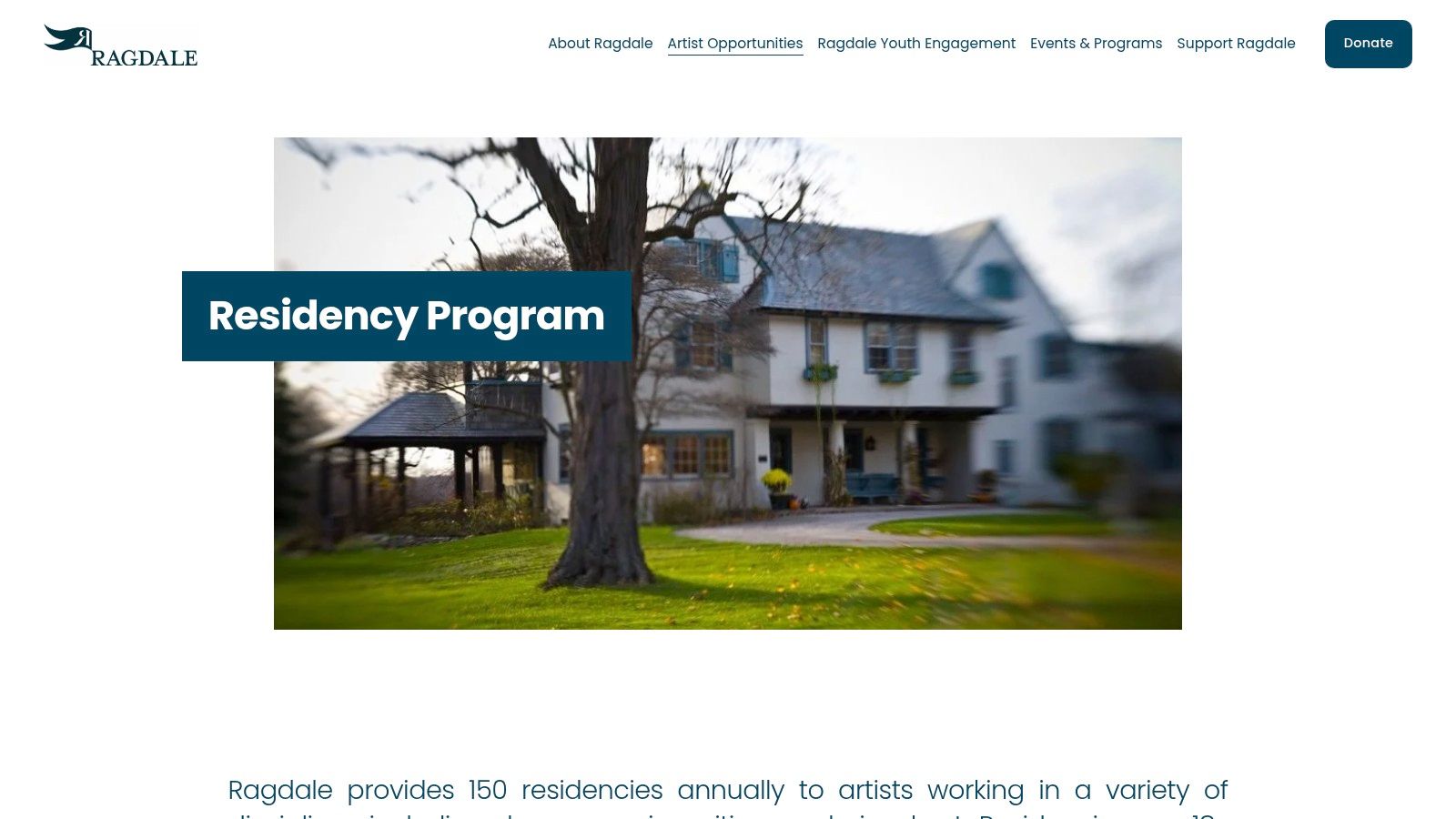
The residency's structure is centered on providing time and space. Artists are given private accommodations and dedicated workspaces, with the foundation providing chef-prepared communal dinners that foster connection and dialogue among residents. The serene setting, complete with access to a 50-acre prairie, distinguishes it from other artist residencies in Chicago and encourages a deep focus on the creative process without external distractions.
Program Highlights & Key Offerings
| Feature | Details |
|---|---|
| Duration & Cost | 18-day sessions. Sliding-scale fee (suggested $35–$250 per day). |
| Eligibility | Open to artists, writers, and composers from around the world. |
| Studio Access | Private studios and accommodations provided on campus. |
| Financial Support | Numerous fellowships are available that waive all fees and include stipends of $1,000 or more. |
| Community & Environment | Communal dinners, interdisciplinary cohort, and access to a large prairie for reflection. |
| Application Cycle | Two application cycles per year, typically closing on May 15 and November 15. |
Suitability for Painters and LGBTQ+ Artists
For painters working with acrylics and watercolors, Ragdale provides dedicated studio spaces that allow for uninterrupted work. The 18-day format is particularly well-suited for completing a small series, experimenting with new techniques, or generating foundational work for a larger project. The peaceful, natural environment can serve as a powerful source of inspiration for landscape or abstract painters looking to reconnect with their practice.
Ragdale has a strong commitment to creating an inclusive and affirming environment, actively welcoming applications from LGBTQ+ artists. The communal nature of the residency, especially the shared evening meals, creates an intimate setting for queer artists to build genuine connections with a diverse group of creative professionals. The availability of numerous fellowships ensures that financial barriers do not prevent artists from underrepresented communities from accessing this valuable opportunity.
Practical Application Tips
Success in the Ragdale application process hinges on a well-defined project proposal. Because the residency is short, the selection committee looks for artists who have a clear and achievable plan for their 18 days. Your statement should concisely articulate what you intend to create and why Ragdale's specific environment is essential for its completion. When addressing the sliding-scale fee, be transparent about your financial situation; the foundation uses this information to ensure equitable access and award fellowships.
Website: https://www.ragdale.org/residencies
5. Spudnik Press Cooperative — Artist Residency (Printmaking)
The Spudnik Press Cooperative Artist Residency offers a vital opportunity for artists specializing in print-based media. Unlike long-term studio programs, this residency is a short-term, production-focused engagement, typically lasting two to six weeks. It is designed for artists who need intensive, dedicated access to professional printmaking facilities to complete a specific project, experiment with new techniques, or produce a limited edition of work. Its deep integration within Chicago’s vibrant printmaking community makes it a standout choice for focused creative production.
Residents receive 24/7 access to the cooperative's extensive studios and light technical assistance from staff, allowing for an immersive and highly productive experience. The program is flexible, with residents collaborating with staff to design a project focus and timeline that suits their goals. A key component of the residency is public engagement, which often culminates in an artist talk, workshop, or other community-facing event, providing a platform for residents to share their work and process with a wider audience.
Program Highlights & Key Offerings
| Feature | Details |
|---|---|
| Duration & Cost | 2–6 weeks. Cost-free access to facilities; no housing or standard stipend. |
| Eligibility | Open to experienced printmakers with a clear project proposal. |
| Studio Access | 24/7 access to screenprinting, intaglio, letterpress, and risograph studios. |
| Professional Development | Opportunities for technical support and skill-sharing within the co-op. |
| Public Engagement | Residents are expected to present a public program, like a workshop or artist talk. |
| Application Cycle | Varies; applications are typically accepted annually or bi-annually. |
Suitability for Painters and LGBTQ+ Artists
For painters, especially those working with acrylic or watercolor, this residency offers a unique chance to translate their visual language into print media. The facilities support techniques like screenprinting and monotyping that align well with painterly aesthetics, enabling artists to explore layering, color blending, and texture in a new medium. The short, intensive format is ideal for a painter looking to expand their practice by creating a specific suite of prints based on their existing work.
Spudnik Press fosters an inclusive and collaborative environment that is welcoming to all artists, including those from the LGBTQ+ community. The cooperative model itself is built on mutual support and shared knowledge. The required public programming offers a significant platform for queer artists to share their perspectives and narratives with the broader Chicago arts community, fostering connection and visibility through their specialized print-based projects.
Practical Application Tips
Success in applying to the Spudnik Press residency hinges on a well-defined and feasible project proposal. Your application must clearly articulate what you intend to create, which specific printmaking processes you will use, and why Spudnik's facilities are essential to achieving your goals. Showcase a portfolio that demonstrates technical proficiency in printmaking and a strong artistic voice. Because the program emphasizes community, detailing your proposed public engagement component, such as a unique workshop idea, can significantly strengthen your application.
Website: https://www.spudnikpress.org
6. Monira Foundation — Monira Residency, Chicago (hosted at Mana Contemporary Chicago)
The Monira Residency, hosted at the expansive Mana Contemporary Chicago arts center in Pilsen, offers interdisciplinary artists a valuable six-month, rent-free studio. This non-living residency is designed for artists who need dedicated time and space for project-based work. Its unique position within a major multi-tenant arts building provides a dynamic environment with significant opportunities for networking, collaboration, and public exposure, making it a key destination for artists seeking to advance their careers.
The program's core philosophy centers on providing the essential resources of time, space, and community. Artists benefit from a private studio space without the financial pressure of rent, allowing for deep concentration on their practice. The residency fosters a collaborative atmosphere through community events and building-wide open studios, giving participants a direct platform to engage with curators, collectors, and the public.
Program Highlights & Key Offerings
| Feature | Details |
|---|---|
| Duration & Cost | Six months, completely cost-free (non-living). |
| Eligibility | Open to interdisciplinary artists. Application is via nomination or periodic open calls. |
| Studio Access | Private, rent-free studio space within Mana Contemporary Chicago. |
| Professional Development | Exposure through building-wide open studio events and networking within a large arts community. |
| Public Engagement | Participation in open studios and other public-facing events is a key component. |
| Application Cycle | Varies; alternates between nomination-only and limited open calls. |
Suitability for Painters and LGBTQ+ Artists
The private studio spaces are ideal for painters working with various media, including acrylics and watercolors, providing the necessary room to develop a new series or experiment with larger formats. The six-month duration allows for the completion of a substantial, project-based body of work. Being embedded within Mana Contemporary offers painters invaluable exposure to a diverse network of arts professionals who frequent the building.
The Monira Foundation and Mana Contemporary foster an inclusive and interdisciplinary environment where LGBTQ+ artists can thrive. The community-oriented structure and frequent public events create a supportive setting for queer artists to share their unique perspectives with a broad and engaged audience. The residency's emphasis on project-based work also allows for the focused exploration of identity and themes relevant to the LGBTQ+ experience, culminating in a highly visible public showcase.
Practical Application Tips
Because this residency alternates between nomination-based selection and occasional open calls, staying informed is critical. Regularly check the Monira Foundation website and subscribe to their newsletter for announcements. When an open call is available, your application should center on a well-defined project with a clear timeline for the six-month period. Emphasize how the specific environment of Mana Contemporary will benefit your project's development and how you plan to engage with the building's vibrant community. For additional resources on finding and preparing for residencies, you can learn more about the national network of artist communities at the Alliance for Artist Communities.
Website: https://monirafoundation.org/monira-residency-chicago/
7. Arts + Public Life (University of Chicago) — APL/CSRPC Artists-in-Residence (AIRs)
The APL/CSRPC Artists-in-Residence (AIRs) program, a collaboration between Arts + Public Life and the Center for the Study of Race, Politics, and Culture (CSRPC) at the University of Chicago, is a premier ten-month paid residency for artists whose work engages with social and community-focused themes. Based on Chicago's South Side, this residency provides significant institutional support, including a stipend, materials funding, and studio space at the Arts Incubator, making it a critical opportunity for artists dedicated to socially engaged practices.
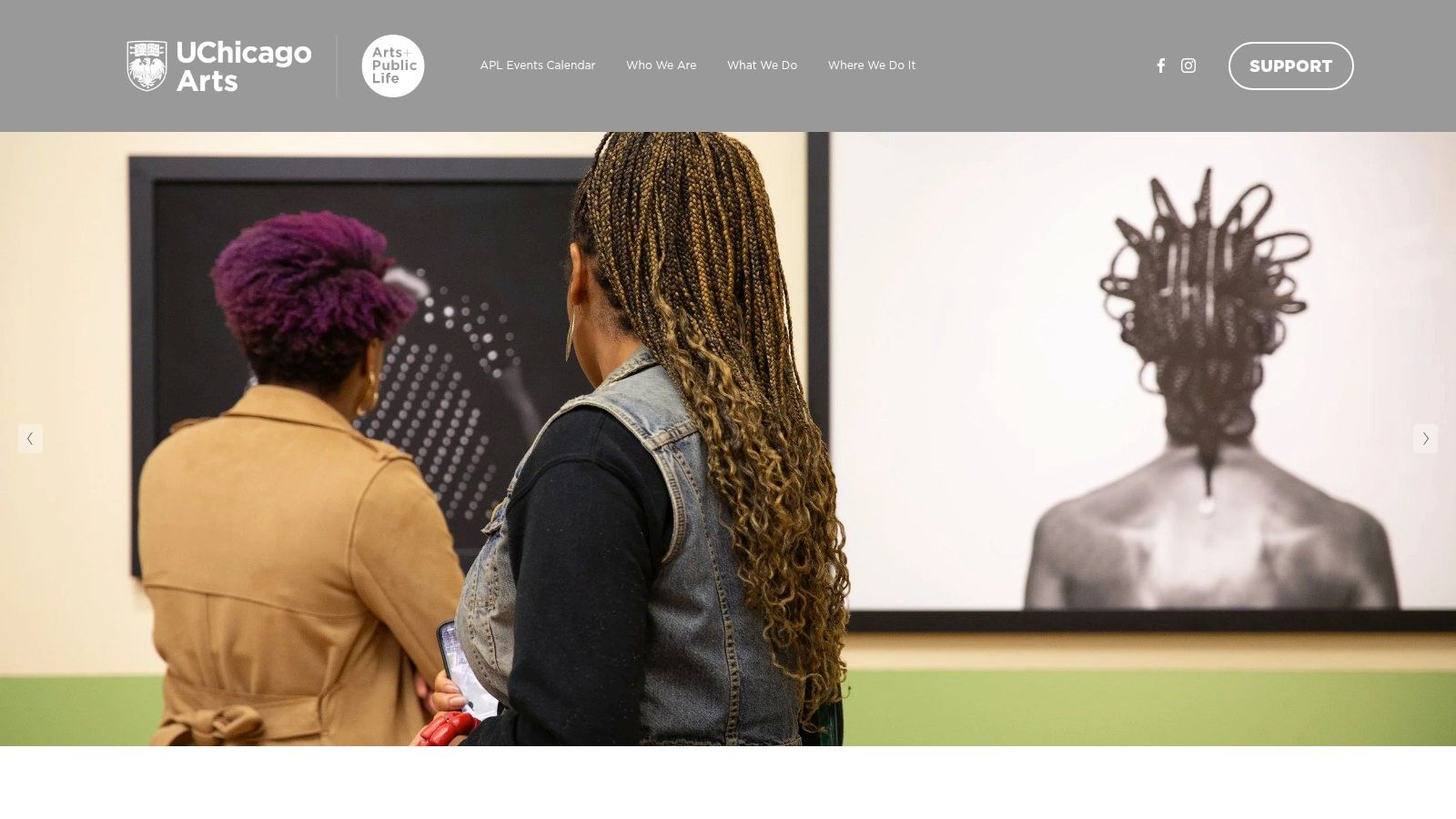
The program is distinct in its mission to amplify voices and practices that explore issues of race, community, and public dialogue. Residents gain unparalleled access to the University of Chicago's vast intellectual and material resources, including its libraries, archives, and faculty expertise. This connection provides a powerful framework for research-intensive projects and offers a prominent platform for exhibition and public programming through the university's Arts Block venues.
Program Highlights & Key Offerings
| Feature | Details |
|---|---|
| Duration & Cost | Ten months; fully funded with a stipend and materials support. |
| Eligibility | Open to artists and collectives whose work aligns with the program's mission. |
| Studio Access | Private or semi-private studio space at the Arts Incubator. |
| Professional Development | Access to university resources, faculty, and public presentation venues. |
| Public Engagement | Required public programming, such as workshops, talks, or open studios. |
| Application Cycle | Typically opens in the fall for the following academic year. |
Suitability for Painters and LGBTQ+ Artists
For painters whose work is rooted in social commentary or community history, this residency offers a fertile environment. The studio space is suitable for developing a significant body of work in acrylics or watercolors, while the program's resources can support research for conceptually-driven projects. The emphasis on public engagement is ideal for artists interested in exploring how to build art community projects that extend beyond the canvas and into public discourse.
The residency's core focus on race, politics, and culture creates a deeply supportive and critically engaged space for LGBTQ+ artists, particularly queer artists of color. The program has a strong track record of selecting residents whose work challenges dominant narratives and explores intersectional identities. This alignment ensures that LGBTQ+ artists have an institutional platform that not only respects but actively amplifies their perspectives within a broader academic and community context.
Practical Application Tips
Success in applying for this residency hinges on clearly articulating the connection between your artistic practice and the mission of APL and CSRPC. Your application must demonstrate a deep engagement with themes of race, social justice, or community on the South Side. A strong proposal will outline a specific, research-based project you intend to pursue, explaining how access to the University of Chicago's resources is essential to its realization. Highlight past projects that showcase your ability to execute socially engaged work and facilitate public dialogue.
Website: https://artsandpubliclife.org/airs
7 Chicago Artist Residencies Compared
| Program | 🔄 Implementation complexity | ⚡ Resource requirements | 📊 Expected outcomes | 💡 Ideal use cases | ⭐ Key advantages |
|---|---|---|---|---|---|
| Hyde Park Art Center — Jackman Goldwasser Residency | High — competitive, year-long commitment | Low cost to artist — free private studio + $1,500 stipend; Chicago residency required | Increased visibility via open studios and curator visits; professional development | Chicago-based artists seeking rent-free private studio and presentation opportunities | Cost-free private studio; stipend; strong public/program visibility |
| Chicago Artists Coalition — Artist & Curatorial Residency | Medium — cohort model with scheduled exhibition process | Modest — small stipend ($350), limited supply budget, low application fee | Curated exhibition, mentorship, networking within Chicago arts ecosystem | Artists wanting cohort mentorship and a clear exhibition pathway | Career-development focus; curated exhibition support; strong local connections |
| Lillstreet Art Center — Artist-in-Residence (AIR) | Medium — department-based with teaching obligations | Moderate — monthly stipend, paid teaching opportunities, full facilities access | Solo exhibition, teaching experience, sustained studio/facilities access | Artists who want teaching experience plus studio time and exhibition | Consistent hands-on facilities; paid instruction; solo show opportunity |
| Ragdale Foundation (Lake Forest, IL) | Low — short, retreat-style 18-day sessions | Variable — sliding-scale fees ($35–$250/day) or fellowship waivers/stipends | Focused, restorative project time with communal meals and cohort support | Artists needing a concentrated, restorative retreat for short-term work | Tranquil campus with meals; transparent fees; fellowship support |
| Spudnik Press Cooperative — Artist Residency (Printmaking) | Low — short (2–6 week) production-focused residencies | Low–Moderate — studio access and technical support; no housing; stipends uncommon | Intensive print production, technical mentorship, community programming | Printmakers needing specialized equipment and short-term production time | Deep print resources; flexible, project-focused timeline; community integration |
| Monira Foundation — Monira Residency (Mana Contemporary) | Medium — six-month, non-living, nomination/open-call model | Low cost to artist — rent-free studio but no housing provided | Sustained rent-free production and building-wide public exposure | Artists seeking rent-free studio in a high-visibility multi-tenant arts building | Rent-free studio in Mana Contemporary; frequent public engagement |
| Arts + Public Life (UChicago) — APL/CSRPC AIRs | High — 10-month program with institutional expectations and mission alignment | Moderate–High — stipend, materials support, studio/exhibition space; institutional resources | Institutional amplification, public programming, career advancement in civic-engaged practice | Artists focused on community-engaged or socially relevant work seeking institutional platform | Strong university resources/venues; platform for socially engaged projects; alumni visibility |
Strategic Next Steps: Preparing Your Residency Application
Navigating the landscape of artist residencies in Chicago presents a wealth of transformative opportunities, as detailed in this guide. From the community-focused Radicle Studio at the Hyde Park Art Center to the interdisciplinary environment of the Chicago Artists Coalition, each program offers a distinct ecosystem for artistic growth. We have explored options like the craft-centric Lillstreet Art Center, the serene retreat at Ragdale Foundation, and the specialized printmaking facilities at Spudnik Press Cooperative. These residencies, alongside the expansive networks at the Monira Foundation and the civic engagement focus of Arts + Public Life, provide diverse pathways for painters and LGBTQ+ artists to deepen their practice.
The common thread among these premier institutions is their search for artists with a clear vision, a compelling project proposal, and a professional application package. Choosing the right program is the foundational step; crafting an application that authentically represents your artistic voice is the critical next action that turns aspiration into reality.
Synthesizing Your Research into a Cohesive Plan
Your journey from reader to resident artist begins now. The information presented serves as a strategic map, but the path forward requires deliberate, organized action. A scattered approach to applications can dilute your efforts and lead to missed deadlines or subpar submissions.
To transition effectively, consider these structured next steps:
- Create a Master Timeline: Begin with a digital calendar or spreadsheet. Input the application deadlines for your top-choice residencies, such as those at the Chicago Artists Coalition or Ragdale. Work backward from each date, setting personal deadlines for key milestones: final portfolio selection, first draft of your artist statement, requests for letters of recommendation, and final proposal refinement. Allow at least four to six weeks for this process per application.
- Develop a Modular Application Kit: Prepare high-quality digital versions of your core materials. This includes your CV, a portfolio of your 10-15 strongest works (especially highlighting acrylic or watercolor pieces), an artist bio, and a general artist statement. Think of these as foundational blocks you can customize.
- Conduct Targeted Research: For each specific residency, revisit their mission statement, current curatorial themes, and the work of recent alumni. This deeper research allows you to tailor your proposal with precision, demonstrating a genuine understanding of and alignment with their unique institutional goals.
Tailoring Your Application for Maximum Impact
A generic, one-size-fits-all application is the most common reason for rejection. Selection committees review hundreds of submissions and can easily identify proposals that lack specific relevance. To stand out, every component of your application must speak directly to the opportunity at hand.
For Painters (Acrylic & Watercolor):
Your proposal must move beyond simply stating your medium. Articulate why a particular residency's environment is essential for your work. For example, if applying to a program with large, light-filled studios like those at Mana Contemporary (Monira Foundation), explain how that specific architectural feature will enable you to scale up your watercolor works or experiment with new drying techniques for large acrylic canvases. Connect your material needs to the facilities offered.
For LGBTQ+ Artists:
If your identity is integral to your practice, articulate this connection with clarity and purpose. Explain how your work explores specific themes relevant to the LGBTQ+ experience and how a supportive, inclusive community would foster this exploration. Frame your personal narrative as a strength that enriches your artistic inquiry and would contribute a valuable perspective to the resident cohort. A powerful application often weaves together the personal, the political, and the aesthetic into a compelling narrative that resonates with the residency's values.
Key Insight: The most successful applications demonstrate a symbiotic relationship. They clearly articulate not only what the artist will gain from the residency, but also what their unique practice, perspective, and proposed project will contribute to the residency's community and creative ecosystem.
Ultimately, your application is a curated introduction to you as a professional artist. It should be polished, authentic, and meticulously researched. By investing the time to prepare a thoughtful and targeted submission, you significantly increase your chances of securing a coveted spot in one of Chicago’s exceptional artist residencies, paving the way for a period of profound creative development.
As you prepare your portfolio and refine your artistic vision for these applications, exploring the work of other artists can provide immense inspiration. The emotive, impressionistic paintings at Skyler’s Art demonstrate how personal narrative and a deep connection to nature can be powerfully conveyed through acrylic and watercolor, reflecting the kind of compelling work that residency committees seek. Discover the collection at Skyler’s Art to see how a cohesive and authentic artistic voice is brought to life.