Art That Expresses Emotion: Bring art that expresses emotion into your space
Art that expresses emotion isn't just about painting a pretty picture. It's a form of visual storytelling where an artist uses color, texture, and composition to translate a feeling into something you can see and experience. Think of it as a non-verbal language that allows an artist like Skyler to convey complex ideas like resilience or joy, forging a direct connection with the viewer.
Understanding the Unspoken Language of Art
Have you ever stood in front of a painting and felt a sudden wave of calm wash over you? Or maybe a sharp pang of nostalgia, or a jolt of pure energy? That powerful, immediate experience is the very heart of what makes art that expresses emotion so compelling.
This kind of art moves beyond being simple decoration. It becomes a rich dialogue, acting as a bridge between the artist’s inner world and our own. Each piece can serve as a mirror, reflecting not just a scene but a feeling, inviting a profound sense of connection and even self-discovery.
This art form works because it’s built on a deliberate visual vocabulary. The artist isn't just painting an object; they are carefully crafting an emotional narrative. Every single choice—from a turbulent, thickly-layered brushstroke to a serene, smoothly-blended color palette—is a word in this silent conversation.
The Elements of Emotional Dialogue
Artists channel their own experiences and perspectives directly into their work, embedding emotions right onto the canvas. This process turns a static object into a dynamic vessel for the human experience. When we look at this art, we're not just observing; we're participating in that story.
Key aspects of this dialogue include:
- Intentionality: Every element is carefully chosen to build a specific mood or feeling.
- Authenticity: The work often reflects the artist’s genuine personal journey, like Skyler’s own exploration of identity and resilience.
- Connection: The ultimate aim is to resonate with the viewer, sparking empathy and introspection.
Art becomes a vital tool for human connection when it speaks a language we can all feel, even if we cannot name it. It validates our own unspoken emotions and reminds us that we are not alone in our experiences.
This is a great place to start. Recognizing the techniques artists use to communicate is the first step toward appreciating the deep layers of meaning in their work. For a closer look at these methods, you can learn more about impressionistic painting techniques and how they capture fleeting moments and feelings.
How Artists Create Emotion on the Canvas
Artists are, in essence, translators. They take the abstract, intangible world of human feeling and convert it into a concrete visual language. To do this, they rely on a powerful toolkit of intentional techniques designed to guide a viewer's emotional response.
Think of a painter as a composer. Where a musician uses specific notes and tempos to craft a mood, an artist uses color, texture, and composition to achieve the very same thing. This isn’t a happy accident; it’s a series of calculated choices designed to evoke a specific feeling, turning a simple canvas into a deeply resonant experience.
This concept map helps visualize the direct line connecting the artist's intent with the viewer's emotional journey.
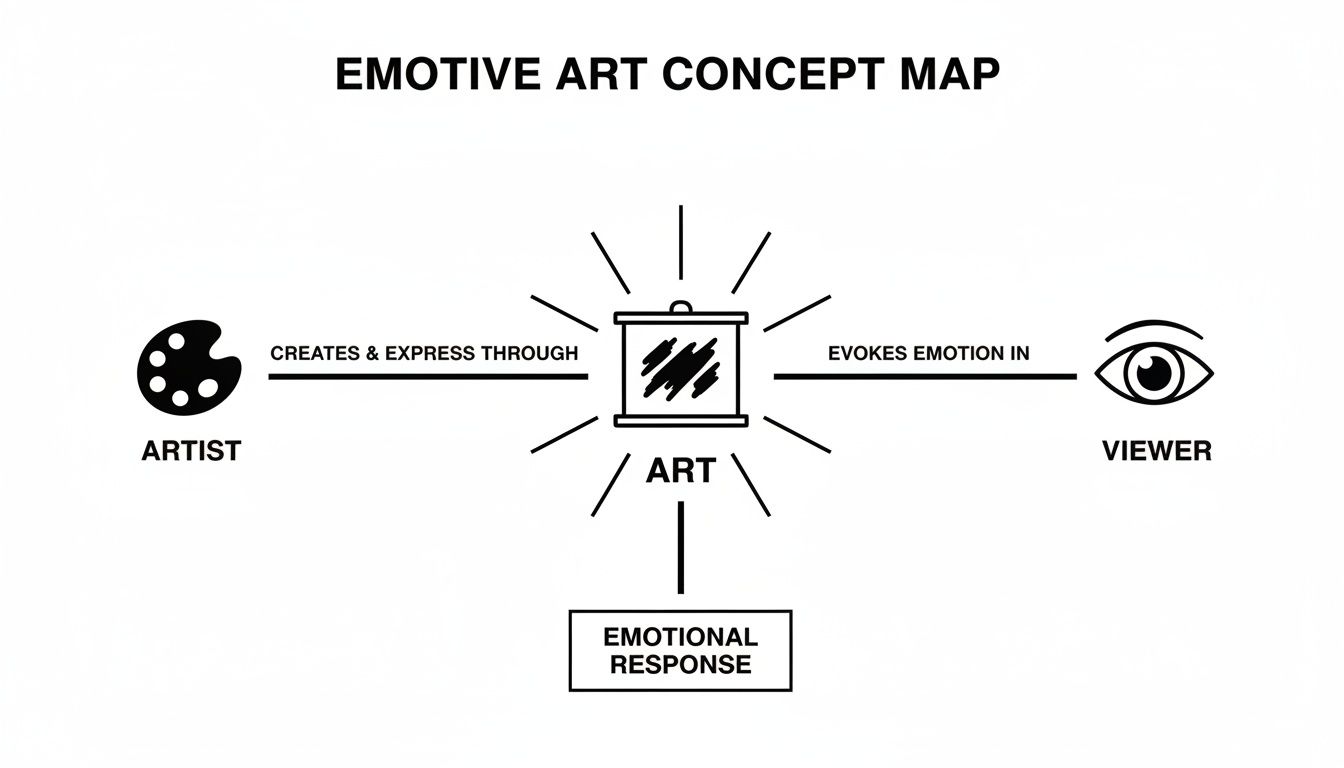
As you can see, every artwork becomes a conduit, channeling emotion from the creator to the observer through these deliberate artistic choices.
The Vocabulary of Color and Light
Color is perhaps the most direct line to our emotions. It’s a primal language we all understand instinctively, and artists who create art that expresses emotion are fluent in it. They know precisely how to build an atmosphere using a carefully chosen palette.
- Warm Tones: Think of the energy packed into reds, oranges, and yellows. They speak of passion, warmth, and intensity. Skyler often harnesses these in her sunset seascapes, capturing that feeling of vibrant, fleeting beauty as the day ends.
- Cool Tones: In contrast, blues, greens, and purples tend to quiet the soul. They create a sense of calm, peace, or even a touch of melancholy, dominating Skyler’s more contemplative ocean scenes and inviting introspection.
Light is color’s inseparable partner in this dance. The dramatic interplay between bright light and deep shadow—a technique known as chiaroscuro—can inject a scene with high drama and tension. On the flip side, soft, diffused light can give a piece a dreamy, almost ethereal quality.
Composition and Brushwork as Emotional Cues
Beyond the palette, the very structure and surface of a painting carry immense emotional weight. The way an artist arranges elements within the frame, or its composition, directs not just where we look, but how we feel. A composition that leaves vast areas of open space, for example, can summon feelings of solitude, immense freedom, or overwhelming peace.
The physical act of applying paint also tells a story. The texture of a painting is a direct record of the artist’s energy and emotional state during the act of creation. You can dive deeper into this fascinating topic in our guide on how to create texture in paintings to see just how different methods produce such distinct effects.
The artist’s hand is visible in every stroke. A delicate, precise brushstroke suggests control and calm, while a bold, thick application of paint with a palette knife can communicate raw power, spontaneity, or inner turmoil.
By learning to spot these fundamental techniques—color, composition, and texture—you start to understand the unspoken language of art. It’s the key that unlocks a deeper connection, allowing you to move beyond simply seeing a painting and begin to truly feel the story it tells.
Finding Identity and Resilience in Modern Art
It's one thing to talk about artistic theory, but it’s another to see how it creates a real, tangible emotional impact. The work of contemporary artist Skyler is a perfect case study, showing just how personal experiences with identity and resilience can be channeled into art that speaks to us all. Skyler’s work closes the distance between abstract ideas and the finished piece you might hang in your home.
This search for authentic stories is exactly what so many collectors are after today. In 2022, the global art market hit $67.8 billion in sales, but a more interesting trend was brewing beneath the surface: 66% of high-net-worth collectors bought pieces from artists they had only recently discovered. This shift points to a growing hunger for fresh, meaningful narratives from artists exploring deeply personal themes. For more on this, you can read the full 2023 art market report.
A Legacy of Painting with Heart and Soul
Skyler’s entire artistic journey is colored by their grandmother's advice to always paint "with heart and soul." You can feel this philosophy in every piece. Their canvases become honest dialogues about their non-binary identity, their profound connection to nature, and the quiet strength discovered in solitude. It’s a beautiful example of how an artist’s personal creed becomes their visual signature.
This approach means the art is never merely decorative; it’s a genuine form of communication. Skyler’s impressionistic style isn't just an aesthetic choice, but a functional one. The textured, energetic brushwork and luminous color palettes are the very tools they use to build stories of healing and self-discovery.
For many artists, the act of creating is a way to process the world and their place in it. When you connect with a piece, you are connecting with that deeply human process of finding clarity and meaning through art.
Decoding Skyler’s Visual Language
When you look closely at specific pieces, you can see these principles at work. In their solitary seascapes, the vast, open water and dramatic skies aren’t just depicting a location; they’re meant to evoke a feeling of profound introspection and peace. Those cool blues and gentle greens create a restorative atmosphere, while a sudden flash of warm light on the horizon offers a glimmer of hope.
- Color Palette: Dominated by the tranquil blues and greens of the ocean, Skyler’s work often uses these cool tones to create a space for quiet reflection and calm.
- Textured Brushwork: The thick application of acrylic paint adds a physical depth that mirrors emotional complexity, making the turmoil of the waves or the serenity of the sky feel immediate and real.
A powerful example is the piece Pouring Out Your Soul, where turbulent waves crash against a resilient shoreline. Here, the raw energy of nature becomes a direct metaphor for inner struggle and the strength it takes to endure. When you learn to see these intentional choices, you begin to understand the emotional weight behind the art that pulls you in.
A Practical Guide to Collecting Emotive Art
Making the leap from appreciating emotional art to actually buying it can feel intimidating, but it’s one of the most rewarding journeys you can take. Whether you're building a seasoned collection or choosing your very first original painting, the rule of thumb is always the same: trust your gut. Your search for art that expresses emotion starts with your own honest, personal reaction.
That initial pull you feel when you see a piece is your most reliable compass. It’s a quiet signal that the artist’s emotional language is speaking directly to you. Before you start dissecting technique or hunting for meaning, just stand in front of the work and allow yourself to feel. That immediate, intuitive connection is the bedrock of a great acquisition.
This personal connection is becoming a major force in the art world. Global art sales hit an incredible $67.8 billion in 2022, but a far more interesting story is unfolding beneath that number: purchases made directly from artists have doubled. This shows a clear shift toward buyers wanting authentic stories, like those woven into Skyler’s seascapes, making the market more personal than ever. You can explore more on the modern art market from UBS.
How to Choose Art That Truly Speaks to You
Once a piece has caught your eye, it's time to go a little deeper. This is where you look beyond the canvas to connect with the story and the person who created it. Doing so transforms a simple aesthetic choice into a meaningful emotional investment.
- Tune Into Your Gut Reaction: What’s the very first thing you feel? Calm? A jolt of excitement? A wave of nostalgia? That first emotional ping is the most important piece of information you have. Don't ignore it.
- Get to Know the Artist: Take a moment to read the artist’s statement or bio. When you understand what drives them—like Skyler drawing inspiration from their grandmother—the work gains incredible new layers of meaning and your connection to it deepens.
- Think About Your Space: Where will this artwork live? A piece of art has the power to set the entire mood of a room. A serene ocean scene could turn a bedroom into a sanctuary, while a dynamic abstract might bring a jolt of energy to your office. For more practical tips, see our guide on how to choose art for your home.
Collecting emotive art isn't about finding something that matches your sofa; it's about finding a piece that speaks to your soul. You are curating your own emotional environment.
Championing New and Underrepresented Voices
When you decide to buy from an emerging or underrepresented artist, you're doing something powerful. It’s no longer just a transaction—it becomes an act of advocacy for new perspectives and untold stories. Your choice helps diversify not only your own collection but the entire arts ecosystem.
By investing in artists who are courageously exploring themes of identity, resilience, and personal truth, you are championing the very heart of emotional art. You become part of their story, helping to ensure these vital, human conversations can continue through their work for years to come.
How to Integrate Expressive Art Into Your Home
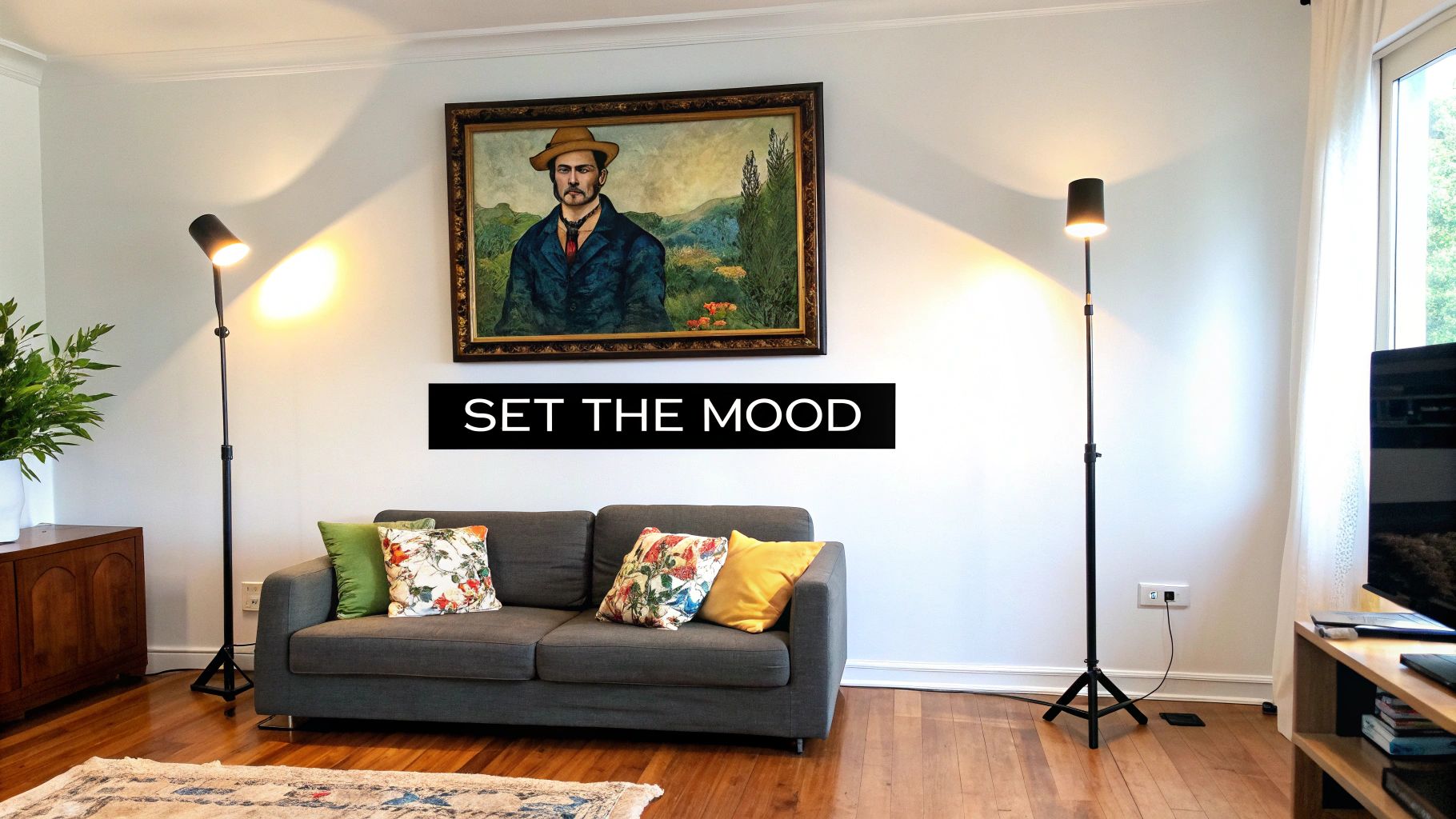
Bringing emotionally expressive art into your living space does more than just fill a blank wall; it can completely transform the feeling of a room. This isn't simply about decoration. It's about making a deliberate interior design choice that shapes the atmosphere and supports your well-being. By placing artwork with intention, you can cultivate specific moods and turn different areas of your home into purposeful sanctuaries.
The secret lies in matching the emotional current of the artwork to the function of the space. Think about what each room is for and, more importantly, how you want to feel when you're in it. When you approach it this way, art stops being a passive object and becomes an active, influential part of your daily life.
Pairing Mood with Room Function
Strategic placement starts with defining your home’s emotional zones. A tranquil, restorative seascape from an artist like Skyler, for instance, is a natural fit for a bedroom. Its calming blues and sense of gentle motion can create a perfect backdrop for rest and serenity. On the other hand, a piece bursting with vibrant colors and energetic brushwork would be ideal for a home office, where it can spark creativity and drive.
- Living Room: This is the place for a conversational centerpiece, something that invites engagement and connection.
- Bedroom: Look for calming art that encourages relaxation and quiet introspection.
- Workspace: Opt for dynamic, thought-provoking pieces that stimulate focus and motivation.
- Dining Area: Consider art that helps cultivate a warm, communal atmosphere for gathering.
Art becomes a tool for mindful living when its emotional energy aligns with the room's purpose. It's about curating not just what you see, but how you want to feel in your own space.
Amplifying Emotion with Light and Framing
Once you’ve found the perfect spot, you can dramatically heighten an artwork’s emotional impact with the right lighting and framing. These finishing touches draw the eye to the very elements the artist used to convey feeling—the color, the texture, the composition. For a deeper dive into this, you can learn more about color psychology in interior design in our related guide.
Consider how a well-placed spotlight on a painting with thick, textured brushwork will cast subtle shadows, accentuating its physical depth and raw energy. This technique brings the artist's hand to the forefront, making the piece feel more immediate and alive.
The frame you choose is just as important. A simple, minimalist frame allows a chaotic, expressive piece to speak for itself without distraction. An ornate, heavy frame, however, might lend a sense of classical drama or historical weight to a portrait. The frame is the final punctuation, reinforcing the artwork’s emotional statement and weaving it seamlessly into your home's story.
The Healing Power of Viewing Emotional Art
Living with art that expresses emotion is about more than just decoration; it's a powerful and quiet form of therapy that anyone can access. You don't need to be an artist to feel its deep psychological effects. The simple act of looking at and connecting with an expressive work can genuinely reduce stress, encourage mindfulness, and build a sense of connection that helps push back against isolation.
When you choose art that speaks to you, you’re actively shaping your home's emotional atmosphere. The artwork becomes a silent partner in a constant dialogue, one that can help regulate your mood and create a dedicated space for reflection. This is where the core ideas of art therapy cross over into the everyday experience of simply being a viewer. Engaging with a piece of art lights up the very same neural pathways we use for looking inward and processing our feelings, making it a unique tool for mental wellness.
Art as a Tool for Self-Regulation
The therapeutic power of art is gaining serious traction in clinical settings. The global Visual Arts Therapy market is expected to grow to $4.87 billion by 2032, a clear sign of art's recognized ability to communicate what words often cannot. This growth is backed by a wealth of research showing that engaging with expressive paintings can lower anxiety and depression, boosting patients' coping skills by as much as 30-50%. You can discover more insights about this growing field of visual therapy and its market impact.
But this healing potential isn't confined to a therapist's office. In your own home, a piece of art can serve as an emotional anchor.
- Promoting Mindfulness: A complex, textured piece almost forces you to pause, observe, and get lost in the details. It pulls you right into the present moment, away from the buzz of daily anxieties.
- Facilitating Catharsis: Art that explores struggle or resilience, like Skyler’s turbulent seascapes, can mirror your own feelings. It offers a safe, non-verbal outlet for complex emotions.
- Inspiring Hope: A canvas filled with light and brilliant color can become a daily reminder of beauty and what’s possible, gently lifting your spirits every time you walk by.
When you select art that dives into themes of resilience or tranquility, you're making a conscious investment in your own well-being. The artwork becomes a partner in your emotional health, offering solace and perspective whenever you need it.
Ultimately, bringing art that expresses emotion into your life is an act of self-care. It provides a lasting source of comfort and inspiration, transforming your living space into a restorative sanctuary that nurtures both mind and soul.
Frequently Asked Questions
Exploring the world of emotional art often brings up a few questions, particularly when you're looking for a piece that truly resonates with you. Here are some thoughts on the most common queries I hear from collectors and art lovers.
How Do I Know if Art Is Genuinely Expressing Emotion?
You can often feel genuine emotion in a piece before you can put words to it. It’s a gut reaction. But if you want to look closer, pay attention to the artist's choices—nothing is accidental.
Look for the intentionality behind the brushstrokes, the thought put into the color palette, and a composition that deliberately pulls your focus and sets a mood. An artist’s statement can also offer a window into their mindset, but ultimately, the real test is your own response. If a work of art stops you in your tracks and makes you feel something, it's doing its job.
Can Art That Expresses Sadness Be Good for My Home?
Absolutely. Art that taps into the full spectrum of human experience, including melancholy or solitude, can create a powerful space for quiet reflection. Think of a painting of a solitary, moody seascape—for one person it might feel lonely, but for another, it could evoke a deep sense of peaceful introspection.
The aim isn't to surround yourself only with art that feels cheerful. It's about finding pieces that add emotional depth and honesty to your space. It's about creating an environment that feels authentic to you, accommodating all facets of life.
Choosing emotive art is about curating your own emotional environment. It should reflect and support the full spectrum of your experiences, creating a space that feels authentic and restorative.
Should I Buy Original Emotive Art or Prints?
While high-quality prints are a fantastic way to bring art into your home, there's nothing quite like an original piece. An original offers a direct, unfiltered connection to the artist's hand and heart. You can see the texture of the paint, the subtle shifts in color, and the energy embedded in the brushwork—details that are often lost in reproduction.
An original painting is a one-of-a-kind artifact of a specific moment of creation. Plus, when you buy original work, especially from an emerging artist, you're not just acquiring an object; you're directly supporting their career and helping them continue to create.
Discover a collection of original works that speak from the heart. Explore the gallery at Skyler’s Art and find the piece that tells your story.