Description
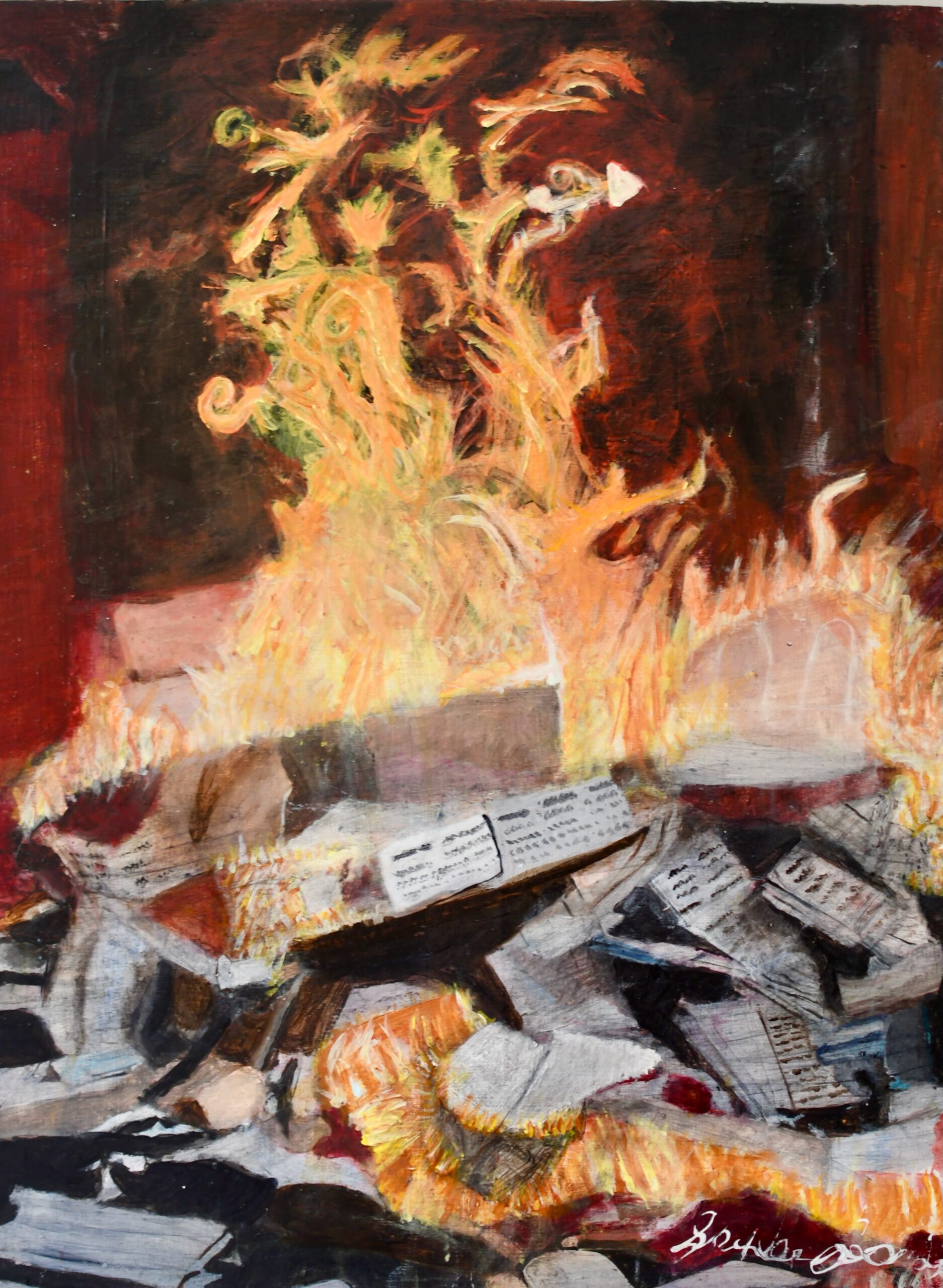
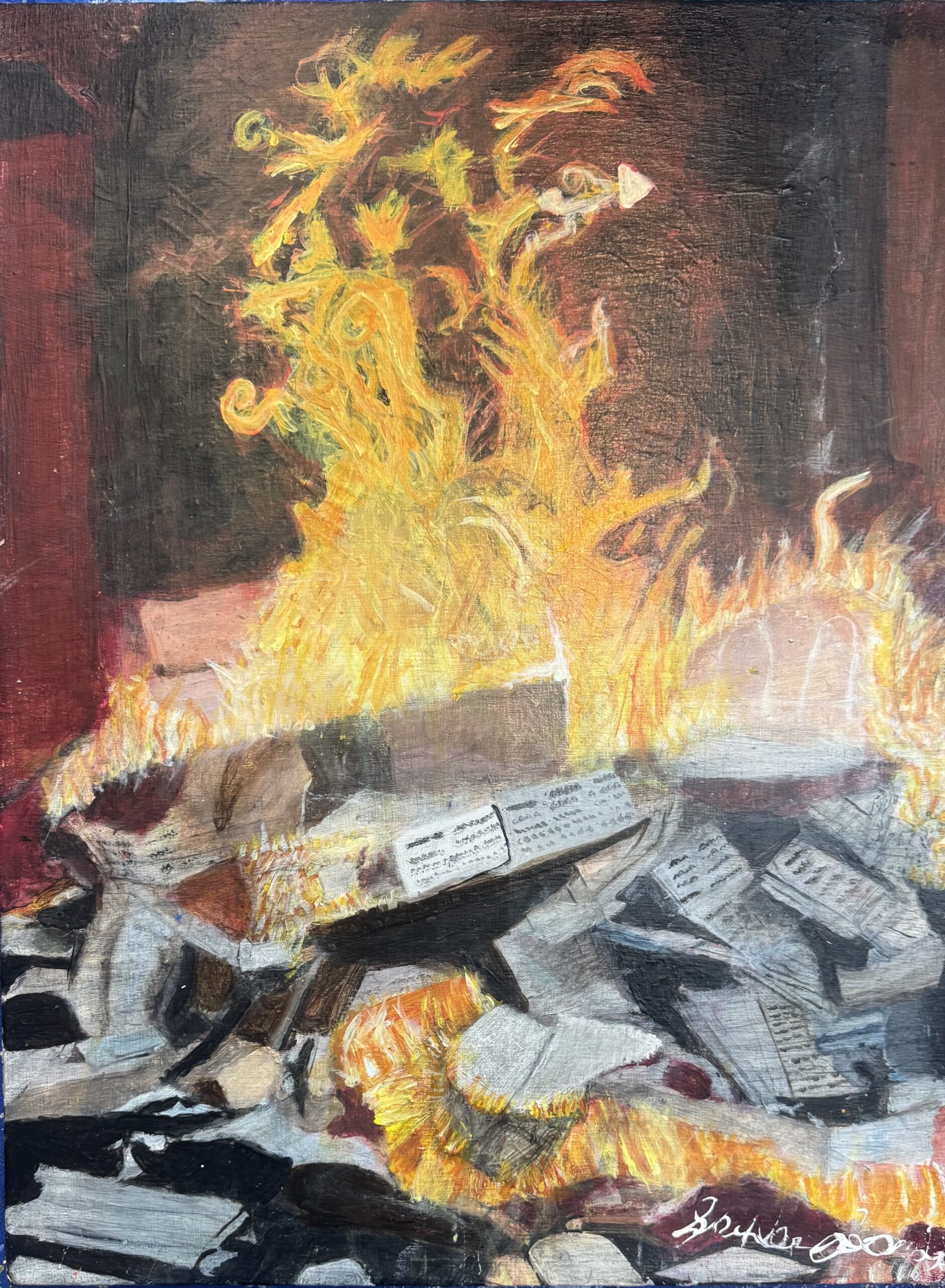
Burning of the Books commands attention through its vivid and evocative portrayal of destruction, transformation, and cultural repression. At the heart of the composition is a tumultuous blaze, captured in swirling, layered strokes of orange, yellow, and red that pulse with a fierce, almost sentient energy. This fire consumes a chaotic heap of scattered papers and books, their muted whites and grays stark against the inferno’s consuming intensity. Printed black text and musical notation remain faintly visible on the burning pages, silent witnesses to the knowledge, creativity, and diverse thought being irrevocably erased. The deep, dark background intensifies the contrast, amplifying the fire’s restless movement and the overwhelming sense of profound loss.
The work goes beyond a mere depiction of flames to embody a chilling historical moment and ideological upheaval. It is deeply inspired by the campaign orchestrated by the German Student Union in 1933—known as the “Campaign against the Un-German Spirit”—during which tens of thousands of so-called “un-German” books were publicly burned across Germany. These orchestrated ceremonies were not random acts of arson but planned political rituals designed to enforce conformity, silence dissent, and rewrite cultural memory under the emerging Nazi regime. The painting reflects the eerie solemnity and ritualistic fervor of these events: rallies and speeches led by Nazi officials, torchlit parades through city streets, and the ceremonious throwing of books onto bonfires while bands played and “fire oaths” were recited.One of the largest and most significant of these book burnings took place in Berlin’s Opernplatz (now Bebelplatz) on May 10, 1933. There, around 40,000 spectators gathered as some 20,000 volumes, including works confiscated from Magnus Hirschfeld’s Institute for Sexual Science, were destroyed. Propaganda Minister Joseph Goebbels delivered a notorious speech marking this violent cultural purge as a turning point—the eradication of what he described as “excessive Jewish intellectualism” and the triumph of the so-called German revolution. The painting captures the raw energy and ominous symbolism of these historical events, where fire became an instrument of ideological cleansing and repression.Through its dynamic brushwork, deliberate color palette, and evocative imagery, Burning of the Books freezes a moment suspended between chaos and catharsis—where destruction generates mourning and prompts reflection on the fragility of human expression and intellectual freedom. By confronting viewers with this charged scene, the artwork serves as a powerful meditation on the forces that seek to silence voices, manipulate history, and erase culture. It embodies the devastating consequences of intolerance while also affirming the resilience embedded in the very act of witnessing, remembering, and acknowledging these dark chapters of history. In the crucible of fire and ash, the painting stands as both a memorial and a warning against the perpetual threats to knowledge and liberty.
The work goes beyond a mere depiction of flames to embody a chilling historical moment and ideological upheaval. It is deeply inspired by the campaign orchestrated by the German Student Union in 1933—known as the “Campaign against the Un-German Spirit”—during which tens of thousands of so-called “un-German” books were publicly burned across Germany. These orchestrated ceremonies were not random acts of arson but planned political rituals designed to enforce conformity, silence dissent, and rewrite cultural memory under the emerging Nazi regime. The painting reflects the eerie solemnity and ritualistic fervor of these events: rallies and speeches led by Nazi officials, torchlit parades through city streets, and the ceremonious throwing of books onto bonfires while bands played and “fire oaths” were recited.One of the largest and most significant of these book burnings took place in Berlin’s Opernplatz (now Bebelplatz) on May 10, 1933. There, around 40,000 spectators gathered as some 20,000 volumes, including works confiscated from Magnus Hirschfeld’s Institute for Sexual Science, were destroyed. Propaganda Minister Joseph Goebbels delivered a notorious speech marking this violent cultural purge as a turning point—the eradication of what he described as “excessive Jewish intellectualism” and the triumph of the so-called German revolution. The painting captures the raw energy and ominous symbolism of these historical events, where fire became an instrument of ideological cleansing and repression.Through its dynamic brushwork, deliberate color palette, and evocative imagery, Burning of the Books freezes a moment suspended between chaos and catharsis—where destruction generates mourning and prompts reflection on the fragility of human expression and intellectual freedom. By confronting viewers with this charged scene, the artwork serves as a powerful meditation on the forces that seek to silence voices, manipulate history, and erase culture. It embodies the devastating consequences of intolerance while also affirming the resilience embedded in the very act of witnessing, remembering, and acknowledging these dark chapters of history. In the crucible of fire and ash, the painting stands as both a memorial and a warning against the perpetual threats to knowledge and liberty.
Reviews
There are no reviews yet.